
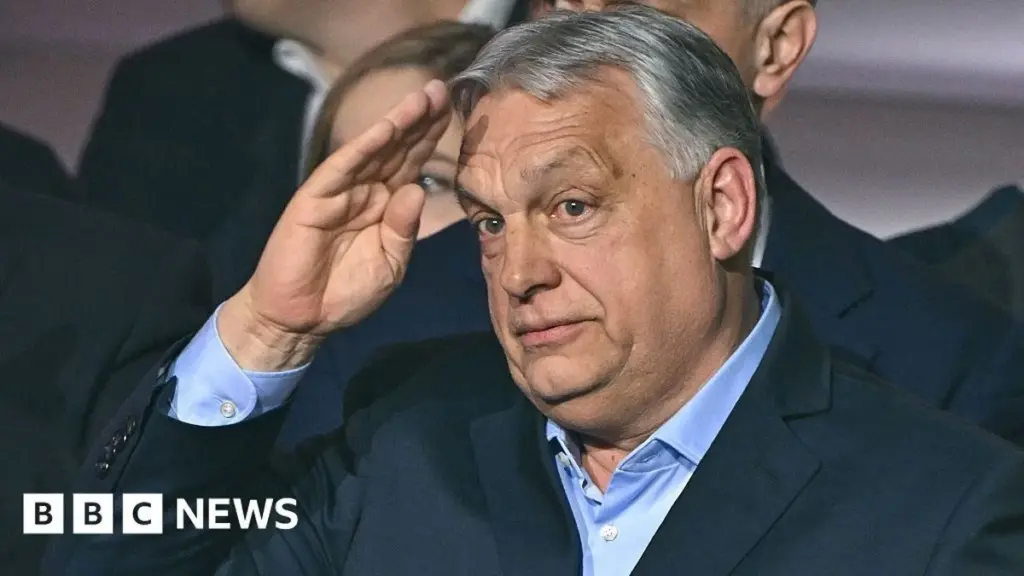
For sixteen years, Viktor Orbán’s tenure in power could be characterized as a prolonged “experiment.” Even he struggled to definitively label its nature. The term “illiberal democracy” carried too many negative connotations.
His American allies preferred the label “national conservatism.” While this sounded more appealing, it never truly aligned with Orbán’s approach. Unlike most conservatives, Orbán frequently acted as a maverick.
He consistently pushed himself into more radical positions. This raised the question: what, then, was he seeking to conserve? His political strategy often involved deliberately antagonizing mainstream institutions, particularly the “Brussels bureaucrats.” These confrontations, rather than weakening him, often served to bolster his own standing.
Orbán presented himself as an opponent of globalism. However, paradoxically, his government welcomed German automakers and encouraged Chinese and South Korean manufacturers of electric vehicle batteries to establish operations in Hungary. Similarly, while he championed national sovereignty, he notably abstained from vocally supporting Ukraine’s sovereignty in its conflict with Russia.
He campaigned against immigration, yet simultaneously facilitated immigration from countries such as Sri Lanka, the Philippines, Ukraine, and Turkey to staff burgeoning new factories. His administration also invested significantly in incentivizing couples to have more children. Despite these efforts, by 2025, the fertility rate had reverted to 1.31, the same figure he inherited from the Socialist party in 2010.
His immediate acceptance of defeat on Sunday evening suggested a keen awareness of his public image. Orbán operated under a “majoritarian” democratic philosophy, adhering to the principle that “the winner takes all.” This conviction heavily influenced his governance.
One year after securing a two-thirds parliamentary majority in 2010, he enacted a new constitution. This reshaped Hungary according to his party’s vision and his own preferences. With a dominant presence in parliament, he systematically introduced legislation to alter the judiciary, the electoral framework, and the national economy.
However, on Sunday, the Hungarian electorate delivered a clear message: “we do not wish to be experimented upon any longer.”
Péter Magyar’s success stemmed from several factors, including his consistent display of the Hungarian flag at every rally and his advocacy for an inclusive, less divisive national narrative. Crucially, many Hungarians seemed weary of perpetual conflict.
There was also significant dissatisfaction with the widening economic gap, where the wealthy prospered while the poor faced greater hardship, and the middle class diminished. Orbán may have won many of his political battles, but his constituents ultimately desired tranquility and stability. They sought a nation that was both ordinary and possessed a distinct voice.
This sentiment is precisely what Magyar has pledged to deliver. Addressing vast crowds gathered by the Danube, he stated, “Tonight we celebrate. But tomorrow, we start work.”