
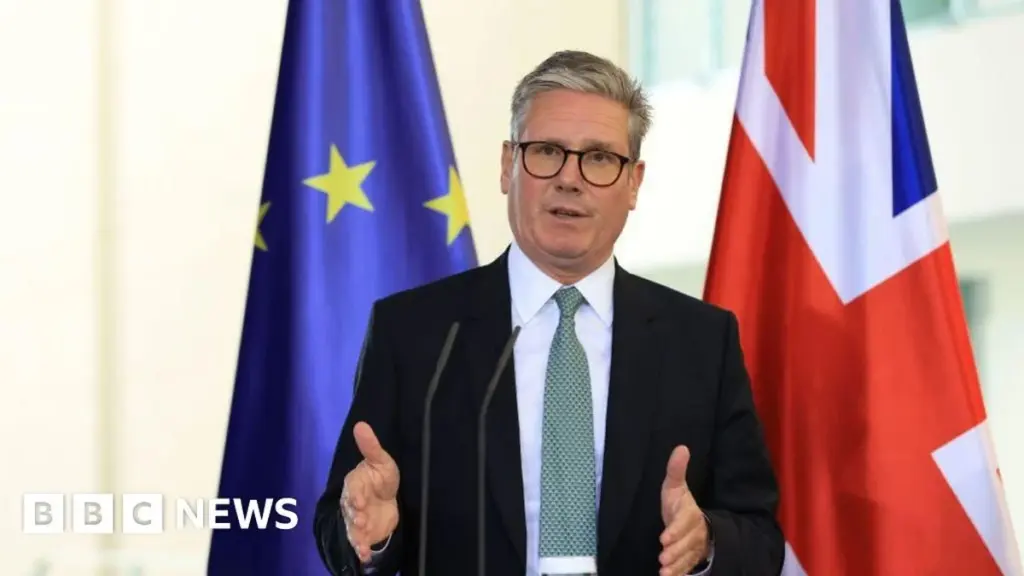
Under proposed new legislation, the UK government may be empowered to adopt European Union single market rules without requiring a parliamentary vote. This measure is part of a broader bill intended to align the UK with evolving EU regulations, particularly in sectors like food standards.
A spokesperson from the Labour party stated the intention behind this initiative: “It will lower costs for businesses and get rid of the Brexit paperwork tax that adds to the cost of the weekly shop.” This plan, however, has encountered significant opposition from the Conservative party and Reform UK.
Understanding the EU Single Market
The EU single market operates as an agreement that facilitates the free movement of goods, services, and people among member states. This free movement is underpinned by the widespread adoption of common rules and standards across participating countries.
Current UK-EU Negotiations and Future Legislation
Currently, the UK and the EU are engaged in negotiations for various agreements, including those concerning food safety and standards for animal and plant health. Parliamentary legislation to support some of these agreements is anticipated later this year. This legislation is expected to introduce new powers enabling what is termed “dynamic alignment” with Europe in areas where deals have already been concluded.
Dynamic alignment signifies that when Brussels introduces a new rule, members of Parliament will have only limited opportunities to scrutinize it. Such rules would typically be implemented through secondary legislation, which is generally not subject to amendment and often approved without a formal vote.
Government Response and Business Impact
A government spokesperson clarified the process: “The bill will go through parliament in the normal way. Any new treaties or deals with the EU will also face parliamentary scrutiny, and Parliament will have a role in approving new EU laws required under those deals via secondary legislation.” The aim stated is to “deliver a ‘food & drink’ trade deal worth £5.1bn a year, backing British jobs and slashing costly red tape for our farmers, producers and businesses.”
Labour’s Stance and Opposition Concerns
While the Labour party has previously stated it would not rejoin the EU single market or customs union, this new legislation could allow the UK to adopt certain European regulations through bilateral agreements with the bloc. A Labour source asserted, “We’re making a sovereign choice to agree deals to reduce trade barriers – where Parliament gets to have a say.”
Conversely, shadow business secretary Andrew Griffith voiced concerns, suggesting it would reduce parliament to “a spectator while Brussels sets the terms.” Reform UK leader Nigel Farage declared his intention to oppose the legislation “every step of the way,” describing the proposals as “a backdoor attempt to drag Britain back under European Union control.”
Parliamentary Democracy and EU Relations
Liberal Democrat MP Munira Wilson commented on the necessity of balancing closer EU ties with parliamentary democracy. A UK-EU summit is scheduled for later this year, following a May agreement between the two sides covering areas such as fishing rights, trade, defense, and energy. Sir Keir stated that this year’s summit would be “more ambitious” and would “not just ratify existing commitments made at last year’s summit.”