
Many of us were introduced to the basics of life using examples from the natural world as children. The rationale was to make “the talk” as straightforward and less awkward as possible, using imagery of birds laying eggs and bees pollinating flowers, rather than focusing on human or parental anatomy.
However, evolutionary and behavioural biologist Lixing Sun challenges this comforting simplification in his engaging and sometimes astonishing book, “On the Origin of Sex: The weird and wonderful science of how our planet is populated.” Sun argues that the common “birds and the bees” analogy fails to convey the sheer diversity, drama, and inherent strangeness of animal reproduction.
Even species that might appear unremarkable possess surprisingly complex and often intensely competitive reproductive strategies. Consider barnyard hens, capable of rejecting a significant portion of sperm after mating with a lower-ranking male, or male ducks, which have evolved corkscrew-shaped penises. In response, female ducks have developed vaginas that spiral in the opposite direction, granting them considerable control over paternity.
“On the Origin of Sex” is replete with such fascinating examples, bringing to life the fundamental biological processes. The sheer variety of reproductive methods often renders even the most adventurous human activities relatively mundane. Yet, as the book’s title implies, Sun’s ambition extends far beyond cataloging these behaviors. He delves into the profound questions that have long puzzled humanity regarding reproduction, beginning with the fundamental inquiry: why does sexual reproduction exist at all?
The Evolutionary Puzzle of Sexual Reproduction
For individuals not extensively versed in evolutionary biology, this line of questioning might appear unusual. However, from an evolutionary standpoint, sexual reproduction presents significant challenges and costs compared to asexual reproduction. The primary hurdle is the requirement for two partners: one to produce male gametes and the other to produce female gametes.
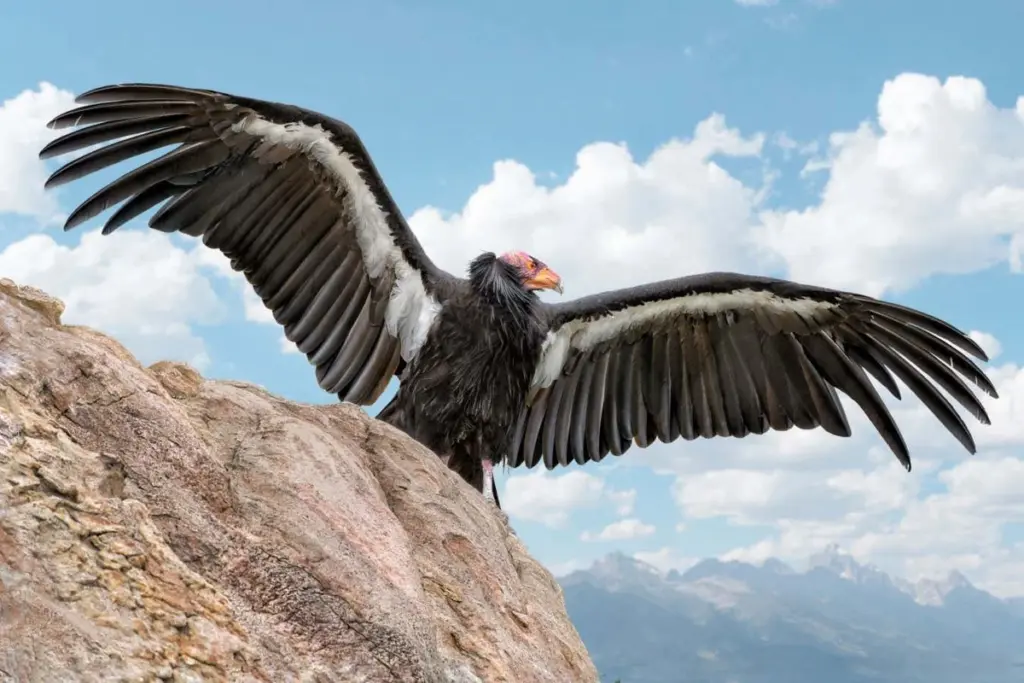
Asexually, reproduction is considerably more efficient and remains a viable strategy for numerous organisms, including bacteria and fungi. Parthenogenesis, a form of asexual reproduction where an embryo develops without fertilization, has been observed in over 80 vertebrate species, with notable examples including California condors, bonnethead sharks, and Komodo dragons.
Why the “Two-Sex” System Prevailed
Sun dedicates the initial section of his book to addressing this central question, offering a concise overview of pivotal concepts. Among these is Muller’s ratchet, a concept proposed by geneticist Hermann Muller in 1964. This theory posits that the absence of genetic recombination in asexual reproduction leads to the gradual accumulation of detrimental mutations that cannot be purged.
Another significant idea is the “Red Queen hypothesis.” This hypothesis frames evolution as an ongoing arms race, compelling species to “hustle at full throttle just to keep up with their adversaries and stay in the game,” as Sun eloquently puts it. This perspective underscores the vital, life-or-death stakes associated with sexual reproduction.
Author’s Perspective and Approach
As a distinguished research professor at Central Washington University, Sun maintains strong connections with many of the scientists whose work he references. “On the Origin of Sex” marks his fourth book intended for a general audience, following earlier works on natural systems of cheating and fairness, as well as a natural history of the beaver.
Sun himself characterizes “On the Origin of Sex” as a “fast, selective ride.” However, the intended audience is not always clearly defined. At times, the book assumes considerable prior knowledge of evolutionary biology, while at others, his digressions and stylistic flourishes suggest a more accessible readership. Nevertheless, the book sustains reader interest due to the abundance of captivating examples of unusual animal mating practices, ensuring a brisk pace even when readers encounter more technical scientific discussions.
Rethinking Gender and Sex
Sun’s palpable enthusiasm for his subject and his profound admiration for the adaptive strategies observed in the animal kingdom are infectious. His chapters exploring gender adaptations and sex variations are particularly illuminating. Sun advocates for a broader understanding of gender, asserting that our current definition is “hopelessly homocentric, cut off from our evolutionary connections.”
He employs the term “gender” to describe an animal’s roles and functions extending beyond gamete production. His thorough, step-by-step elucidation of the scientific principles underlying both sex and gender not only provides clarity but also highlights the extent to which human societies have culturally centered discussions around these concepts.
Sun observes that “in popular discourse, gender is often treated as a social construct. What’s missing, though, is a more basic understanding of gender as a biological construct – something evolutionary biology can help uncover. That’s where I come in.”
Conscious of navigating sensitive topics, Sun carefully avoids engaging in cultural debates. He emphasizes his focus on evolutionary biology and, predominantly, non-human animals. Yet, the inherent non-binary nature of biology becomes apparent. “Biological sex isn’t just a matter of splitting the world into sperm-producers and egg-makers,” Sun states. He points to species like swamp eels, clownfish, and wrasses, which routinely change sex. Even among birds and mammals, including humans, there exists broad variation, encompassing intersex individuals.
Gender, too, encompassing not only reproductive roles but also behavior and social dynamics, appears far more fluid in the animal kingdom than previously assumed, and it is intrinsically linked to sex. The example of hyenas illustrates this point: not only do they live in matriarchal packs, but females also possess a “pseudo-penis” and a “pseudo-scrotal sac.” These features evolved to provide them an advantage in competing for food after a kill, though they complicate pregnancy.
Sun utilizes this diverse spectrum to champion a re-evaluation of sex and gender, urging an inclusive approach that embraces differences as “natural, adaptive parts of life’s diversity.” He concludes that the “strict male-female binary starts to feel not just limited, but downright outdated.”
Sun has previously stated his initial aim with “On the Origin of Sex” was to contribute scientific insights to discussions on diversity and social justice. By adhering strictly to scientific evidence and drawing examples from nature, he effectively achieves this goal. The sheer diversity observed in non-human life, coupled with the numerous unanswered questions surrounding sex and reproduction, should encourage a greater embrace of complexity and an open mind, he suggests.
While we may believe we fully grasp the facts of life, even Sun concludes his exploration with a sense of awe, acknowledging “how little we truly understand.”
Recommended Reading on Sex and Evolution
-
The Red Queen: Sex and the evolution of human nature by Matt Ridley
This 1993 popular science classic by Matt Ridley is referenced by Lixing Sun for its influence on our understanding of sex and gender, and for its “razor-sharp wit and punchy prose.”
-
The Sexual Evolution: How 500 million years of sex, gender and mating shape modern relationships by Nathan H. Lents
Packed with examples of animal sexual diversity, this engaging and witty book by Nathan H. Lents skilfully combines rigorous research with accessible prose, offering important insights into sexual diversity in humans as well.
-
The Intimate Animal: The science of love, fidelity and connection by Justin Garcia
Published in 2026, this book delves into the science of human attraction and connection. Justin Garcia, an evolutionary biologist, executive director of the Kinsey Institute, and scientific advisor to Match.com, is exceptionally qualified to discuss this subject.
Elle Hunt is a writer based in Norwich, UK.