
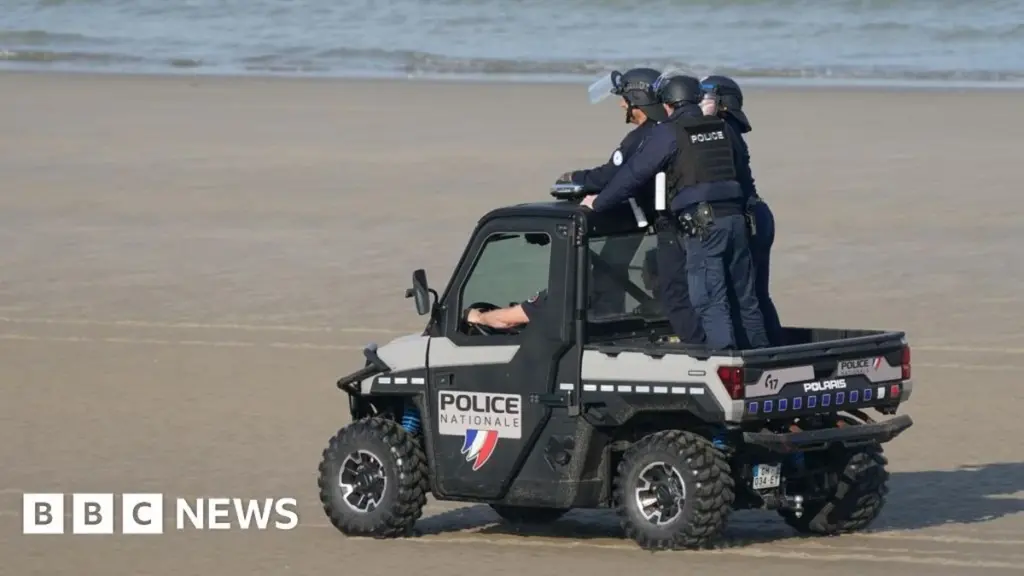
The United Kingdom is set to provide France with £16.2 million over the next two months to enhance beach patrols, as discussions continue to finalize a new agreement aimed at intercepting small boats attempting to cross the English Channel. This development follows a three-year pact initiated in 2023, under which the UK has already allocated £476 million to France for increased patrols designed to disrupt migrant smuggling operations.
The initial agreement was slated to conclude at midnight. However, negotiations to extend and revise the terms have been prolonged by an additional two months. A key point of contention for the UK appears to be the deployment of a greater number of enforcement officers by French authorities.
Sources within the UK government indicated that Home Secretary Shabana Mahmood was engaged in demanding negotiations to secure a more advantageous arrangement for the British public. The sentiment expressed was a desire for greater effectiveness from the allocated funds, encapsulated by the phrase “more bang for our buck.”
In opposition, Conservative shadow home secretary Chris Philp criticized the current approach, stating that the Labour party was effectively paying France for persistent failures. He articulated a strong stance, suggesting that no funds should be transferred to France until a substantial increase in their prevention rate is achieved and they commence interception at sea, a commitment allegedly made the previous summer.
Opposition and Alternative Proposals
Liberal Democrats spokesperson for immigration and asylum, Will Forster MP, cautioned against jeopardizing international partnerships as a solution for the nation’s immigration and asylum system challenges. He proposed that the most effective method to deter dangerous crossings and dismantle the criminal networks involved is to establish a comprehensive returns agreement with France.
Both Conservative leader Kemi Badenoch and Reform leader Nigel Farage have publicly advocated for the UK’s withdrawal from the European Convention on Human Rights (ECHR) as a measure to halt small boat crossings.
Reform UK Treasury Spokesperson Robert Jenrick, speaking on Tuesday, characterized the practice of spending substantial sums to persuade France to act as a “complete farce,” emphasizing the necessity of a “sovereign deterrent.” He further called for the government to implement policies of detention and deportation for all individuals entering the country illegally.
French Concerns and Current Operations
Reports suggest that French authorities have expressed concerns that the demands being made by the UK could potentially elevate the risks faced by asylum seekers. Under the existing agreement, approximately 700 law enforcement officers are currently deployed on beaches, utilizing drones and vehicles to prevent individuals from boarding boats.
The UK government asserts that this measure has successfully prevented 42,000 attempted illegal crossings. Despite these figures, the overall number of individuals completing the Channel journey has reportedly continued to rise.
The Home Office confirmed that the £16.2 million designated for the two-month extension of the patrol deal originates from UK funding. Home Secretary Shabana Mahmood issued a statement, reiterating the success of joint operations in stopping 42,000 attempted journeys. She assured that French law enforcement activities to intercept illegal migrants would continue while a new, enhanced UK-France accord is being finalized, expressing her commitment to restoring order at the borders.
Historical Context and Current Pressures
When initially announced in 2023, the previous Conservative government detailed that the £476 million package was intended to fund a new detention center in France along with a significant increase in law enforcement personnel along the northern French coast. France, in turn, agreed to provide an unspecified, but considerable and ongoing, contribution to the effort.
The number of Channel crossings has escalated over the last three years, with 41,472 individuals arriving in the UK via small boats in 2025. This trend places considerable pressure on Home Secretary Mahmood to reduce these numbers.
Sources indicate that the Home Secretary is advocating for the new arrangement to incorporate performance-based clauses. These clauses would link funding to the effectiveness of French interceptions, a detail initially reported by The Times.
Existing Returns Agreement
In August 2025, under a Labour government, a separate “one-in-one-out” agreement was established with France. This accord permits the UK to return certain individuals arriving by small boat to France, while simultaneously accepting an equivalent number of migrants from France who have not attempted to reach the UK. As of February of the current year, 305 individuals had been returned to France, and 367 had arrived in the UK under this specific scheme.
Continued Debate on ECHR and Future Strategies
On the subject of withdrawing from the ECHR, the Conservative leader Kemi Badenoch stated that the government had entered office with a pledge to dismantle criminal gangs, a goal that has not yet been achieved. Badenoch outlined the Conservative party’s borders plan, which includes leaving the ECHR, establishing a removals force, and facilitating returns supported by visa sanctions, alongside collaboration with European partners.
Reform leader Nigel Farage, speaking to reporters at a news conference, expressed skepticism about the potential impact of a renewed deal, predicting it would be inconsequential. He argued that even if France intercepts boats, the same individuals would attempt crossings again during periods of calm weather.
Farage further proposed that a Reform UK government would deploy the Royal Navy to escort small boats back to northern France. He contended that such an action would be feasible if the UK were to withdraw from the ECHR.