
April, as the poem poignantly observes, can be a month of poignant reflection, “mixing memory with desire.” This sentiment finds an unexpected echo in several of the non-fiction books we’ve gathered this month. Readers can delve into a life lived largely in solitude within a log cabin, often engaging more with the natural world than with people. Others explore the intricate balance between scientific understanding and life’s most profound questions, interwoven with personal experience.
Consider, too, an illuminating historical journey through the moon’s past, timely given humanity’s recent return to its surface after a 50-year hiatus. For those seeking a more vigorous exploration, there’s the compelling pursuit of two researchers: one dedicated to eradicating violence, the other focused on preparing our brains for the complexities of the 21st century. Prepare for an array of thought-provoking narratives that are sure to stir the emotions.
The Common Uncommon by Bernd Heinrich
This book is recommended for naturalists who find solace and fascination in extended periods spent outdoors. Publishers describe it as the life narrative of Bernd Heinrich, a distinguished entomology professor, biologist, naturalist, and runner. For a significant portion of each year, he resides in a cabin he constructed amidst a “vast sea of spruce, fir and larch” in the mountains of western Maine. He has maintained this lifestyle, intermittently, for approximately four decades.
During this time, Heinrich has witnessed, alongside the surrounding ecosystem, substantial landscape changes. These include the covering of the land by snow, its transition into summer heat, and occasional occurrences of fire, drought, and flood. The title “common uncommon” aptly describes the characteristics of the spiders, ants, chestnut trees, porcupines, owls, and mice inhabiting the woods near his home. It is presented as “a narrative of small surprises in nature, some delightful and some – brought on by climate change – devastating, all seen through the sharp eye of a world-renowned naturalist.” While acknowledging the impact of climate change, Heinrich’s approach bears resemblance to that of a modern-day Thoreau, with his log cabin serving as a parallel to the dwelling occupied by the 19th-century writer who sought solitude with nature in Walden, Massachusetts, albeit for a shorter duration of two years.
The End of Violence by Gary Slutkin
Gary Slutkin is engaged in a mission of considerable ambition. This book outlines his fundamental concept: that violence can be eradicated by conceptualizing it as an epidemic, susceptible to interruption, control, and eventual elimination. Slutkin, an epidemiologist, initially gained recognition for his work on curbing the spread of tuberculosis in San Francisco during the early 1980s, later extending his efforts to address cholera and TB in Somalia. From 1987, he contributed to the World Health Organization’s initiatives concerning HIV and AIDS epidemics across Africa.
Upon his return to the United States, two homicides involving 12-year-olds prompted him to examine violence more closely. He discovered that a significant predictor of a shooting incident was a prior shooting, much like the transmission of an infectious disease. This revealed the critical role of exposure and social acceptance within a community. Slutkin subsequently established Cure Violence Global, an organization whose programs aimed at “curing” violence have demonstrated success in the areas where they have been implemented. Consequently, his book is anticipated to offer a compelling and valuable reading experience.
The Book of Clouds by Vincenzo Levizzani
Imagine holding the esteemed position of a professor of cloud physics. This is the professional role of Vincenzo Levizzani, and based on the descriptions of his book, it appears to be his profound calling as well. In The Book of Clouds: How to read the sky, Levizzani endeavors to elevate readers’ engagement with clouds beyond mere aesthetic appreciation, aiming to replace ignorance with a solid foundation of knowledge. The book incorporates numerous references to art and culture’s portrayal of clouds, drawing from aspects of Shelley’s poem “The Cloud” (from Prometheus Unbound) to Cesare Pavese’s “Grappa in September” (from Hard Labor).
For those who wish to identify different cloud types, understand their formation processes, and learn about their role in producing rain, among other behaviors, this book is an essential resource. It also addresses how climate change is impacting cloud patterns. The publication features an array of impressive graphics and photographs, complemented by a glossary to clarify terms such as “dropsonde” and “graupel.”
Huge Numbers by Richard Elwes
The concept of googology is intrinsically linked to the realm of very large numbers; it has no association with the well-known search engine. These immense quantities form the subject matter and title of a recent book by Elwes, a mathematician and presenter, notably for the YouTube channel Numberphile. According to its publishers, Huge Numbers illustrates how the act of counting has fundamentally shaped human cognition. Elwes himself characterizes the content as a “human story” that spans from the distant past into the far future.
The book explores two primary themes. Firstly, it investigates the scale of numbers that humans require and which numbers delineate the outer boundaries of our world. Secondly, it examines the systems employed for describing or processing these numbers. The text delves into the maximum values these systems can accommodate before failing. An intriguing question posed is whether one can even name the largest conceivable number. The author confidently claims readers will find themselves laughing at least twice.
The 21st Century Brain by Hannah Critchlow
We are currently navigating an era characterized by heightened stimulation, pervasive connectivity, and a mixture of excitement and apprehension. Unprecedented transformations, spurred by artificial intelligence and other powerful forces, are continuously reshaping our world. Some thinkers propose that this period constitutes a significant evolutionary transition. This raises questions about whether we will need to fundamentally re-evaluate the biological basis of human intelligence, identity, and individuality, especially as culture emerges as the dominant influence.
In The 21st Century Brain, neuroscientist Hannah Critchlow, an academic at the University of Cambridge and a recognized public intellectual, confronts these complex issues. Her publisher suggests that she ultimately offers a hopeful perspective, advocating for our ability to “future-proof” our brains. This optimism appears to be rooted in the concept of humans leveraging their inherent capacities, skills, and virtues, such as problem-solving aptitude, adaptability, curiosity, creativity, courage, empathy, and communication. Given the pervasive anxieties surrounding algorithmic governance, the manipulation of information, and the detrimental impact of social media on childhood development—along with calls to ban smartphones for individuals under sixteen—there is a strong hope that Critchlow’s perspective proves accurate.
Lucky People by Nobuko Nakano
Here we encounter a subject guaranteed to provoke both keen interest and considerable disagreement: the fundamental nature of luck and the potential lessons to be derived from individuals who identify themselves as “lucky.” An early glimpse into Nobuko Nakano’s Lucky People, a bestseller in Japan, reveals its intention to not only deconstruct the notion of luck as a purely random phenomenon but also to suggest that fortunate individuals, for various reasons, operate with a different “neurological software” compared to those less fortunate—software that can, it is implied, be acquired.
Nakano posits that characteristics contributing to a “lucky” personality, which can be cultivated, include neural adaptations that occur when one shifts focus from identifying threats to recognizing opportunities. Other contributing factors involve maintaining a positive self-image, demonstrating generosity towards others, and adhering to regular sleep and wake patterns, ideally as an early riser. The practice of prayer is also included among these elements, presenting a fascinating array of concepts.
Original Sin by Kathryn Paige Harden
The subtitle of Kathryn Paige Harden’s Original Sin is essential for assuring readers that the book does not represent an abrupt shift to theological discourse. The subtitle reads: The genetics of wrongdoing, the problem of blame, and the future of forgiveness. Harden, who directs the developmental behavior genetics lab at the University of Texas, addresses some of the most critical questions of contemporary life. These include how individuals take responsibility for shaping their own identities, acknowledging the dual influence of biology and experience. Furthermore, the book examines our societal response when individuals cause harm to themselves or others, and whether scientific advancements have rendered the concept of guilt obsolete.
These inquiries engage with the age-old tensions between nature and nurture, freedom and constraint, the impulse to punish, and the desire to forgive. The hope is that the book effectively delivers on its ambitious promise.
Organ Speak by Giulia Enders
Author and physician Giulia Enders achieved bestseller status with her previous work, Gut, which provided a remarkably engaging exploration of the complex digestive system. That book covered the crucial gut-brain connection, the significance of the microbiome, and the impact of gut health on mental well-being. She now returns with a new offering, Organ Speak: What it really means to listen to our bodies. According to her publishers, this book has maintained a position at the top of the German bestseller list for over six weeks.
This latest work may prove even more surprising, proposing that an inward focus can enhance our understanding of the external world. Readers can anticipate a guided tour of their internal anatomy, encountering “the unseen heroes of our bodies.” Enders explains how our organs have demonstrated remarkable intelligence in responding to challenges and elaborates on the extensive lessons they offer. For instance, the book explores what the immune system can reveal about our fundamental need for security. It also investigates how the process of wound healing might mirror emotional recovery, ultimately addressing the question of what we truly require to thrive. This is undoubtedly another book to watch. Notably, celebrity epidemiologist Tim Spector describes it as a “thrilling journey through health and disease – seen through the secret lives of our cells and organs.”
Still as Bright by Christopher Cokinos
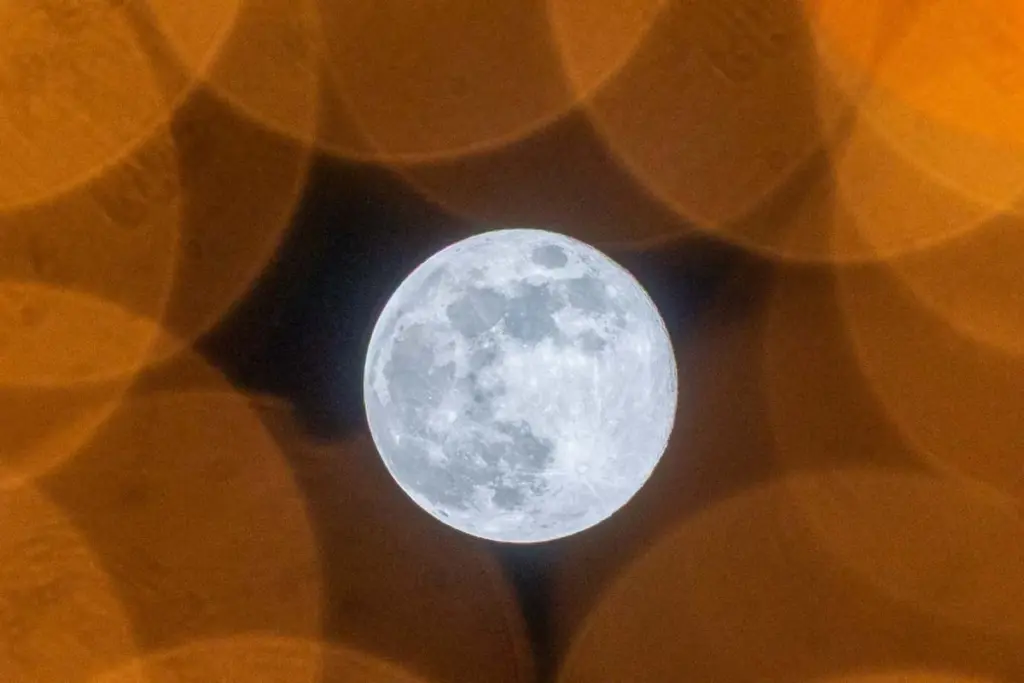
The moon is undeniably a prominent topic once again with the inauguration of NASA’s Artemis II mission, which will send four astronauts on a ten-day flight orbiting the moon. The publication of Still as Bright: An illuminating history of the moon, from antiquity to tomorrow could not be more perfectly timed. Writer Christopher Cokinos traces the moon’s narrative across time and space. He details its significance in the belief systems of ancient cultures and the scientific observations made by Galileo through his telescope. The book covers the obsessions of 19th-century “selenographers” and extends to the Apollo astronauts, and now, the Artemis II mission. Cokinos also recounts his personal lunar explorations, conducted using only his backyard telescope.
Publishers describe it as a “cultural and scientific history, as well as memoir… a thoughtful, deeply moving, evergreen natural history.” For a multitude of reasons, readers are expected to view the moon with a new perspective.
Up by Lucy Rogers
We often scan the skies, seeking signs of rain or sun, or simply observing the captivating shapes of clouds as they drift across the horizon. Then there are the birds, their effortless soaring, swooping, and the creation of remarkably improbable aerial formations. Lucy Rogers’s book, Up: A scientist’s guide to the magic above us, delves into “the beauty, science, and surprises of the world above.” Her exploration takes her across the globe, including a visit to a kite market in India, the Borneo jungle to witness bats emerging from a cave at dusk, and Mexico to experience a total solar eclipse.
Up appears to be an ideal choice for anyone who longs for a glimpse of the aurora borealis or marvels at the ingenuity of flight. Rogers, an engineer with experience in space-debris-mitigation technologies, and known for her role as a judge on the BBC television show Robot Wars, ensures that the sense of wonder and the quest for marvels are firmly grounded in scientific understanding. This promises to be an engaging read.
Chain Reaction by Ijeoma Uchegbu
One might ask where society would be without chemistry’s quiet role in maintaining the order of our frequently chaotic world. Every facet of existence is mediated by chemical processes: from our DNA, conserved within our cells, to the methodologies employed in treating illnesses and the physical construction of our environment, and extending to the chemical composition of PFAS—the so-called “forever chemicals” remarkable for their persistence. In her book, Chain Reaction, Ijeoma Uchegbu, a professor of pharmaceutical nanoscience at University College London, serves as a reminder of this often-overlooked science, while also recounting how chemistry has influenced her own life.
Beyond Belief by Helen Pearson
Helen Pearson, a seasoned editor at one of the world’s foremost science journals, addresses the extraordinary shift in how evidence, rather than mere opinion, is now considered the definitive guide for human decision-making. Publishers describe this phenomenon, termed the “evidence revolution,” as a global undertaking to “science-ify policy.” This involves the application of data and scientific methodologies to determine efficacy in various contexts. Examples include assessing whether police patrols demonstrably reduce crime, and if performance appraisals actually enhance productivity. Furthermore, evidence is sought to ascertain whether smaller class sizes benefit students, and more currently, whether smartphones genuinely pose a harm to teenagers.
Policy-making has historically been hampered by challenges related to evidence, potentially due to its unavailability or its presentation in an inaccessible or untimely format. Even the field of medicine has progressed incrementally, often relying on physicians’ opinions and conventional wisdom rather than robust scientific findings. This book is anticipated to provide a comprehensive examination of these critical processes.