
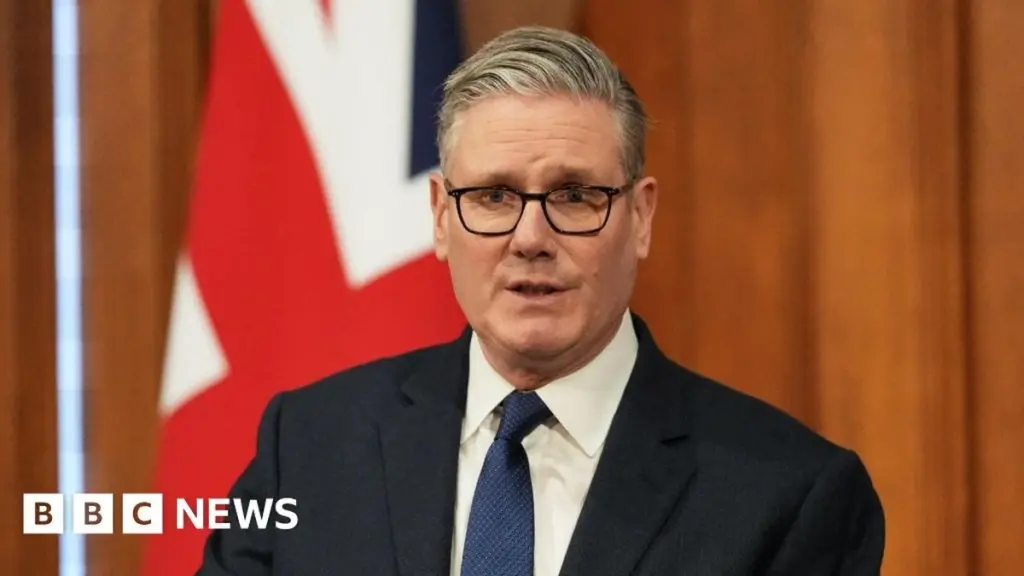
Sir Keir Starmer has indicated that the United Kingdom will pursue closer economic relationships with the European Union. This strategic shift comes in the context of ongoing conflict in Iran and its subsequent global implications.
Speaking at a news conference, Starmer stated his intention to leverage an upcoming summit with the EU to foster increased cooperation on both economic and security matters. This approach arises as relations between the United States and the UK have reportedly become strained, partly due to the Prime Minister’s reluctance to become more deeply involved in the conflict with Iran.
Addressing the War’s Impact and Economic Concerns
In his remarks, Sir Keir acknowledged the conflict’s potential impact on the UK. He sought to reassure the public, emphasizing that the government is actively implementing measures to mitigate the effects of the rising cost of living. Opposition parties have been pressing the government to outline its plans for protecting citizens from escalating energy costs.
A range of proposals have emerged from various political groups. The Conservatives and Reform UK are advocating for the removal of Value Added Tax (VAT) from household energy bills, alongside the cancellation of the fuel duty increase scheduled for September. The Liberal Democrats echo the call to halt this fuel duty hike. Meanwhile, the Green Party suggests the government should commit substantial funding now to subsidize energy bills starting in July, coinciding with the next price cap recalculation. Plaid Cymru has called for immediate clarity on support measures for potential rises in energy bills, while the Scottish National Party (SNP) argues for Holyrood to have direct control over energy policy.
Sir Keir expressed confidence in the UK’s resilience, stating, “No matter how fierce this storm we are well-placed to weather it and we have a long-term plan to emerge from it a stronger and more secure nation.” He pointed to several measures taking effect this month aimed at alleviating living costs, including the removal of certain green levies from energy bills and an increase in the national living wage. The Prime Minister asserted that the government has been proactive in addressing the cost-of-living crisis.
However, the Organisation for Economic Co-operation and Development (OECD) has issued a warning, noting that the UK is projected to experience the most severe impact on economic growth from the conflict among major economies.
Navigating Energy Costs and Global Supply Chains
When questioned about reassuring motorists regarding the fuel duty increase, Sir Keir confirmed that the current rate remains in effect until September. He further elaborated that household support measures would be continually assessed, with significant factors including the duration of the conflict and the speed at which the Strait of Hormuz can be reopened.
In parallel, the Prime Minister announced that the Foreign Secretary would host representatives from 35 nations, including European and Gulf states, later this week. The objective of this meeting is to discuss potential strategies for ensuring the Strait of Hormuz remains “accessible and safe after the fighting has stopped.” He acknowledged the challenges involved, yet underscored that reopening the strait is firmly in the UK’s national interest.
Iran’s actions have led to effective blockades of the strait, a critical artery for global oil transportation. This has contributed to sharp increases in wholesale oil and gas prices. A sustained period of elevated oil prices is anticipated to result in higher household energy bills in the UK when the current price cap is adjusted in July.
Strengthening EU Relations Post-Brexit
Both the Prime Minister and Chancellor Rachel Reeves have recently made statements advocating for a more robust trading relationship with the EU. Sir Keir, however, stressed that this objective has gained increased urgency due to the repercussions of the US-Israel conflict with Iran.
“It is increasingly clear that as the world continues down this volatile path, our long-term national interest requires closer partnership with our allies in Europe and with the European Union,” he stated. He further argued that Brexit had inflicted significant economic damage, and that the potential for strengthening security and reducing living costs through closer EU ties is substantial and cannot be overlooked.
A UK-EU summit is slated for this summer, following a trade agreement reached last May covering areas such as fishing rights, commerce, defense, and energy. Sir Keir indicated that this year’s summit would aim for greater ambition, going beyond the ratification of previous commitments.
Cooperation on the Single Market
When asked about the possibility of the UK rejoining the EU’s single market, which facilitates the free movement of goods, services, and people under common regulations, the Prime Minister responded positively regarding enhanced cooperation. “I do think that we should strengthen our cooperation on defence, security, energy, emissions and the economy,” he said.
He expressed ambition for greater engagement with the single market, believing it to be of significant economic benefit. Nevertheless, he reiterated Labour’s manifesto commitment that a return to the single market, the customs union, or freedom of movement is not planned.
Pressed on whether this represented a prioritization of Europe over the US, Sir Keir countered, “I’m not going to choose because I think it’s in our interest to have a strong relationship with the US and with Europe.” He posited that closer European ties would, in fact, strengthen the UK’s relationship with the US, noting the consistent calls from successive US presidents for Europe to increase its contributions to defense and security.
NATO Commitment and National Interest
President Donald Trump has reportedly criticized Sir Keir in recent weeks for refusing to permit US bases in the UK for initial offensive strikes against Iran. The UK has since authorized the use of its bases for defensive operations against Iranian missile attacks. In a separate development, Trump was quoted in The Daily Telegraph as considering a withdrawal from NATO, citing the insufficient participation of European countries in the US-led action against Iran.
Addressing these remarks, Sir Keir reaffirmed the UK’s “full commitment to NATO,” describing it as “the single most effective military alliance the world has ever seen.” He concluded by stating, “Whatever the pressure on me and others, whatever the noise, I’m going to act in the British national interest in the decisions that I make. That’s why I’ve been absolutely clear that this is not our war and we’re not going to get dragged into it.”