
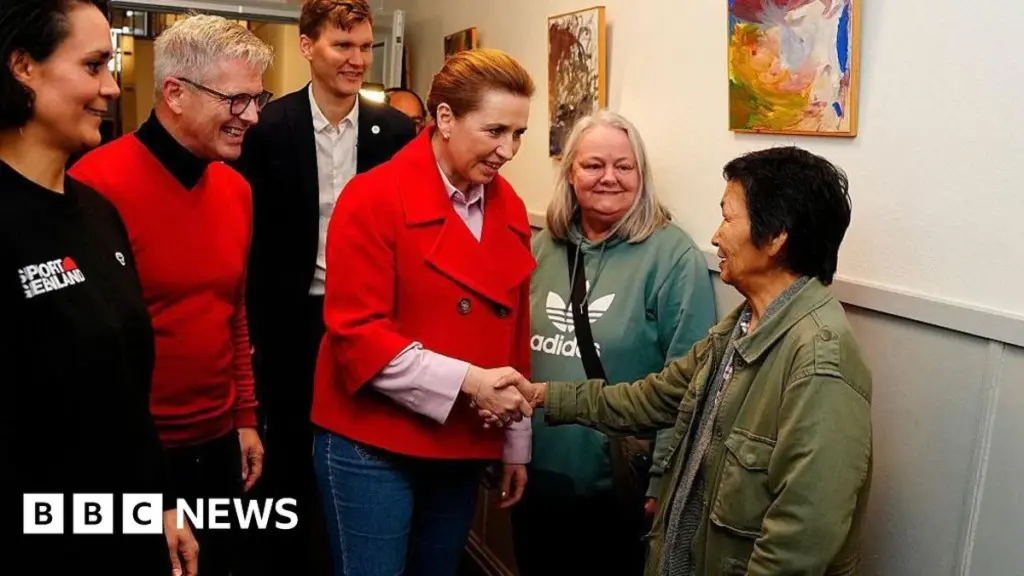
Danes are heading to the polls in an election that could see Prime Minister Mette Frederiksen secure a third term for her Social Democrats.
Frederiksen, at 48, initiated this election cycle months ahead of schedule. Her decision was reportedly influenced by public approval stemming from her firm response to former US President Donald Trump’s remarks regarding the potential annexation of Greenland, an autonomous Danish territory.
Despite this, the Social Democrats have seen a decline in support since the 2022 elections. The party now faces a substantial challenge from two prominent centre-right factions, notably the Liberal Venstre party, led by Defence Minister Troels Lund Poulsen.
Denmark, characteristically governed by coalition arrangements, will determine through this vote whether governing power remains with the left-leaning bloc or shifts towards the right.
Current Polls and Campaign Dynamics
The most recent opinion surveys indicate that Frederiksen’s Social Democrats are projected to secure the largest proportion of votes, exceeding 20%. This places them significantly ahead of both the Liberal party and the Green Left.
While the Greenland issue is not the central focus of this electoral contest, Frederiksen appears to be banking on the “Trump bump” – a surge in her poll numbers following her assertive stance on Greenland. This, she hopes, will be sufficient to earn her a third term in what is anticipated to be a closely contested election.
Denmark, a long-standing NATO ally of the United States, has consistently rejected overtures from Mr. Trump concerning Greenland. Both Denmark and its European counterparts dispatched a military detachment to the island in January.
However, the campaign trail has been largely shaped by domestic considerations, given a broad consensus on foreign policy matters within Denmark.
Key Domestic Issues Driving the Election
The state of the national economy and the rising cost of living have emerged as primary concerns for voters. In response, Frederiksen has proposed a 0.5% wealth tax targeting the wealthiest 20,000 Danish citizens. Additionally, the elevated levels of pesticides in drinking water, attributed to pig farming and agricultural practices, have become a significant point of discussion, prompting calls for bans from some parties, including Frederiksen’s.
Despite the Social Democrats’ lead in the polls, it may not translate into the 90 seats necessary to command a parliamentary majority.
Coalition Challenges and Potential Kingmakers
Following a decisive victory in 2022, Frederiksen led a broad coalition government that included her Social Democrats alongside the centrist Moderates and the centre-right Liberals. All three parties are now showing significant drops in voter support according to current surveys.
Troels Lund Poulsen, representing the Liberal party, has positioned himself as a potential prime ministerial candidate, contingent on a strong performance in this election.
Even with the largest vote share, the Social Democrats are trending towards their most unfavorable outcome in over a century. In the preceding local elections, their support had dwindled to 17%.
The polls suggest that neither the “red” left-wing bloc nor the “blue” right-wing bloc will achieve a majority without the crucial support of the centrist Moderates, led by Foreign Minister Lars Løkke Rasmussen. The Moderates are therefore poised to act as kingmakers in determining the next government.
The Influence of Greenland and the Faroe Islands
The four parliamentary seats allocated to Greenland and the Faroe Islands could also play a decisive role. There is a possibility, for the first time in decades, that at least one of the Greenlandic seats might shift its allegiance from the left to the right.
Rasmussen, who also garnered praise for his handling of the Greenland situation, has expressed his interest in the position of royal investigator. This role is instrumental in the formation of a governing coalition.
Historically, the royal investigator typically assumes the role of the next prime minister. However, Rasmussen has indicated that he does not intend to lead the country again, having previously served two terms as prime minister.
Speaking to reporters, he emphasized his desire to be at the forefront of shaping the new government’s policy, stating that Denmark needs to “stand together at a time of division.”