
A significant disagreement between Hungary and Slovakia on one side, and Ukraine on the other, is currently obstructing a critical €90 billion European Union loan intended for Ukraine.
The Druzhba (Friendship) pipeline, which transports oil from Russia to Hungary and Slovakia by passing through Ukraine, has been unable to function since January 27th. This cessation of flow occurred after a major oil hub located in Brody, a city in western Ukraine, sustained damage during a Russian attack.
Ukraine estimates that it will require an additional six weeks to complete repairs and resume oil transit. However, Budapest contends that Kyiv is deliberately delaying the process. Hungary’s government suggests this is a retaliatory measure for Hungary’s stance, which has been characterized as pro-Russian and anti-Ukrainian.
This conflict highlights how a single or a pair of member states can hinder decision-making within the European Union. It also surfaces the energy supply challenges faced by Hungary and Slovakia, stemming from their decision not to pivot away from Russian oil supplies in 2022, unlike many other nations.
The Significance of the Brody Pumping Station
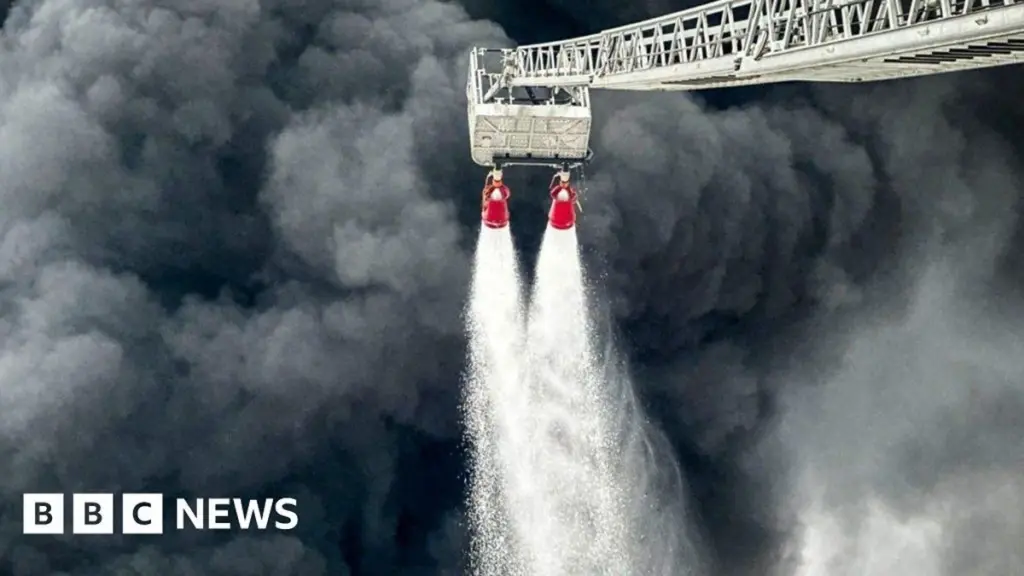
The pumping station at Brody, situated in Ukraine’s western Lviv region, plays a crucial role in facilitating the transit of Russian oil to both Hungary and Slovakia. Intelligence gathered from satellite imagery appears to confirm that the Russian strike on January 27th impacted a vital component of this facility: a large storage tank. This tank is essential for maintaining the oil pressure needed to keep the pipeline operational.
Visual evidence suggests the tank was engulfed in flames for several days following the strike. Described as Ukraine’s largest oil tank, it has a capacity of 75,000 cubic meters.
Henadiy Ryabtsev, an energy expert in Ukraine, stated that the damage to the Brody pumping station is extensive. He further indicated that the intense heat generated by the fire might have compromised other critical systems within the facility, including pumps and the pipeline itself.
“The oil was on fire for approximately a week, meaning that during that entire period, everything in its vicinity was exposed to high temperatures,” Ryabtsev commented.
Ukraine’s Repair Efforts and EU Support
The Ukrainian government has stated that the damage at Brody is severe and that Ukraine lacks the necessary resources to expedite the repairs. “This is a technical issue,” a spokesperson for Ukraine’s Ministry of Foreign Affairs, Heorhy Tykhy, told the BBC. “Our infrastructure is damaged daily. Ukraine repairs all of it, but our resources are not limitless. We are engaged in a full-scale war, a reality that Hungary, for reasons unknown, chooses to disregard,” Tykhy added.
Ursula von der Leyen, President of the European Commission, announced that the EU has offered Ukraine “technical support” and financial assistance to accelerate the repairs. “The Ukrainians have welcomed and accepted this offer. European experts are available immediately,” she posted on X.
Earlier, President Volodymyr Zelensky had expressed reservations about restoring the pipeline. “To be completely honest, I would not restore it… because it is Russian oil,” he remarked to journalists on March 5th.
Hungary’s Accusations and Counterarguments
The Hungarian government has accused Ukraine of deliberately delaying the resumption of oil flow through the pipeline for political motivations. Prime Minister Viktor Orbán maintains strong economic and political ties with Moscow and has openly expressed his opposition to President Zelensky. Opposition to Ukraine is a central theme in the election campaign of Hungary’s governing Fidesz party, with elections scheduled for April 12th.
Hungary’s assertion that the pipeline itself is undamaged is supported by several observations. Zsolt Hernadi, the CEO of Hungarian energy company MOL, stated on March 2nd that “We can say this with a clear conscience: the pipeline itself has not been damaged.” He further recounted that Ukrainian counterparts requested MOL to promptly accept crude oil from the tank to avert further escalation and a larger fire. MOL then received 35,000 tons of crude oil of Ukrainian origin, which subsequently flowed through the Druzhba pipeline without incident. Oil continued to arrive via the pipeline for at least two to three days.
“Later, when we inquired why the pipeline had not been restarted, we were informed that no decision had yet been made regarding its restart. The absence of a decision can hardly be classified as a technical issue,” Hernadi added.
A study commissioned by MOL from an American company, with excerpts reviewed by the BBC, concluded that pumping oil from a burning tank would “unlikely” damage the underground pipeline, given its inherent resilience and ability to withstand extreme temperatures.
Technical Perspectives on the Damage
Conversely, András Rácz, a security analyst at the German Council on Foreign Relations, offered a different perspective. He explained that “The superheated oil from the burning tanks effectively cooked the system from the inside, damaging sensors, valves, and all the safety systems within the pipeline.” Rácz bases his assessment on discussions with Hungarian and Ukrainian pipeline engineers.
“While the pipe itself is intact, it cannot be operated safely because all internal components require replacement, or at least thorough inspection to ascertain the full extent of the damage,” he elaborated.
Ukrainian engineers face challenges in their repair work, being restricted to daytime operations due to nightly air raids. Additionally, a shortage of specialized personnel contributes to delays, particularly given the ongoing damage to Ukraine’s energy grid from Russian attacks.
“I consider it very promising that the Ukrainian side is now demonstrating greater transparency,” Rácz observed.
Meanwhile, Hungary has begun sourcing non-Russian seaborne Brent crude from Norway, Saudi Arabia, and Libya. This supply is being routed through the Adria pipeline from Croatia. However, MOL’s refineries are not equipped to process non-Russian oil, which has a lower sulfur content.