
A crucial set of mayoral elections are underway across France this Sunday, serving as the final electoral test before the nation turns its attention to the presidential elections next year. The outcomes in major towns and cities will offer a significant indication of the political landscape. Particular anticipation surrounds Paris and Nice.
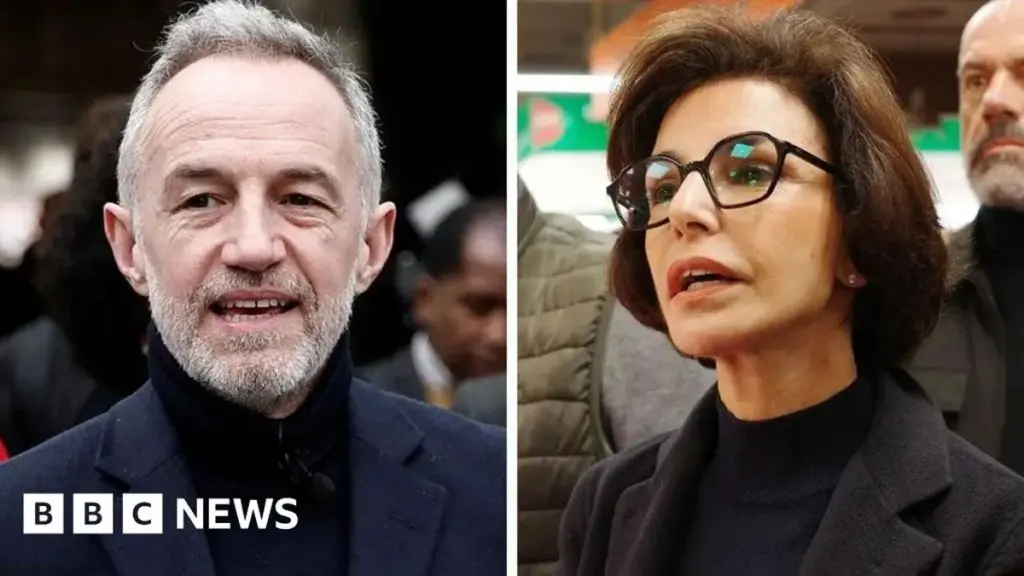
In the capital, Paris, a shift to the right remains a distinct possibility. After a quarter-century under a Socialist-led administration, the political control of Paris could potentially pass to Rachida Dati. This outcome hinges on her ability to surpass Emmanuel Grégoire in current opinion polls.
Along the French Riviera, the southern city of Nice also presents a compelling narrative. Eric Ciotti, an ally of Marine Le Pen’s National Rally (RN), appears poised for a victory. His potential win underscores the growing influence of the hard-right.
The Left’s Strategic Alliances and Internal Challenges
Throughout the country, the municipal elections’ second round are casting a spotlight on the hard-left party, France Unbowed (LFI). In numerous locations, LFI has entered into strategic alliances with other left-wing factions. These partnerships primarily involve the Socialist Party (PS) and the Greens, with the explicit aim of consolidating the anti-right vote.
However, a central theme emerging from these elections, with considerable implications for the 2027 presidential race, is the public’s reception to these alliances. Voters are being closely watched to gauge their support for or rejection of these pacts. This scrutiny is heightened by increasing criticism directed at LFI and its prominent leader, Jean-Luc Mélenchon, concerning allegations of antisemitism and a strategy perceived as targeting a specific, potentially Muslim, electorate.
Toulouse: A Microcosm of Left-Wing Dynamics
Toulouse, located in the southwest of France and a hub for the aeronautics industry, also boasts a substantial student population alongside its characteristic high-rise housing estates. This city serves as a key indicator of the broader trends. In the first round of voting, the incumbent center-right mayor, Jean-Luc Moudenc, secured 37% of the vote. He was followed closely by two left-wing candidates: François Piquemal of LFI, who garnered 27.5%, and the Socialist François Briançon, with 25%.
Following the initial results, Piquemal and Briançon have united their campaigns. This merger positions them with a clear lead over Moudenc on paper. Should this alliance prove successful, François Piquemal would assume the role of Toulouse’s mayor, representing a significant gain for the hard-left.
The critical question for Toulouse voters is whether this left and hard-left coalition will inspire participation or act as a deterrent. Similar pacts uniting left-wing forces have been established in 26 other significant towns and cities. These include Nantes, Grenoble, Lyon, Limoges, Clermont-Ferrand, Brest, and Tours.
These agreements have not gone unnoticed by right-wing politicians, who have vocally denounced them as “alliances of shame.” The formation of these alliances comes in the wake of considerable friction. Weeks prior, the Socialists, along with other mainstream left-wing parties, had publicly condemned LFI. They had pledged to avoid any future nationwide left-wing coalition unless LFI altered its conduct.
Context of Left-Wing Tensions
This rift followed a violent incident in Lyon where a far-right student was killed by individuals suspected of being far-left militants. Among those implicated was a parliamentary assistant to an LFI Member of Parliament. Furthermore, Jean-Luc Mélenchon delivered a speech that was interpreted by many as a clandestine reference to the Jewish identity of the late financier Jeffrey Epstein.
Critics on the right argue that the Socialists have compromised their core principles under electoral pressure. They contend that the Socialists have aligned with LFI out of apprehension regarding vote erosion from their left flank.
In their defense, the left asserts that these alliances are a necessary strategy to counter potential victories by the far-right. It is worth noting that in most cities where these pacts have been formed, the primary opposition is not from the National Rally but from the more traditional center-right Republicans (LR) party.
National Implications and Presidential Aspirations
Political observers across the spectrum view these recent developments as indicative of Jean-Luc Mélenchon’s increasing confidence as the presidential election approaches. His reported objective is to establish himself as the central figure for left-wing votes, positioning himself for a potential runoff against either Marine Le Pen or the RN’s president, Jordan Bardella.
The strategy of forming broad left-wing coalitions has not been universally adopted. In Paris, for instance, the Socialist candidate Emmanuel Grégoire declined an alliance with Sophia Chikirou, who is running under the LFI banner. Consequently, Grégoire remains in the mayoral race.
Meanwhile, Rachida Dati, representing the right, has seen her prospects improve due to the withdrawal of candidates from the centrist and far-right factions. Opinion polls suggest she is now challenging Grégoire’s lead.
In Marseille, the incumbent Socialist mayor, Benoît Payan, has benefited from the withdrawal of the LFI candidate. His close challenger from the National Rally, Franck Allisio, faces a hurdle as a Republican candidate continues to draw votes from the right.
The National Rally’s electoral potential is, as often observed, constrained by the willingness of opposing factions to unite against it, a dynamic evident in both Marseille and the neighboring city of Toulon.
The hard-right’s most promising opportunities for a significant electoral breakthrough lie in Nice. Eric Ciotti, affiliated with the RN’s allied UDR party, is widely expected to secure victory against the incumbent Christian Estrosi.
For centrist political forces, the encouraging news has been the strong performance of former Prime Minister Edouard Philippe in the first round of voting. Philippe is a likely winner in Le Havre, a result that would provide a substantial lift to his presidential aspirations for the following year.