
Life in Sedanka, a remote fishing village nestled in Russia’s Far East, is undeniably arduous. Many residences lack fundamental conveniences like running water, indoor plumbing, and central heating, despite winter temperatures that consistently plummet to -10°C (14°F). The village, encircled by forest-tundra and marshland, finds its district center accessible only between May and October via riverboat or specialized tracked vehicles. During the winter months, travel relies exclusively on snowmobiles or helicopters. Opportunities for local employment are scarce, compelling most villagers to sustain themselves through fishing and cultivating their own food.
An additional burden now weighs upon Sedanka: nearly all men between the ages of 18 and 55 have reportedly departed to join Russia’s conflict in Ukraine. This exodus has profoundly impacted the community’s fabric.
The Human Cost of Conflict
“It’s heartbreaking – so many of our people have been killed,” shared Natalia, a resident whose name has been altered for her protection, in a recent interview with the BBC World Service. “My sister’s husband and my cousins are at the front. In almost every family, someone is fighting.”
Situated on the northwestern reaches of the Kamchatka Peninsula, near the Sea of Okhotsk, Sedanka lies over 4,300 miles (7,000 kilometers) from the front lines in Ukraine. For context, the American city of Anchorage, across the Pacific, is roughly half this distance away.
From a total village population of 258, thirty-nine men have signed contracts with Russia to participate in the war. Tragically, twelve of these individuals have been confirmed killed, with an additional seven reported missing. When a regional governor visited in March 2024, a delegation of women conveyed their plight, referring to the conflict as the “special military operation,” the Kremlin’s designation for its involvement in Ukraine. They expressed their predicament to state television: “There is no-one to chop firewood for winter to heat our stoves.”
Broader Russian Casualties
The BBC, in collaboration with the Russian news outlet Medizona and independent researchers, has so far verified the deaths of 40,201 Russian soldiers in 2025. Based on their analysis, the total number of fatalities for 2025 is projected to reach 80,000, which would represent the deadliest year for Russian losses in Ukraine since the full-scale invasion commenced on February 24, 2022. This estimate incorporates obituaries citing 2025 as the year of death or burial, though these are still undergoing comprehensive processing and cross-verification.
Confirmed deaths for 2024 currently stand at 69,362, a figure comparable to the combined totals from 2022 and 2023. The casualty rate has notably increased since late 2024. Deaths have been verified through official reports, probate data registries, newspaper articles, social media posts from relatives and friends, and information from new memorials and graves. In total, the BBC has identified 186,102 Russian soldiers killed in the war by name. The actual death toll is widely believed to be significantly higher, as many battlefield fatalities are not officially recorded.
Military experts suggest that the BBC’s analysis may account for 45-65% of the total deaths, placing the potential number of Russian casualties between 286,000 and 413,500. Ukraine has also experienced substantial losses. Last month, President Volodymyr Zelensky stated that “officially” 55,000 Ukrainians had been killed on the battlefield, with a “large number of people” officially missing, though he provided no precise figure. Estimates from sources like the UA Losses website, cross-referenced by the BBC, suggest the number of Ukrainians killed could be as high as 200,000.
Disproportionate Impact on Indigenous Communities
While most Russian soldiers killed in the conflict bear Slavic surnames, losses are disproportionately high among smaller indigenous groups, particularly in economically depressed regions of Siberia and the Far East, such as Sedanka. Sedanka is primarily inhabited by Koryaks and Itelmens, indigenous peoples who, under wartime regulations, are eligible for mobilization exemptions. Anti-war activist Maria Vyushkova notes that Russian state television often perpetuates stereotypes of indigenous communities as “born warriors” and skilled marksmen to encourage their enlistment. “Many indigenous communities take pride in that heritage as part of their identity. The Kremlin uses this pride to recruit for war,” Vyushkova explained.
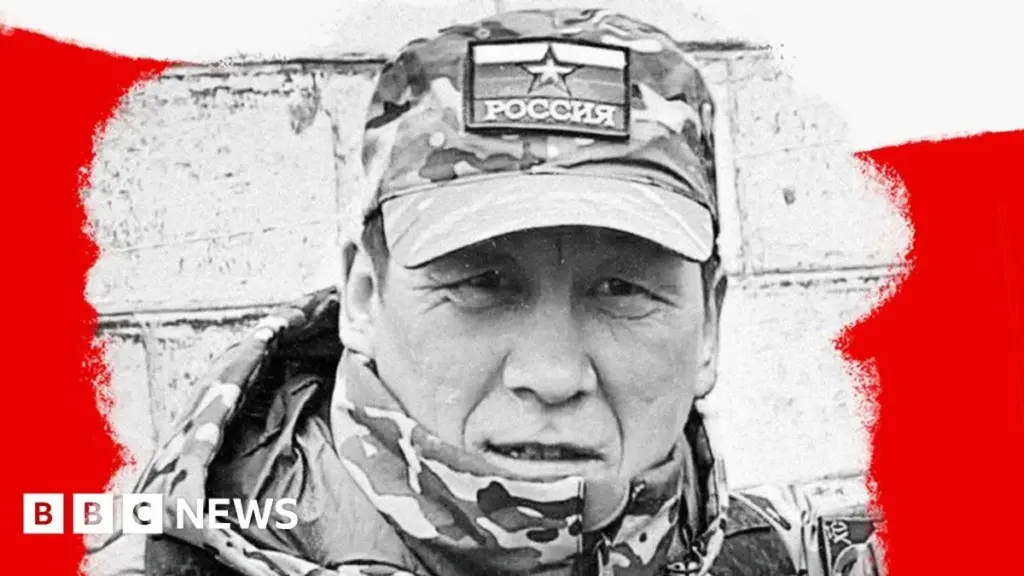
Vladimir Akeev, a 45-year-old hunter and fisherman from Sedanka, signed a contract with the army in the summer of 2024 and was killed in combat four months later. His funeral in November 2024 required mourners to reach the cemetery by snowmobile, with his coffin transported on wide wooden sleds. Other confirmed casualties from indigenous groups include 201 Nenets, 96 Chukchi, 77 Khanty, 30 Koryaks, and seven Inuit people. Relative to the male population aged 18 to 60, this represents an estimated 2% of Chukchi, 1.4% of Russian Inuits, 1.32% of Koryaks, and 0.8% of Khanty.
Rural Areas Bear the Brunt
The BBC’s analysis indicates that 67% of those killed are from rural areas and small towns—defined as settlements with populations under 100,000—despite these areas housing 48% of Russia’s population. Major cities experienced the lowest rates of loss, with Moscow reporting the fewest deaths per capita: five individuals for every 10,000 males, or 0.05%. In less affluent regions, such as Buryatia in eastern Siberia and Tuva in southern Siberia, the death rate is 27 and 33 times higher, respectively, than in the capital. Demographer Alexey Raksha attributes this disparity between urban and rural areas primarily to differences in economic development, wages, and educational opportunities.
Consequently, soldiers from impoverished regions and ethnic minorities constitute a larger proportion of the army and its casualties relative to their overall representation in the population. Another Russian demographer informed the BBC that regions with a high incidence of losses exhibited lower life expectancies even before their men began enlisting. He suggested that for many, the driving factors are not only poverty but also a lack of viable prospects—a sense of having nothing left to lose.
Promises Unfulfilled in Sedanka
In Sedanka, a monument dedicated to “participants of the special military operation” was unveiled in the autumn of 2024. The preceding year, the regional government had pledged to bestow the honorary title of “village of military valor” in recognition of the men’s participation in the war. A support program for the families of Sedanka’s soldiers was also promised. However, the village has yet to officially receive its honorary title, and much of the anticipated support for soldier families has not materialized.
The roofs of four contract soldiers’ homes were repaired after falling into disrepair, but only after significant media coverage drew attention to their plight. One in five houses, constructed during the Soviet era, has been officially declared unsafe. The village’s sole school has been categorized by authorities as being in a state of emergency, with some walls showing signs of imminent collapse. These critical infrastructure issues are exacerbated by the absence of the village’s working-age male population, who have been drawn into Russia’s ongoing conflict in Ukraine.