
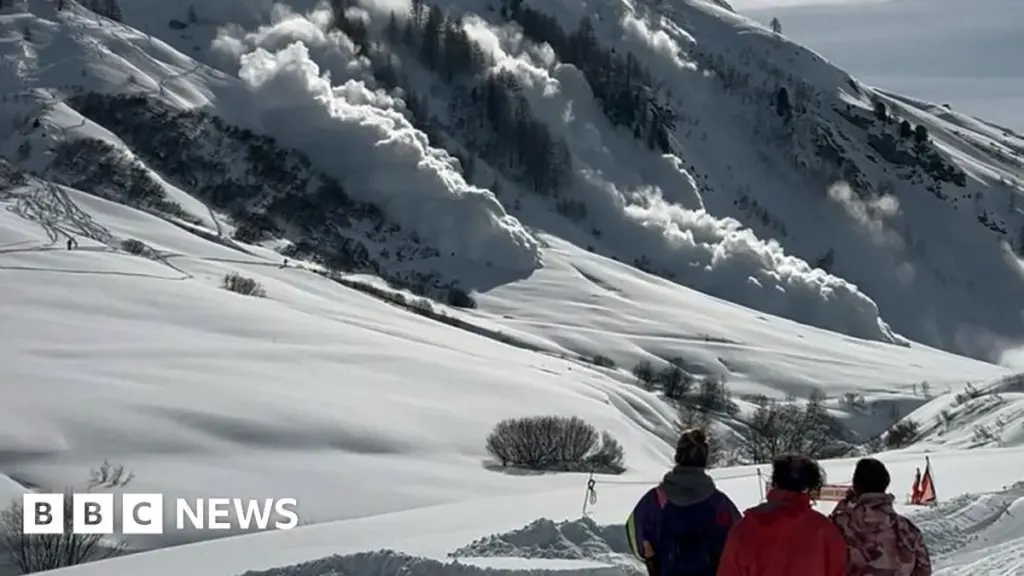
The avalanche season in the Northern Hemisphere typically sees snow-related incidents making headlines. This year, however, has been marked by unusually severe events, including a tragic incident in California that resulted in the deaths of eight skiers and left one person missing. Concurrently, the Alps are experiencing a difficult situation with a higher-than-usual number of fatalities, prompting a renewed focus on avalanche awareness and preparedness for winter sports enthusiasts.
Assessing the California Incident
The California event presents a distinct scenario from the Alpine crisis. The region had recently emerged from a period of low snowfall, and the latest snow accumulation is not considered exceptional by experts. Despite this, the combination of drought followed by intense snowfall can create dangerous conditions. When new snow falls on an unstable or absent old snow base, it lacks adequate binding, leading to loose, unpredictable layers.
The Alpine Crisis: Extreme Conditions
In contrast, the Alps have been subjected to two major storms within a single week. This has resulted in significant heavy snowfall coupled with strong winds, elevating avalanche warning levels across a substantial portion of the mountain range. Tragically, three British nationals were among the dozens killed in incidents throughout the season. One Alpine resort has characterized the current conditions as the most severe experienced this century.
These extreme weather events have necessitated evacuations in several Swiss and northern Italian communities. Power outages have also been reported, and a train derailment occurred at Goppenstein in the Swiss canton of Valais, highlighting the widespread impact of the severe weather.
Investigating Potential Connections: Climate Change
The question arises whether there is an interconnectedness between the events in Europe and California and whether climate change plays a role. While climate change might appear to be a primary suspect for these unstable weather patterns, the link is complex. Senior scientist Simon Mason of SEI US suggests that climate change could result in more intense precipitation events interspersed with prolonged dry spells. This aligns with observations in Europe, which has experienced seasons with below-average snowfall and dry periods early in the current season.
However, Mason cautions that avalanche risk is influenced by numerous factors beyond precipitation. The evolution of these risks with future climate change remains difficult to ascertain. Climatologist Christoph Marthy notes that the current Alpine winter, characterized by high pressure and extensive dry periods, is contrary to what might be expected in a changing climate scenario. Benjamin Zweifel of the Swiss Federal Institute for Snow and Avalanche Research emphasizes that the storms are merely one component of a larger issue:
“The main challenge this winter was a very weak snowpack with very persistent weak layers, caused by long periods without new snow and low temperatures.”
Direct Impact of Warming on Avalanches
Beyond its influence on weather patterns, global warming may directly impact avalanche behavior. The US Northern Rocky Mountain Science Center indicates that wet snow avalanches, predicted to increase with rising temperatures, are particularly dangerous, difficult to forecast, and less understood than dry snow avalanches. These wet snow avalanches are triggered by a reduction in snowpack strength, often due to rain, intense sunshine, or warm temperatures, and their frequency is expected to rise with temperature fluctuations.
Further research, such as a 2021 paper in Frontiers in Physiology, suggests that warmer and wetter snow conditions could decrease survival chances in an avalanche. Additionally, thinner snow cover might exacerbate the risk of blunt trauma injuries. Broadly, four key factors appear to be altering avalanche dynamics: the oscillation between droughts and heavy precipitation, the nature of the precipitation itself, the presence of wetter snow, and melting snow.
Resort Mitigation Strategies
Blaise Agresti, a high-mountain guide in Chamonix, points to another significant factor contributing to the rise in European avalanche deaths: a shift in skier behavior towards increased risk-taking and off-piste activity. Approximately 25% of skiers now venture off-piste.
Marked ski pistes typically benefit from pre-emptive avalanche blasting, and groomed snow reduces risk. Pistes can be closed if avalanche danger is high, as has been the case recently. While forecasting and blasting technologies have advanced, avalanches can still occur on declared safe pistes. The absence of absolute safety necessitates caution, particularly on slopes with powdery snow.
Some resorts have implemented stricter measures. French resorts like Tignes and Val d’Isere imposed lockdowns during periods of high avalanche threat, requiring residents and tourists to remain indoors. Generally, resorts do not prohibit off-piste skiing but provide guidance. La Plagne, for example, advises skiers to obtain condition reports, carry essential safety equipment (transceiver, shovel, probe), be proficient in their use, and always ski with a professional guide, never alone. This resort, boasting one of the world’s largest off-piste areas, conducts weekly safety sessions and has deployed a drone with a thermal camera for avalanche detection and rescue.
Thomas Hager, a ski guide in Austria’s Zell am See region, observes a tendency towards complacency among snow sports enthusiasts. He likens snow to water, noting that while ocean surfaces appear calm, local knowledge reveals hidden undercurrents. Hager stresses the importance of consulting local experts and avalanche forecasts. He also highly recommends the use of avalanche airbags, not legally mandated but potentially crucial for keeping victims near the surface.
Contextualizing the Fatality Figures
While the recent surge in European avalanche deaths is concerning, it is not unprecedented. European Avalanche Warning Services report 95 deaths this season, compared to 70 in 2023-24 and 87 in 2022-23. Previous seasons, such as 2020-21 with 131 fatalities and 2017-18 with 147, show comparable numbers.
The Role of Extreme Snowfall Events
Weather experts describe a distinct pattern of rapid transition from below-average to well-above-average snowfall. Meteo France in Bourg-Saint-Maurice reported a shift from low to “remarkable” snowfall in less than ten days, a situation statistically occurring once every eight years and signifying a substantial avalanche risk. Val d’Isère’s weather bulletin highlighted a third wave of significant snowfall as a serious concern requiring careful precautions, noting that such conditions have not been prevalent since February 1999.
The question remains whether modern avalanche warning systems and resort safety measures have effectively reduced casualty figures. Benjamin Zweifel believes these factors have made a considerable difference, particularly in Switzerland. He acknowledges that France and Italy have experienced higher fatalities (25 each, compared to Switzerland’s 13), potentially due to more challenging conditions in the western and southern Alps.
However, the worst may be abating. Improved weather is anticipated from Friday, allowing for further safety operations and snowpack stabilization. Nevertheless, sunny, south-facing slopes are expected to shed snow, posing increased risks for off-piste skiers.