
Feedback, a regular feature in New Scientist, highlights amusing items from science and technology news, encouraging readers to submit their own discoveries via email to [email protected].
Doubling Up: The Clone Conspiracy
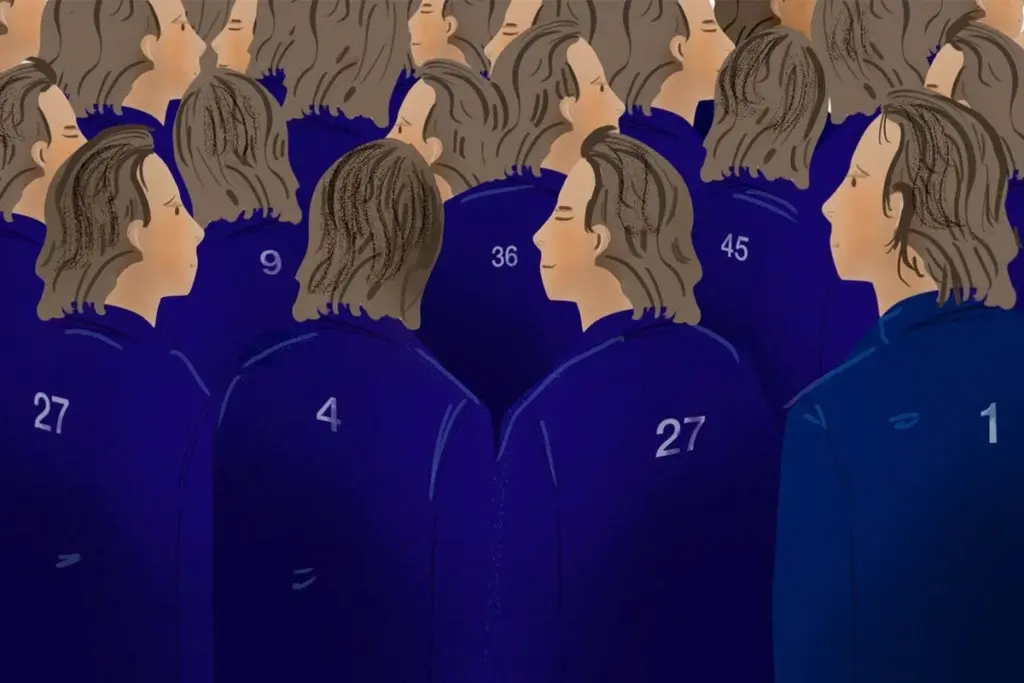
The internet, despite its unreliability, buzzes with theories about a growing number of celebrities being replaced by clones. The latest alleged body-snatch victim is actor Jim Carrey. Following his first public appearance in some time at the 51st Csar Awards in Paris on 26 February, Carrey’s altered appearance sparked a conspiracy theory. This theory posits that the person on stage was not Carrey himself but a clone, dismissing the more plausible explanations of aging and cosmetic procedures.
This alleged celebrity cloning spree is persistent. Carrey’s supposed replacement follows similar theories concerning Paul McCartney, who has allegedly been substituted by a look-alike since 1966, and Avril Lavigne, who is said to have died in 2003 and been replaced.
Contemplating the logistics of creating a viable clone of an actor like Jim Carrey presents significant challenges. To date, no human has been successfully cloned. However, for the sake of argument, let’s entertain the idea of an illicit cloning laboratory operating in Hollywood. Even with such a facility, a major hurdle remains. A clone, taken from Carrey’s cells, perhaps from the set of an upcoming film, would emerge as an infant. It would then require 64 years to mature to Carrey’s current appearance, by which time the original would be 128 years old.
Drawing a parallel to a plotline in the film *Star Trek: Nemesis*, where antagonists genetically engineer a clone of Captain Picard for accelerated aging to facilitate a replacement, highlights the technical difficulties involved. Even with advanced 24th-century technology, such a process proved problematic. This suggests that contemporary cloning conspiracies would likely encounter substantial technical barriers.
Steel for Lunch: The Science of Sonic Seasoning
Feedback admits a preference for straightforward dining experiences, often deriving amusement from scathing restaurant reviews detailing patrons’ lingering hunger after meticulously plated, minuscule dishes. This sentiment made us previously unaware of ‘sonic seasoning,’ an emerging practice of using curated sounds to enhance the culinary experience.
This concept stems from the science of sensory cross-modality, where differing senses interconnect in the brain, fostering unusual associations between sensory inputs. For some individuals, this can manifest as synaesthesia, where stimuli like colours might evoke tastes. However, even for those without synaesthesia, the auditory environment in a restaurant can significantly influence how food is perceived.
Chris Simms highlights recent research from Charles Spence and Tianyi Zhang at the University of Oxford. Their work aimed to identify “a musical match for the metallic taste,” a sensation previously undocumented and unexplored within this context.
With a predictable outcome, the sound identified as “strongly associated with a metallic taste” was “the sound of the theremin, associated with old sci-fi movies.” The theremin is an electronic instrument played without physical contact, where hand movements near two antennas generate sound via electromagnetism, producing an otherworldly wail well-suited to eerie science fiction themes.
Initially, Feedback thought this explained the apparent metallic taste when hearing the *Star Trek* theme. However, upon verification, the theremin is not present in that recording, suggesting a personal sensory anomaly. Further investigation revealed numerous recordings popularly believed to feature theremins but which actually do not, including the soundtrack of *Forbidden Planet* and The Beach Boys’ “Good Vibrations.”
This exploration has made us hungry. We are now contemplating the ideal sonic accompaniment for leftover pizza.
Pass the Bear: Nominate and Connect
Just as nominative determinism seems exhausted, reader Richard Black offers an exceptionally intricate example. His discovery began with Chanda Prescod-Weinstein’s article discussing “What is a galaxy?” Prescod-Weinstein referenced a paper by astronomer Simon Smith, detailing the discovery of a star cluster named Ursa Major III. This cluster derives its name from its location within the constellation Ursa Major, the Great Bear, as observed from Earth.
Richard recounts: “My mind (being of advanced years) immediately jumped to a song [performed] by Alan Price called ‘Simon Smith and the Amazing Dancing Bear’ which is instantly stuck in my head now.” Whether this constitutes true nominative determinism or simply a complex chain of associations, the connection is now shared.
To preempt any complaints regarding the validity of such connections, reader Richard Bartlett has provided another example: the head coach of Leicester City women’s football team is Rick Passmoor.
Do you have a story for Feedback? You can share your discoveries by emailing [email protected], including your home address. This week’s and previous Feedback columns are available on our website.