
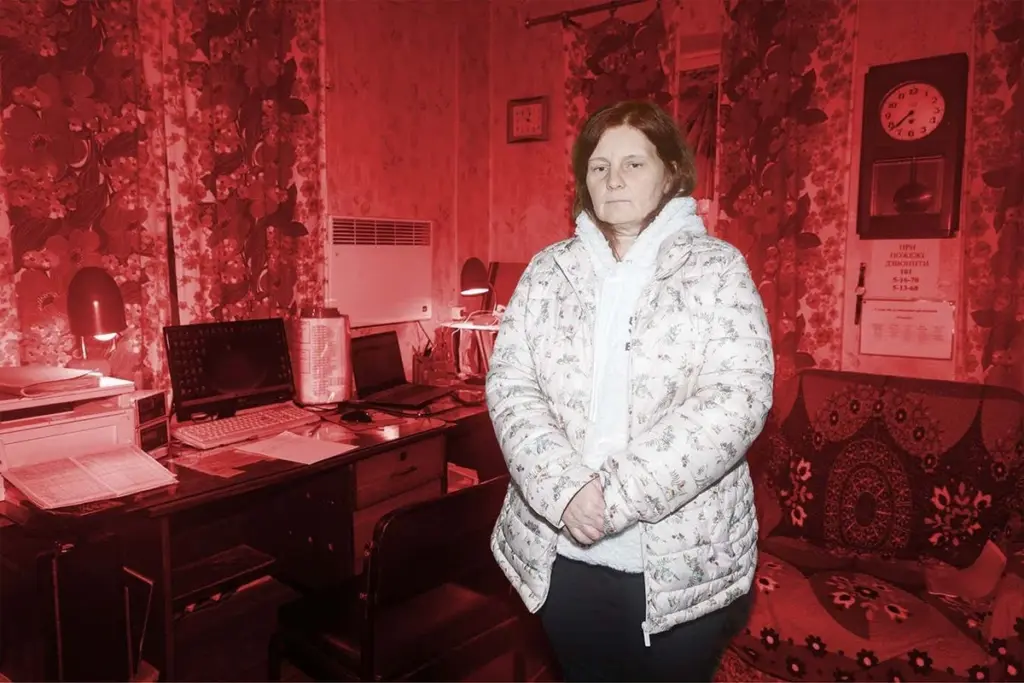
As Russian forces entered Ukraine on February 24, 2022, crossing the Belarusian border, Lyudmila Dyblenko, the head of the Chernobyl Meteorological Station, instructed her staff to evacuate. However, by the time she initiated this directive, her own opportunity to leave had vanished. Russia had already secured the exclusion zone surrounding the nuclear plant.
“I began gathering monitors and equipment, but it was far too late,” Dyblenko recounted, speaking from the modest cottage that serves as the weather station. Despite having no alternative but to remain in place, she resolutely chose to continue her critical work. This involved meticulously recording vital measurements of radiation, temperature, wind, rainfall, and other environmental factors essential for scientific monitoring across the Chernobyl area.
“I made the decision to continue my job,” she stated. “I have a profound passion for my work and a deep love for my country.”
Sustaining Operations Amidst Disruption
While the regular transmission of readings is typically an automated process, a power outage on March 9 rendered Dyblenko’s equipment inoperable. This interruption not only halted her ability to transmit data but also made heating and cooking nearly impossible.
During a winter visit, the cottage was the warmest place encountered, with a constant fire providing a comfortable working environment at Dyblenko’s small desk. Yet, this comfort was absent during the period of occupation.
Dyblenko adeptly monitored the Russian patrol schedules, noting their movements to precisely time her own actions. She then began venturing out discreetly to take manual readings. For transmitting this data, she relied on an older mobile phone, which she found possessed a more effective antenna than contemporary smartphones.
The meteorological station is situated at an elevated point within Chernobyl. Dyblenko identified two nearby locations—a lorry park and a church—where she could procure a faint signal, enabling her to relay her collected data.
“I have software designed to automatically process and send the data, but this was unfeasible during the power outage, necessitating manual operation,” Dyblenko explained.
Navigating Danger and Determination
As Dyblenko persisted with her efforts, the Russian soldiers grew increasingly audacious. On one occasion, a soldier entered her quarters demanding cognac. Dyblenko responded by addressing him with stern authority, questioning, “Is this a restaurant?” This firm approach proved effective, and the soldier departed without achieving his objective.
Her vigilance eventually led her to realize she was under constant surveillance. She observed a small red light, likely from a laser sight, emanating from the bushes on the opposite side of the clearing where the scientific instruments were located. She consciously decided to disregard its presence and continue her work as though it were not there.
Uninterrupted Data and National Recognition
Due to Dyblenko’s perseverance, there is no discontinuity in the collected data. This ensures that scientific analysis of the Chernobyl exclusion zone can proceed with completeness and accuracy, without any gaps during the period of occupation.
For her courage, Ukraine’s President, Volodymyr Zelenskyy, presented her with a medal. It is likely a rare distinction for a meteorologist during wartime, a recognition she speaks of with evident pride, and deservedly so.