
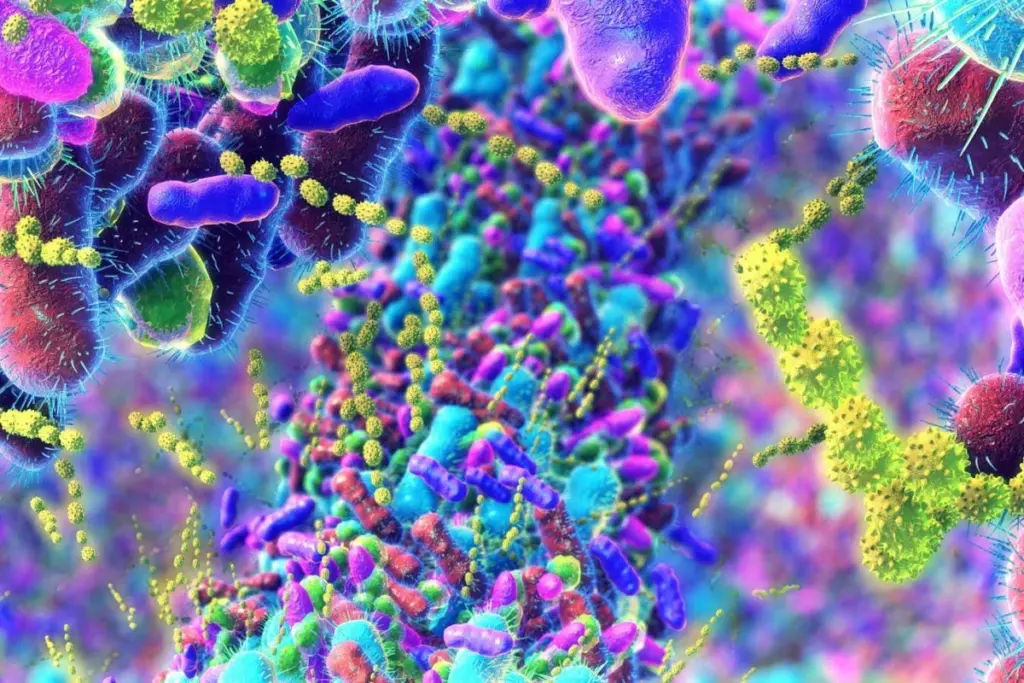
Bacteria residing in the gut possess the ability to return discarded sex hormones back into the bloodstream. Recent research indicates a significant disparity in the prevalence of these hormone-recycling bacteria: individuals within industrialized societies harbor substantially more of them compared to those in hunter-gatherer or non-industrial farming communities. This finding suggests a potential for elevated blood levels of certain sex hormones in people living modern lifestyles, which could, in turn, have profound health implications.
As Rebecca Brittain from Jagiellonian University Medical College in Poland notes, “We don’t know how the body would respond to this increased input.” However, she acknowledges that, “the implications could be quite large.”
The Mechanism of Hormone Recycling
Sex hormones, such as oestrogens, are substances that circulate within the bloodstream. When their levels become excessively high, liver cells attach a chemical tag to them. This tagging process typically leads to the hormone’s excretion, often through the digestive tract. Crucially, this tag is a sugar molecule that serves as a food source for specific gut bacteria. Consequently, certain bacteria within the gut can detach these tags using enzymes known as beta-glucuronidases.
Upon the removal of this tag, a hormone can be reabsorbed by the body, eventually re-entering the bloodstream. Existing studies suggest that a considerable proportion of excreted sex hormones undergo recycling by gut bacteria through this process.
Introducing the “Oestrobolome” and “Testobolome”
The concept of the “oestrobolome” was first introduced in 2011. This term describes the collective group of gut bacteria capable of altering oestrogens, thereby potentially influencing blood hormone levels in both men and women. More recently, the term “testobolome” has been proposed to refer to gut bacteria that can affect testosterone levels.
New Study Compares Microbial Hormone Recycling Across Diverse Populations
The latest research, conducted by Brittain’s team, involved an analysis of the oestrobolomes of hundreds of individuals across 24 distinct global populations. This comparative study utilized existing data where the gut microbiomes of these individuals had previously been sequenced. The populations included a range of lifestyles, from hunter-gatherers in Botswana and Nepal to rural farmers in Venezuela and Nepal, as well as urban residents from Philadelphia and Colorado.
Brittain’s team focused their investigation on identifying genetic sequences that code for beta-glucuronidase enzymes. By measuring both the overall proportion and the diversity of these sequences, they gathered key metrics. The findings revealed that the capacity for oestrogen recycling by gut microbes in industrialized populations is up to seven times greater than that observed in hunter-gathering and rural farming groups. Furthermore, the diversity of these bacteria was found to be twice as high in the industrialized populations.
An additional discovery from the study indicated that infants fed formula exhibited up to three times the hormone recycling capacity and up to eleven times the diversity compared to breastfed infants. Interestingly, factors such as an individual’s age, sex, and body mass index (BMI) did not appear to influence their oestrobolomes.
Future Directions and Potential Health Impacts
Brittain’s team, along with other researchers, is now actively working to determine if the enhanced recycling capacity indicated by gene sequences actually translates to higher levels of oestrogen recycling. Most importantly, they aim to ascertain whether this increased recycling culminates in elevated blood levels of these hormones. It remains a possibility that individuals’ bodies might possess mechanisms to adjust hormone levels, thereby partially or fully compensating for amplified recycling.
However, should certain individuals consistently experience higher blood oestrogen levels throughout their lives due to their microbiomes, this could significantly impact their fertility and overall health. Such a scenario might increase the risk of specific cancers, although it’s also acknowledged that these effects could, in some instances, prove beneficial. Brittain points out, “The assumption is usually that higher oestrogen recycling is harmful.” She counters this by stating, “I don’t think that’s a fair assumption. For some people with really low oestrogen levels this could be a good thing.”
Expert Commentary and Study Limitations
“It is an interesting study that adds to the growing evidence of the importance of the gut microbiome function in human health and development,” commented Katherine Cook of Wake Forest University School of Medicine in North Carolina. Cook, whose own research explores potential links between the microbiome and breast cancer risk, also highlighted certain limitations of the study. She noted that all the industrialized populations examined were located within the United States. “Additional cohorts, perhaps from Europe, could have strengthened the industrial associations,” Cook suggested.
Brittain indicated that her team intends to investigate the lifestyle factors that may be responsible for the observed differences. “We would love to know so much more about these individuals, but the data didn’t exist, so we’ll do our own study,” she stated.