
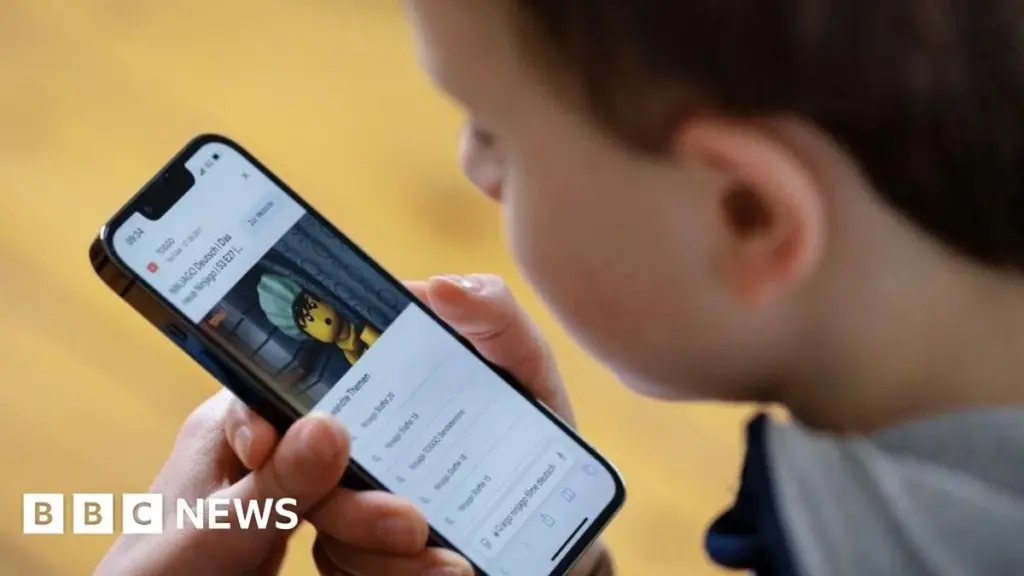
Austria has unveiled plans to prohibit the use of social media for individuals under the age of 14. This initiative places Austria among a growing number of nations exploring stricter online regulations for young people. The proposed ban follows extensive deliberations within the country’s three-party coalition government, which is led by conservative parties. However, the precise implementation timeline and methodology remain unclear.
During the announcement, Vice-Chancellor Andreas Babler of the Social Democrats articulated the government’s rationale, stating that inaction was not an option given the observed effects of social media on children, which can lead to addiction and illness. He emphasized that politicians have a duty to safeguard children, drawing a parallel between the digital sphere and regulated industries like alcohol and tobacco. “There must be clear rules in the digital world too,” Babler stated, asserting the necessity of protections against addictive algorithms for those under 14.
Babler further remarked on the existing regulations applied by other information providers to shield young individuals from detrimental content. He suggested that similar protective measures should now be extended to the online environment. Austria’s move aligns with an expanding global trend where countries are considering limitations on children’s social media access due to concerns over exposure to potentially harmful material.
This development occurs in the wake of a significant ruling in the United States, where a jury determined on Wednesday that two major social media corporations had intentionally designed addictive algorithms that negatively impacted the mental health of young users. Social media companies typically counter such criticisms by pointing to existing policies that prohibit users under 13 from joining their platforms, although the strictness of enforcement is often debated. They also highlight the availability of site versions with parental control features when faced with queries regarding user harm.
The international landscape shows a developing pattern of such restrictions. In December, Australia became the first country to implement a ban for individuals under 16. Subsequently, in January, France’s lower house of parliament approved a similar measure for those under 15. French President Emmanuel Macron acknowledged Austria’s participation in this evolving global approach via a post on X (formerly Twitter), stating that Austria was “joining the movement.”
Other European nations are also actively considering similar regulations. The United Kingdom government has initiated a public consultation period regarding a potential ban for social media users under 16. Meanwhile, Denmark, Greece, Spain, and Ireland are evaluating comparable measures. Specifically, Spain and Ireland are considering age limits for under-16s, whereas Denmark and Greece are looking at restrictions for those under 15.
Christoph Wiederkehr, Austria’s Minister of Education and a member of the liberal Neos party, underscored the damaging potential of social media, adding that individuals require education on its responsible use. Alexander Pröll, the state secretary for digitalization and a representative of the conservative ÖVP, indicated that a draft bill formalizing the ban is scheduled for presentation by the close of June. This legislation is anticipated to detail the technical mechanisms for age verification when accessing social media platforms.
Babler mentioned that Austria might adopt an existing EU system for age verification if it becomes available and is deemed ready. However, should such a system not materialize in a timely manner, Austria intends to proceed with its own national plan. Political analyst Thomas Hofer observed that the proposed ban appears to be gaining public approval.
Hofer suggested to the BBC that the government is attempting to project an image of control amidst uncertain times. “Such a ban is very popular, also among parents,” he commented, characterizing it as an issue that garners cross-party support. He noted that, in contrast, the governing parties are frequently on the defensive regarding other policy areas, including the economy, budget deficits, and rising prices.
The coalition government’s social media ban proposal is being advanced concurrently with controversial reforms to the secondary school curriculum. These reforms include an increased focus on democracy and artificial intelligence studies, alongside a reduction in the number of Latin lessons offered.