
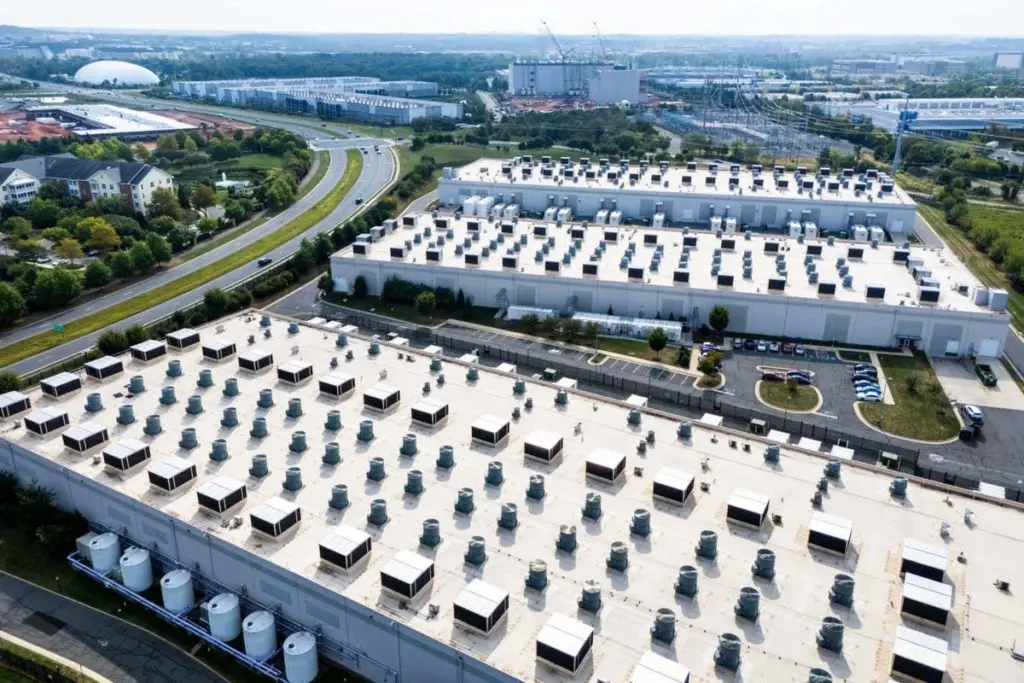
The operational heat output from data centers designed to power artificial intelligence systems is substantial enough to elevate local land surface temperatures by several degrees Celsius. This phenomenon, termed “data center heat islands,” may already be impacting an estimated 340 million individuals globally.
The global proliferation of data centers is projected to accelerate dramatically. JLL, a real estate advisory firm, forecasts a doubling of worldwide data center capacity between 2025 and 2030, with AI applications anticipated to drive half of this surging demand.
Researchers at the University of Cambridge in the UK, led by Andrea Marinoni, observed a consistent upward trend in the energy required to operate data centers. Recognizing the likelihood of an exponential increase in this demand in the near future, the team initiated a study to quantify the environmental thermal impact.
The researchers analyzed satellite data capturing land surface temperatures over the preceding two decades. This thermal data was then cross-referenced with the geographic coordinates of over 8,400 AI data centers. To isolate the impact of the data centers themselves, the study specifically focused on facilities situated away from densely populated urban centers, minimizing confounding factors.
Their findings indicated a consistent average increase of 2°C in land surface temperatures during the months following the commencement of AI data center operations. In certain instances, the observed temperature rise reached as high as 9.1°C.
This thermal effect was not confined to the immediate vicinity of the data centers. The research team detected elevated temperatures extending up to 10 kilometers away. Even at a distance of seven kilometers, the intensity of the heat increase was reduced by only 30 percent.
“The results we obtained were quite surprising,” stated Marinoni. “This could evolve into a significant issue.”
By integrating population data, the researchers estimated that over 340 million people reside within a 10-kilometer radius of these data centers. Consequently, these individuals are living in environments that are warmer than they would be in the absence of the data center’s thermal output. Marinoni noted that regions such as the Bajío area in Mexico and the province of Aragon in Spain experienced a 2°C temperature increase between 2004 and 2024 that could not be attributed to other known factors.
Chris Preist, from the University of Bristol in the UK, suggested that the study’s conclusions might warrant further refinement. He proposed that subsequent research should differentiate between heat generated by computational processes and heat originating from the building’s construction or its absorption of solar radiation. “It would be worth doing follow-up research to understand to what extent it’s the heat generated from computation versus the heat generated from the building itself,” Preist commented.
Regardless of the precise source, Marinoni affirmed that the data center undeniably contributes to increased ground temperatures. “The message I would like to convey is to be watchful about the design and development of data centers,” he advised.
Journal reference: arXiv DOI: arXiv:2603.20897