
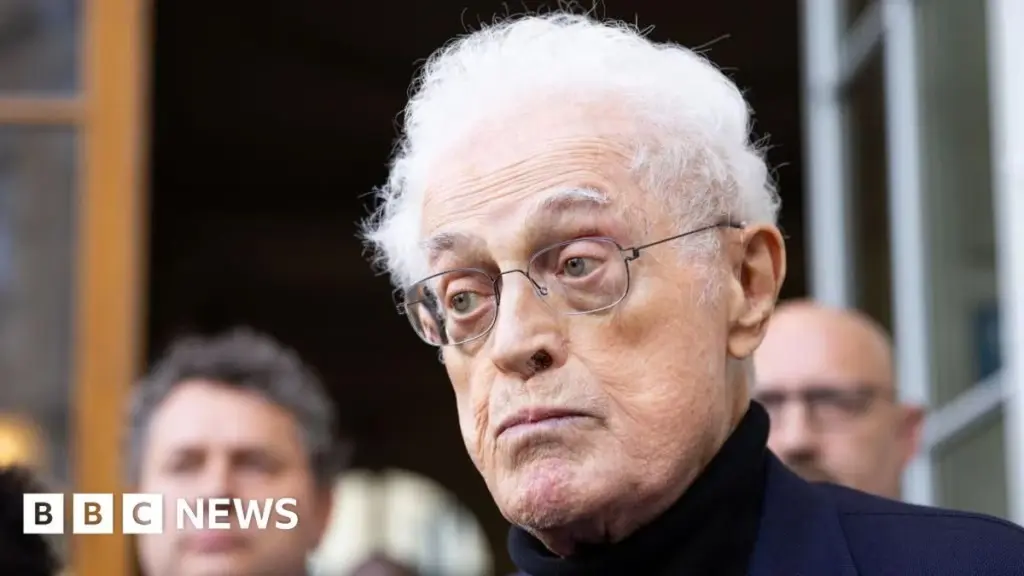
Lionel Jospin, who served as the Prime Minister of France and was a prominent figure in the Socialist Party, has passed away at the age of 88.
Beyond his tenure as head of government in the late 1990s, Jospin’s political career was significantly marked by two presidential bids. In 2002, his campaign experienced a surprising and significant setback when he failed to advance beyond the first round of voting, a result overshadowed by the far-right’s Jean-Marie Le Pen. This electoral outcome was particularly stinging, given his prior role as prime minister.
Jospin had previously held the position of prime minister for five years under the presidency of Jacques Chirac, a member of a more conservative political leaning. The political landscape shifted dramatically in 1997. Chirac, who had defeated Jospin in the 1995 presidential election, subsequently faced a snap parliamentary vote that resulted in a loss. This outcome necessitated a period of “cohabitation,” a political arrangement where the president governed alongside a prime minister from an opposing party.
During his time in leadership, Jospin forged a governmental alliance that included the Communist and Green parties. His administration implemented notable legislative changes, including the introduction of the 35-hour work week. This policy remains in effect today, although it has faced considerable criticism from the business sector.
In a move that defied pressure from both right-wing factions and religious institutions, Jospin also established the PACS, a civil union ceremony for same-sex couples. This initiative served as a precursor to legal same-sex marriage.
However, his decision to continue privatization policies, initially begun by the prior right-wing government, generated discontent among some on the left. In a notable public statement, Jospin articulated a perspective on state responsibility, stating, “People cannot expect everything from the state and the government.”
The 2002 presidential election saw a division of votes among numerous left-wing candidates in the initial round. This fragmentation led to Jospin’s vote share falling to just over 16%. He finished marginally behind Jean-Marie Le Pen, whose strong performance shocked the nation and secured his progression to the second round. Le Pen was ultimately defeated by Chirac in the subsequent runoff.
Following this humbling electoral defeat, Jospin promptly announced his departure from political life.
Early Life and Political Formation
Born in 1937 in Meudon, a suburb of Paris, Lionel Jospin was the son of a noted Socialist activist. His upbringing within the Protestant faith was often linked to his reserved demeanor, though he disavowed religion during his teenage years.
He attended secondary school in the affluent 16th arrondissement of Paris. Jospin later described feeling like an unwelcome outsider during this period. He continued his education at the prestigious ENA, France’s elite school for public administration.
In the 1960s, Jospin became involved with a Trotskyist organization known as the Communist Internationalist Organisation (OCI). This group specialized in placing its members in influential positions within government and industry. Among its recruits was Jean-Luc Mélenchon, who would later serve as a minister under Jospin and now leads the far-left La France Insoumise (LFI) party.
Although Jospin maintained that he had left the OCI a few years after joining, his past association as a far-left “entryist” remained undisclosed until the 1990s. He did not publicly acknowledge this affiliation until 2001.
The early 1970s marked Jospin’s entry into the Socialist Party (PS), which was undergoing reorganization under François Mitterrand. Mitterrand, who would later become president, actively supported Jospin’s career advancement, appointing him party secretary in 1981. That same year, Mitterrand assumed the presidency, and Jospin gained his first seat in the National Assembly.
During Mitterrand’s second presidential term, which began in 1988, Jospin initially served as Minister of Education. However, his influence diminished, and he was replaced in 1992 by Jack Lang. In the aftermath, Jospin became a critic of Mitterrand’s highly personalized style of governance.
Jospin, who was married later in life to philosopher Sylviane Agacinski (his surviving spouse), was widely respected as a principled, if somewhat technocratic, leader on the left. His approval ratings during his time in office consistently remained high when contrasted with those of contemporary political figures.
Tributes and Legacy
Following the announcement of his death on Monday, numerous tributes were paid to Lionel Jospin.
President Emmanuel Macron stated, “With his rigor, his courage and his idealism, he embodied a lofty idea of the Republic.”
Former president François Hollande, who succeeded Jospin as head of the Socialist Party in 1997, remarked, “The left mourns one of its most eminent figures, and France knows that one of its greatest leaders has just died.”