
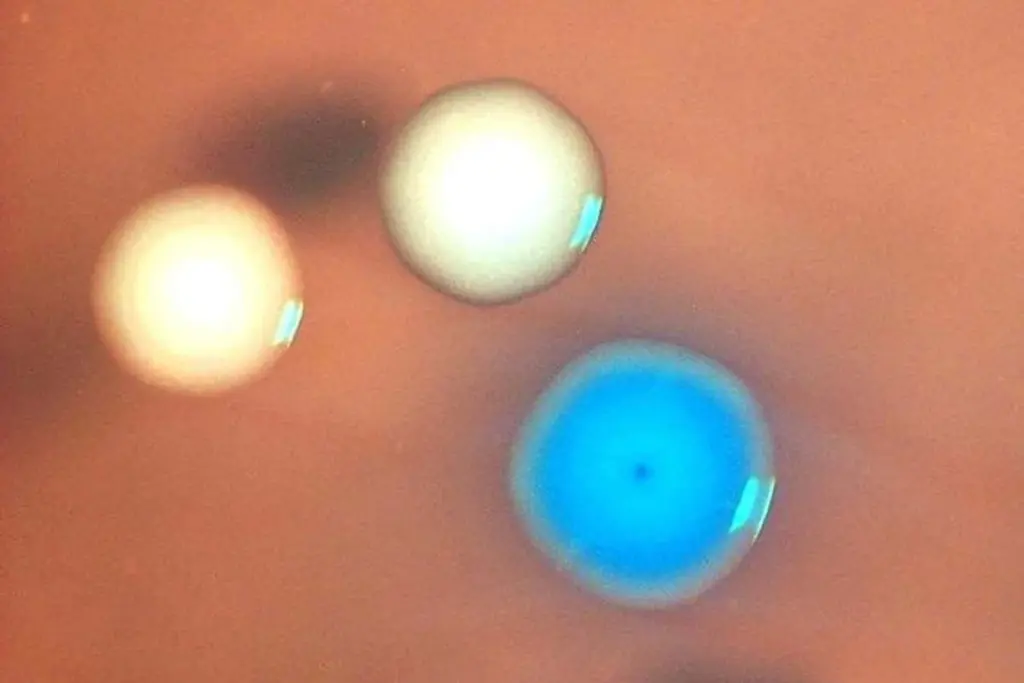
Scientists have successfully created a living synthetic cell by transplanting a complete genome into a defunct bacterium, effectively bringing it back to life. This significant advancement holds the potential to fulfill the ambitious, though still largely unrealized, promise of synthetic biology: engineering organisms for the production of sustainable fuels, pharmaceuticals, and novel materials.
Synthetic biology focuses on modifying existing biological systems or constructing entirely new ones to impart novel functionalities. A prime example involves altering yeast DNA to direct these organisms to synthesize specific desirable chemicals. In 2010, researchers took a step towards creating more adaptable engineered microbes by synthesizing a bacterial genome. This synthesized DNA was then introduced into a living cell, leading to what was then termed the first synthetic cell.
However, a significant challenge persisted. It was difficult to definitively ascertain whether the cell was truly operating under the direction of the synthetic genome or if its original genetic material was still influencing it. This uncertainty stemmed from the common bacterial practice of absorbing genetic material from their surroundings and integrating it into their own genomes, a process known as horizontal gene transfer.
Overcoming the Obstacle of Original Genomes
To circumvent this issue, John Glass and his team at the J. Craig Venter Institute (JCVI) in La Jolla, California, devised a strategy. They opted to first disable the host cell’s genome, effectively rendering it non-functional.
The researchers employed mitomycin C, a chemical commonly used in chemotherapy to damage DNA and eliminate cancerous cells. They applied this agent to cells of Mycoplasma capricolum, a simple bacterium.
“The cell remains healthy, but since it can no longer reproduce and its genome is no longer functional, it is destined to die or is already dead,” explained Zumra Seidel, a team member also affiliated with the JCVI.
Whole-Genome Transplantation and Synthetic Life
Subsequently, the team introduced a synthetic version of the genome from another bacterium, Mycoplasma mycoides, into these non-living cells. This was achieved through a method they refer to as whole-genome transplantation.
Remarkably, some of these bacteria began to grow and divide normally. Genetic analyses confirmed that they carried the synthetic genome. The researchers posit that this marks the creation of the first living synthetic bacterial cells constructed entirely from non-living components. They have dubbed these “zombie cells” due to their revival after a state of functional death.
“We take a cell without a genome, which is functionally dead. But by introducing a new genome, that cell is resurrected,” Glass stated.
Technical Prowess and Redefining Life
Kate Adamala, of the University of Minnesota, described the work as a major technical achievement. “They are delivering a genome payload into a non-living recipient, meaning they receive no assistance from the host’s own repair mechanisms. They essentially rebooted that cell,” she commented, calling it “amazing work.”
Adamala also noted that this research blurs the conventional boundaries between life and non-life. “The fundamental purpose of any true living cell is to metabolize and replicate. These functions have historically defined life. In this case, the recipient [cell’s genome] performs very little residual metabolism and certainly does not replicate. So, what then truly characterizes life?” she questioned.
Elizabeth Strychalski from the National Institute of Standards and Technology in Gaithersburg, Maryland, suggested that biological processes might inherently exist on a spectrum between life and death. “I hope this encourages people to consider life as a series of processes. By applying an engineering mindset, we can examine our living systems and identify the essential processes needed to achieve a specific goal,” she proposed.
Potential Applications and Future Directions
Thus far, the technique has only been demonstrated with Mycoplasma. However, the research team views it as a proof of principle that could accelerate the development of synthetic organisms. These engineered microbes could function as miniature chemical factories, producing therapeutic drugs or carrying out environmental cleanup tasks.
“For a considerable time, we have possessed the capability to assemble very large segments of synthetic DNA, but we haven’t been able to effectively deploy them to execute useful functions,” Strychalski explained. “It is akin to possessing a script for a Shakespearean play but being unable to stage its performance.”
Akos Nyerges at Harvard Medical School highlighted that this research addresses a key challenge in synthetic biology. “This technology renders genome transfer a more predictable and dependable strategy, potentially unlocking numerous subsequent applications in other species,” he remarked.
The transition to more complex organisms like yeast or E. coli might present difficulties. These organisms possess a cell wall, which Mycoplasma lacks, and have larger genomes. Nevertheless, Glass expresses optimism that the technique will eventually prove successful with them as well.
“If this method is viable for one type of organism, it is likely to be applicable to others,” he stated. His laboratory is actively exploring methods to remove and reintroduce cell walls. “Under appropriate growth conditions, E. coli can generate a new cell wall,” he added.
Nyerges also pointed out that biosafety concerns are an inherent aspect of synthetic biology. While the Mycoplasma species used in the study are pathogenic to goats and cattle, he stated that none of the modifications are anticipated to increase their virulence.
Strychalski emphasized that established laboratory protocols effectively minimize the risk of pathogen escape.
Reference: bioRxiv DOI: 10.64898/2026.03.13.711674