
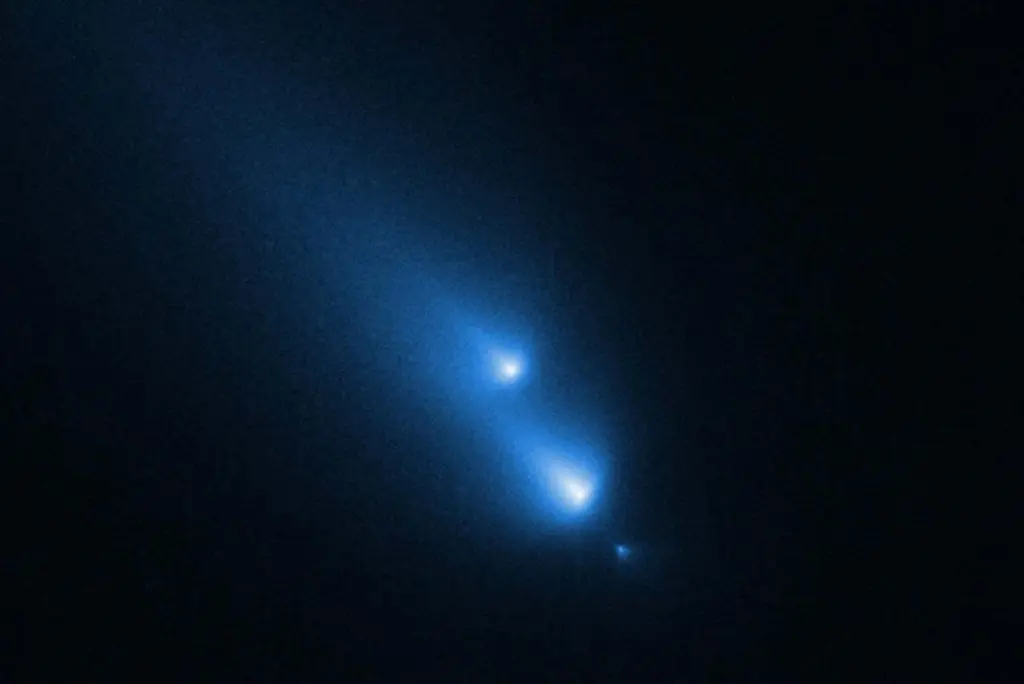
A near-instantaneous discovery has provided scientists with an exceptionally rare opportunity to study the early solar system. Following a comet’s unexpected fragmentation into four distinct pieces, researchers gained a unique window into primordial conditions. This event offered a crucial chance to examine materials formed billions of years ago.
The celestial event occurred just days before it was precisely documented. John Noonan, a researcher at Auburn University in Alabama, and his team had initially intended to observe a different comet. However, the Hubble Space Telescope’s limited maneuverability prevented them from targeting their original choice. This led them to shift their focus to a comet designated C/2025 K1 (ATLAS).
Upon directing the Hubble telescope towards K1, the astronomers were surprised to find not a single entity, but four separate fragments. Noonan noted that while comet breakups are not unheard of – observed frequently from Earth – this particular comet was not known to have disintegrated at the time of their observation. He emphasized the sheer serendipity involved in capturing these images, stating, “The amount of sheer luck that came into acquiring these images cannot be overstated.”
High-resolution imaging allowed the researchers to precisely determine when K1 began to fracture, pinpointing the event to approximately one week prior to the observations. This detailed data is crucial because clear imagery of a recently fractured comet has never been obtained before. Predicting the exact moment a comet will crack is difficult, and precisely positioning a space telescope to capture such an event is even more challenging.
Comets are composed of pristine ice remnants from the nascent stages of solar system formation. However, their outermost layers gradually erode due to prolonged exposure to sunlight and cosmic radiation. Accessing these ancient, undisturbed ices, which hold vital clues about the environment in which planets originated, requires a method to expose deeper material. A fragmenting comet naturally provides this very mechanism.
When a comet breaks apart, the internal ices are expected to begin the process of sublimation, transitioning directly from solid to gas and dispersing. Noonan explained that these extremely cold ices, exposed to heat for the first time in billions of years, should sublimate rapidly. However, this anticipated reaction did not appear to occur immediately with comet K1. A noticeable brightening, typically indicative of sunlight illuminating sublimated gas and dust, took approximately two days to appear after the comet’s fragmentation.
The reason for this observable delay remains a subject of ongoing investigation. Noonan and his team are currently engaged in a comprehensive analysis of the remaining data collected on K1. This detailed examination is expected to elucidate the cause of the delay and reveal the composition of the comet’s interior. Noonan anticipates that this work will provide “a really fascinating look into this comet and the early solar system.”
Journal reference:
Topics: