
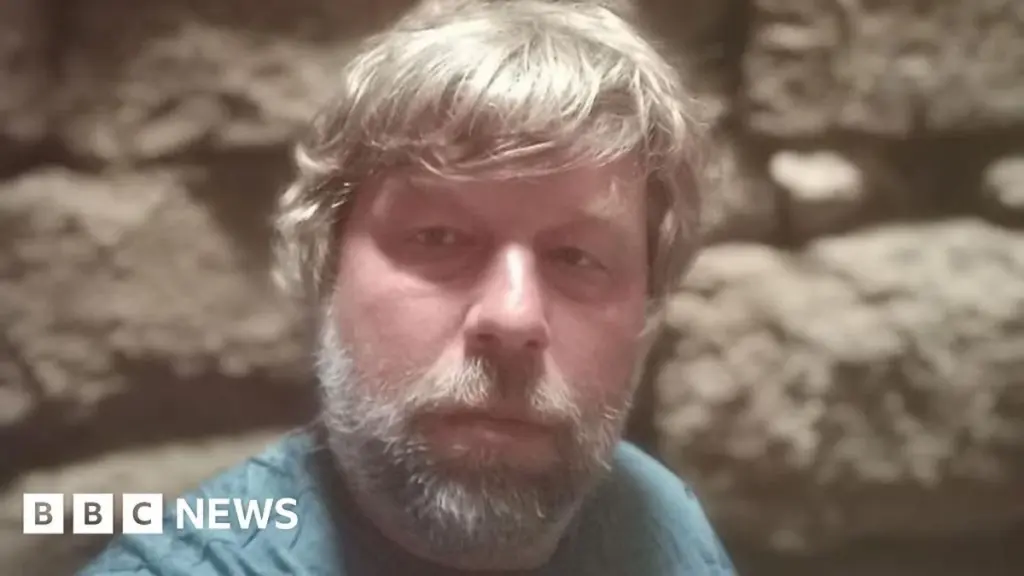
A judicial decision in Poland has paved the way for the extradition of Russian archaeologist Alexander Butyagin to Ukraine. Butyagin is currently detained in a Warsaw prison, facing allegations of conducting illicit excavations and appropriating artifacts from the ancient city of Myrmekion located in Crimea. This region, a Ukrainian peninsula, was annexed by Russia in 2014.
The ruling, issued by Judge Dariusz Łubowski, is subject to further review. Should it be upheld, the ultimate decision regarding Butyagin’s extradition will rest with Poland’s Minister of Justice. Butyagin was apprehended in Poland in December, following a request from Ukrainian authorities. He has consistently denied all charges against him. If convicted, he could face a prison sentence of up to five years.
Russia has publicly called for his immediate release, asserting that the legal proceedings against him are politically motivated. This case emerges within a broader context where European courts have, on several occasions since Russia’s full-scale invasion of Ukraine in 2022, declined to extradite Russians to Ukraine. These refusals often cite potential infringements of the European Convention on Human Rights.
Defence Cites Risk and Denies Malice
Butyagin’s defense attorney, Adam Domański, has expressed concerns that his client’s life and well-being would be endangered if extradited to Ukraine. Butyagin, a senior scholar at the Hermitage Museum in St. Petersburg, Russia’s preeminent art institution, has directed the museum’s archaeological fieldwork at Myrmekion since 1999. Myrmekion is an ancient Greek settlement established in Crimea during the 6th century BC.
Initially, Butyagin’s research activities had received official authorization from Ukraine. However, following Russia’s annexation of the Crimean peninsula in March 2014, his work purportedly continued without the consent of Kyiv. This continuation extended even after the full-scale invasion commenced eight years later.
The charges against him involve the alleged plundering of artifacts, including approximately 30 gold coins. The estimated damage resulting from these actions has been assessed at over $4.5 million (approximately £3.4 million). Prior to his arrest in Warsaw on December 4th, Butyagin had been traveling across Europe, delivering public lectures to Russian-speaking audiences. He was aware that a warrant for his arrest had been issued by a Kyiv court in April 2025, though he reportedly did not anticipate being detained within the European Union.
Disputed Justification for Excavations
Under the Second Protocol of The Hague Convention for the Protection of Cultural Property in the Event of Armed Conflict, Russia’s excavation activities in Crimea are considered illegal. Ukraine and the majority of European nations are signatories to this protocol, while Russia is not.
In statements made to the BBC via his lawyer prior to the extradition proceedings, Alexander Butyagin explained that his continued digging was intended as a means of preserving the archaeological site. While he did not contest undertaking work without official authorization from Kyiv, he strongly refuted accusations of “intentional unlawful destruction, ruin, or damage” to historical monuments. He argued that ceasing their work would have compromised the monument’s condition, leaving it vulnerable to natural deterioration, vandalism, and looting.
Ukrainian Perspective on Cultural Heritage
Conversely, Evelina Kravchenko, a senior researcher at Ukraine’s Institute of Archaeology, stated that Russian archaeologists should be prohibited from conducting excavations in Ukrainian territory under occupation. Kravchenko conveyed to the BBC her lack of personal animosity towards Butyagin but expressed the belief that his activities, conducted as a Russian citizen working in Crimea, had been detrimental to the region’s cultural heritage.
In November 2024, Ukraine’s Security Service (SBU), in conjunction with Ukrainian police and the prosecutor’s office, announced the gathering of evidence against a Russian national accused of looting Ukrainian cultural heritage in occupied Crimea. The SBU identified the individual as the head of the Hermitage’s archaeology department, though his name was not publicly disclosed at the time. The archaeologist is suspected of engaging in illegal excavations at a heritage site and causing the destruction, ruin, or damage of cultural heritage properties.
Butyagin remains in a detention facility in Warsaw, and a request for his release on bail has been denied. When asked about the possibility of resuming excavation work in occupied Crimea should his appeal be successful, the archaeologist offered no direct answer. He stated only his desire to enact significant changes in his life and his priority of returning to his family.