
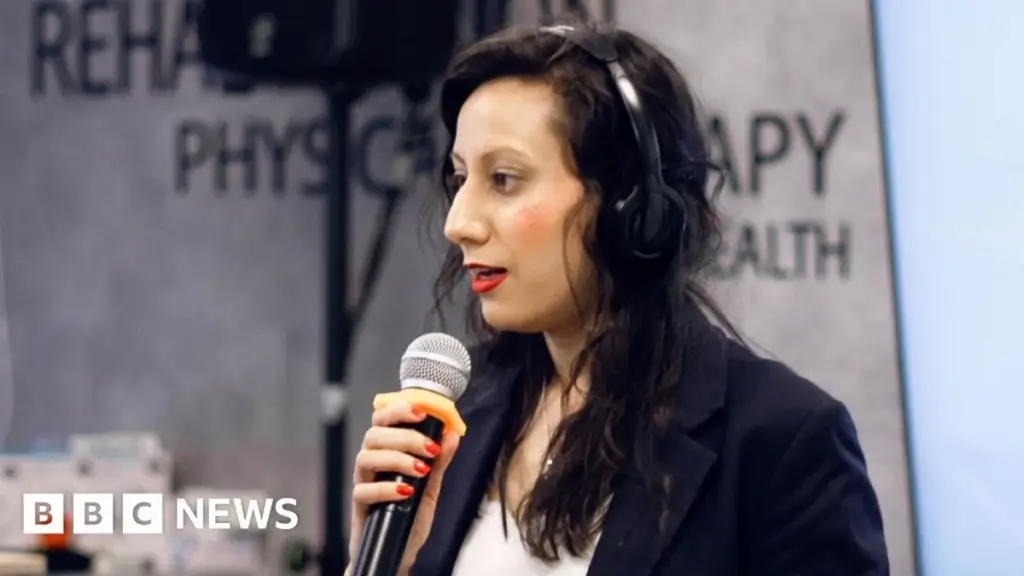
A Member of Parliament, who is also a practicing National Health Service physiotherapist, has spearheaded an unprecedented visit to deliver specialized training to Ukrainian clinicians. Sonia Kumar, who secured the Dudley seat for the Labour party in the 2024 general election, organized the initiative following a poignant trip to Ukraine in September. During that earlier visit, she encountered the remarkable resilience and fortitude of injured Ukrainian soldiers, a firsthand experience that profoundly affected her.
President Zelensky reported last month that 55,000 Ukrainian soldiers have sustained fatal injuries on the battlefield, with a significantly larger number wounded. Some reports, however, suggest the cumulative casualty figure could be as high as 200,000.
Following an extensive journey, including travel on what she described as a “rickety train,” Kumar reported successfully delivering training to 25 healthcare professionals. The instruction focused on addressing injuries commonly sustained during the ongoing conflict.
Kumar explained that her initial focus was to identify conditions such as back injuries, neurological deficits, shoulder injuries, and ankle sprains – ailments familiar in a UK clinical setting. Yet, she quickly recognized the starkly different context for those actively serving on the front lines.
“If you sustain an ankle injury that rapidly swells, how do you manage that situation efficiently to get a soldier back into active combat?” she questioned, illustrating the unique challenges faced by military medics.
She also shared encounters with patients who had suffered severe brain injuries or limb amputations. Despite their profound trauma, these individuals expressed a resolute willingness to face such risks again, a sentiment Kumar found deeply moving.
Kumar indicated that discussions were underway regarding further avenues for the United Kingdom to support Ukrainian health professionals. “Mental well-being is equally crucial; it is intrinsically linked, progressing hand-in-hand,” she remarked. “However, they communicated to me that they also require practical assistance.”
Healthcare staff in Ukraine conveyed that their immediate needs were not for sympathy, but rather for enhanced skills, collaborative partnerships, and tangible support. Kumar characterized the mission as an exemplar of international cooperation at its finest. She expressed hope that this visit would inaugurate a sustained, long-term partnership between British and Ukrainian healthcare teams.
“Because even amidst the profound adversity of war, collaborative efforts such as this possess the capacity to help restore lives,” she stated.
The training program, facilitated by Kumar, took place at the Institute of Vertebrology and Rehabilitation in Kyiv. The initiative was conducted in collaboration with the Patients of Ukraine Charitable Foundation.
Tanisha Sandhu, one of the UK physiotherapists involved in delivering the program, commented on the severity of the injuries being treated. “The conditions clinicians are confronting here are exceptionally complex,” Sandhu noted. “Our ability to share therapeutic techniques that could accelerate recovery or alleviate pain holds the potential to dramatically alter an individual’s quality of life.”
Ukraine’s Deputy Minister of Health, Yevheniy Honchar, emphasized the critical importance of rehabilitation services. “Rehabilitation stands as our paramount priority,” Honchar stated. “We are experiencing an immense demand within Ukraine specifically due to the war.” He expressed gratitude to the visiting delegation, adding, “Enhancing the skills and knowledge base, guided by esteemed experts from Great Britain, is of considerable importance.”