
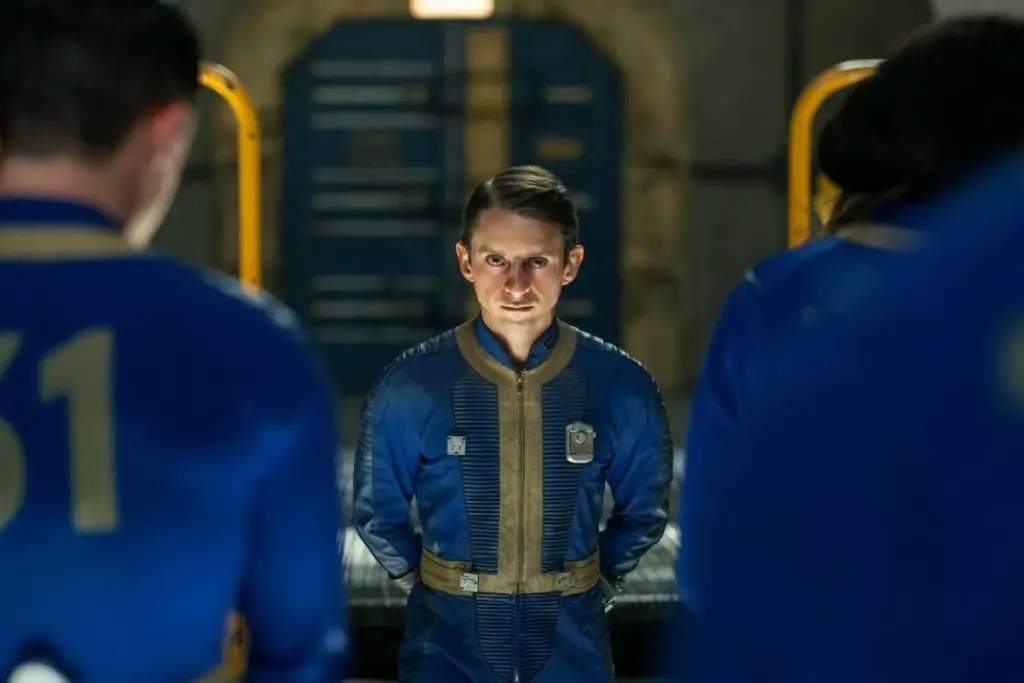
This year has been notably defined by the presence of fictional bunkers, particularly on television. The trend gained momentum in January with the second season of Amazon Prime Video’s “Fallout.” This series presents a vibrant alternate history unfolding centuries after a nuclear apocalypse devastated the United States. A select few survive in underground “vaults,” while the majority inhabit a desolate surface world populated by monsters and mercenaries. The narrative follows Lucy, a vault dweller searching for her father, Hank, accompanied by the gruelly charming, irradiated gunslinger known as The Ghoul.
Following close behind, Disney+’s “Paradise” returned for its second season this month. The cataclysm in this series is a volcanic-induced mega-tsunami that has brought an end to civilization. Consequently, America’s elite have retreated to a location beneath a mountain in Colorado. Secret service agent Xavier Collins, having identified the killer of former US President Cal Bradford, now seeks his wife, Terri, among rumored survivors, while political maneuvering continues within the Colorado bunker.
Later this year, Apple TV’s “Silo” is set to release its third season. This third apocalyptic scenario stems from a planet rendered uninhabitable by toxic atmospheric conditions. The residents of the “silo” are confined to a grim, rigidly stratified society, their history erased as records were destroyed 140 years prior. Only the illicit trade in “relics” from a bygone era offers glimpses of the past. However, when engineer Juliette uncovers evidence of a conspiracy within the silo’s leadership, she begins to question the supposed toxicity of the surface world.
The allure of fortified, subterranean living extends beyond these series. Audiences can find additional fictional bunkers in films like “Greenland 2: Migration” or the musical “The End.” It is also noteworthy that the 1995 novel “I Who Have Never Known Men,” set in an underground prison, achieved significant popularity on TikTok in 2024.
While the theme of end-of-world scenarios and protective shelters is not new—with roots tracing back at least to Arthur Conan Doyle’s 1913 novel “The Poison Belt”—its current widespread appeal reflects a palpable and understandable anxiety about the state of our world. This anxiety is fueled by a society where responsibility is increasingly privatized and where personal safety often depends on being exceptionally smart, wealthy, or fortunate. It fosters an environment where the instinct to isolate oneself from external threats is often tacitly encouraged. The persistent rumors of real-life celebrities acquiring doomsday escape properties further underscore this sentiment.
Regardless of the specific subgenre of bunker fiction preferred—be it the irreverent violence of “Fallout,” the sophisticated murder mystery of “Paradise,” or the melancholic intrigue of “Silo”—the recurring motif is a descent into the earth. This fixation on visions of global annihilation and a rapidly diminishing future appears to be a defining characteristic of contemporary storytelling.
There are two primary interpretations of this phenomenon. One perspective suggests a collective resignation, a loss of faith in humanity’s ability to improve society, and an acknowledgment of defeat in the struggle against inherent selfishness. In this view, the only solace found is in meticulously imagining the specifics of societal collapse and endlessly replaying a past order through the experiences of a privileged few within their fortified havens.
The alternative perspective, which holds more favor, posits that these narratives represent a period of reckoning with the necessity for profound, transformative change, akin to a societal purification. The beloved characters in bunker fiction arguably would not exist without such cataclysmic events. Therefore, finding compelling characters in “Fallout,” “Paradise,” and “Silo” can be interpreted as a reflection of underlying hope within these end-of-world narratives.
Featured Content
- TV Series:
- Fallout: Season 2 (Amazon Prime Video)
- Paradise: Season 2 (Disney+)
- Silo: Season 3 (Apple TV)
- Book:
- Bunker (by Bradley Garrett, Penguin Books)
Bradley Garrett’s non-fiction work, “Bunker,” offers a compelling exploration of end-times culture, presenting a more nuanced view than the seemingly fatalistic mindset of doomsday preppers.
Bethan Ackerley is a subeditor at New Scientist, with a particular interest in science fiction, sitcoms, and all things eerie. She can be followed on X @inkerley.