
Train drivers across Spain are preparing to commence a three-day national strike starting Monday. The industrial action stems from concerns regarding the perceived lack of safety assurances within the country’s railway infrastructure.
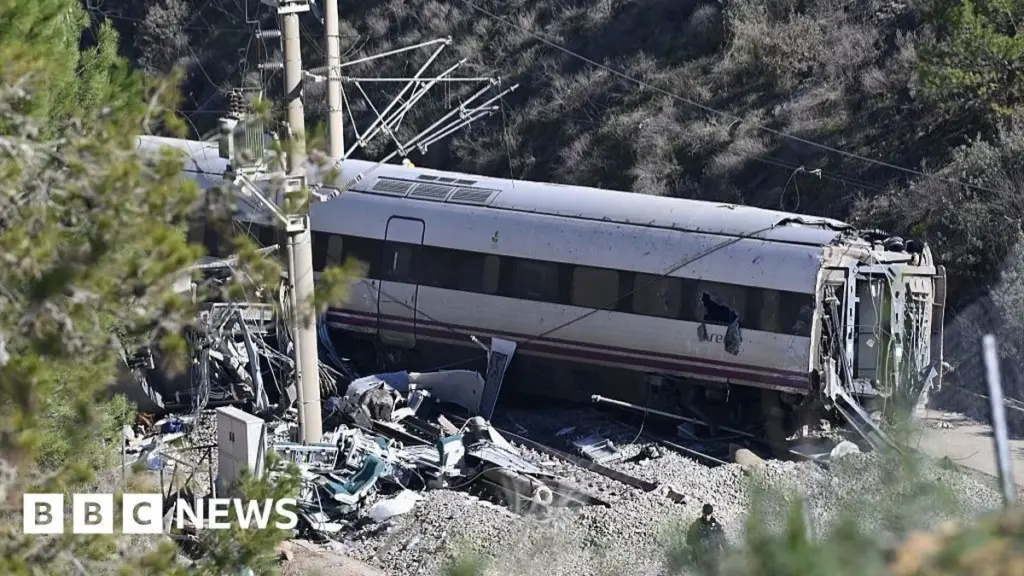
This strike follows two serious train collisions that occurred in January. The first incident transpired in Adamuz, in southern Spain, resulting in 46 fatalities. A mere two days later, another crash near Barcelona claimed the life of a train driver and left dozens injured.
These twin accidents have inflicted significant travel disruptions. They have also raised questions about the reliability of Spain’s rail network, which has historically been praised.
Union Demands and Network Conditions
Semaf, the national union representing train drivers, is advocating for the recruitment of additional personnel. Furthermore, the union is calling for increased investment and enhanced maintenance, citing what it describes as the “constant deterioration of the rail network.”
Following these two collisions, subsequent safety assessments by authorities identified further issues and instances of inadequate maintenance impacting several rail lines.
Spain’s Prime Minister, Pedro Sánchez, is scheduled to address parliament later this week to answer questions concerning the identified failures within the railway system.
Details of the Accidents
Adamuz Collision
The accident in Adamuz on January 18 involved a high-speed train that derailed and collided with another train traveling in the opposite direction. This event marked the country’s most severe rail disaster in over a decade.
A preliminary report from the Civil Investigation Commission for Railway Accidents (CIAF) indicates that grooves observed on the wheels of the derailed train, as well as those on three preceding trains, suggest a track fracture occurred prior to the train passing over it.
Catalonia Derailment
Just two days after the Adamuz incident, a local train derailed in Catalonia. The derailment was caused by a collapsed wall, leading to the death of a trainee driver and injuries to at least 37 passengers.
Rail officials theorize that the wall collapsed as the train approached, striking the driver’s cabin first. This impact subsequently caused substantial damage to the lead carriage, which carried the majority of the injured passengers.
Semaf has previously asserted that these collisions represent “a turning point in demanding that all necessary actions be taken to guarantee the safety of railway operations.”
Government Response and Investment Scrutiny
The level of funding allocated to the rail network has become a focal point of public and political discussion. The current government, led by the Socialist party, has attempted to counter criticisms regarding investment levels.
As evidence, the government highlighted a €700 million investment aimed at modernizing the Madrid-Andalusia line in recent years. The section of track where the Adamuz accident occurred was reportedly part of this renovation project.
Transport Minister Óscar Puente stated, “We’re not looking at a problem of lack of maintenance, we’re not looking at a problem of obsolete [infrastructure], and we’re not looking at a problem of lack of investment.”