
The viral sensation of Pope Francis in a trendy puffer jacket in 2023, later revealed to be an AI-generated image, serves as a recent, stark reminder of how easily fabricated visuals can spread online. However, the manipulation of photographs is far from a new phenomenon. An exhibition delves into humanity’s long-standing practice of altering images, a trend that began almost as soon as photography itself was invented.
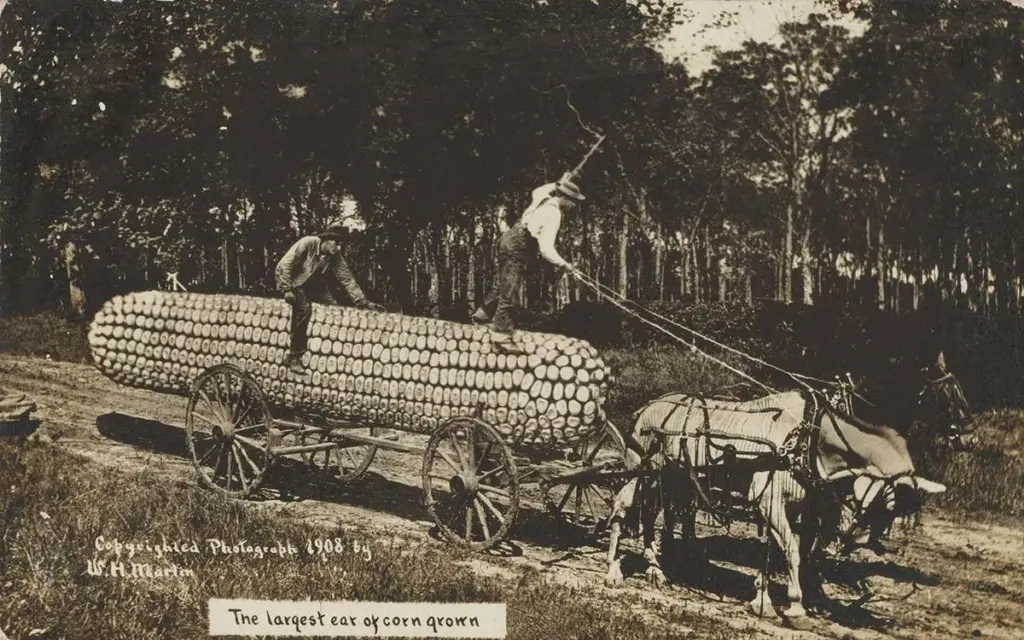
Consider the striking 1908 photograph of an enormous ear of corn. This image, created by W. H. Martin, is part of a collection of postcards that showcased exaggeratedly large farm produce and livestock. Martin’s technique involved photographing individual elements of his scenes. He then meticulously cut and pasted these components together, subsequently re-photographing the composite to create a surreal, “created” image.
This piece is featured in the exhibition titled FAKE! Early Photo Collages and Photomontages, running until May 25th at the Rijksmuseum in Amsterdam, The Netherlands. The exhibition also includes a photomontage postcard from before 1908, depicting a speculative future New York where airborne vehicles are commonplace. Although appearing hand-drawn due to later colorization during printing and subtle retouching of outlines, its foundation remains photographic.
The Rijksmuseum notes that photographers began experimenting with cutting and pasting images as early as the 1860s. The exhibition meticulously charts the evolution of photographic manipulation from this period through to the conclusion of the Second World War.
Among the exhibits is a disquieting image from approximately 1900-1910, featuring a wheelbarrow laden with an oversized human head. This piece exemplifies the creative, if sometimes unsettling, applications of early photo montage techniques.
Furthermore, the era’s fascination with colossal agricultural products is revisited in a 1908 postcard. This particular image depicts geese, significantly larger than their human handlers, being driven towards a market, highlighting a recurring theme of amplified scale in early manipulated photography.