
The contemporary global landscape is marked by significant instability. Europe is now experiencing the fifth year of its most severe conflict since the Second World War, unfolding in Ukraine. Concurrently, escalating petrol prices and the economic repercussions of the conflict in Iran are placing considerable strain on the global economy. Furthermore, diplomatic relations with the United States, historically a key ally of the UK, have become increasingly strained.
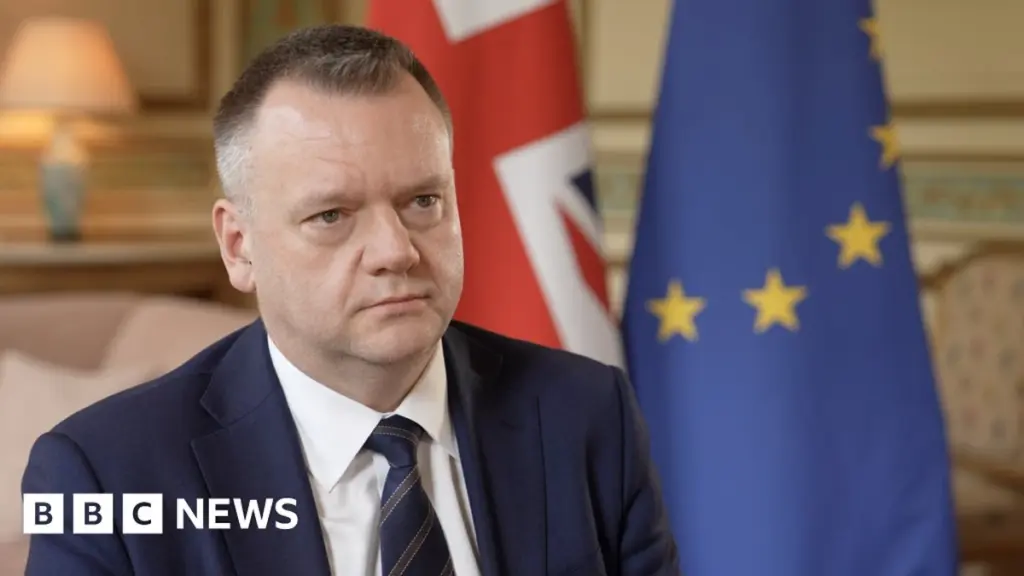
Against this backdrop, the UK’s Minister for EU Relations, Nick Thomas-Symonds, articulated the government’s strategy. He described an “ambitious” and “ruthlessly pragmatic” approach aimed at fostering closer ties with European neighbours, specifically within sectors identified as being in the UK’s national interest. This perspective was shared during a discussion at the residence of the UK ambassador to the EU in Brussels.
Thomas-Symonds expressed his belief that prevailing geopolitical turbulence has fostered a greater openness among the UK public towards closer relations with the European Union. “I do find a support for closer UK–EU relations… I think there is a particular imperative at the moment… we find ourselves in a dangerous situation in the world,” he stated, highlighting a perceived imperative driven by global insecurity.
Security and Defence Cooperation Deepens
The UK’s enhanced cooperation with other European nations is already evident in areas of security and defence. A notable example is the coordinated response to the situation in Ukraine, where the UK has taken a leadership role. Additionally, there is a stated intention to collaborate on the joint procurement of armaments. This initiative follows commitments made by European leaders to the United States, pledging to bolster their own continental defence capabilities.
Focus on Economic Reintegration and Reducing Trade Barriers
Beyond security, Thomas-Symonds is also directing attention towards economic linkages. Nearly a decade after the Brexit referendum, Prime Minister Sir Keir Starmer has committed to streamlining post-Brexit regulations and reducing associated costs for British companies engaging with the EU, the UK’s principal export market.
By the summer, coinciding with the second post-Brexit EU-UK summit, the UK anticipates finalizing several agreements with Brussels. These include a food and agricultural safety accord intended to alleviate burdens for businesses exporting products such as sausages to Northern Ireland and the wider EU. Furthermore, discussions are underway for a carbon emissions trading agreement and a youth “experience” programme. This programme would facilitate limited periods of work or study in each other’s territories for young individuals from both the EU and the UK.
Earlier this week, an announcement confirmed the UK’s reentry into the EU’s Erasmus+ scheme, a move expected to benefit a greater number of young Britons seeking educational opportunities across the bloc.
Navigating Brexit Red Lines and Political Disagreement
The government maintains that these initiatives are consistent with the outcome of the Brexit vote and its stated manifesto commitments, specifically avoiding the UK’s return to the EU, its single market, or its customs union. However, leaders from Reform UK and the Conservative Party express a differing view. They argue that “aligning” with the EU necessitates the UK adhering to EU rules, thus positioning the UK as a rule-taker rather than a rule-maker. This perspective contrasts with the core promise of the Leave campaign a decade ago, which emphasized “taking back control” from Brussels.
Conversely, the government asserts that its strategy of selectively engaging in deals with the EU in areas that serve UK interests is, in fact, an exercise of post-Brexit national sovereignty. Prime Minister Starmer plans to introduce new legislation later this year, providing ministers with a streamlined process for adopting draft laws that align with future European standards. The objective is to ensure a unified market for specific goods and services.
Nigel Farage has described the proposed bill as a “backdoor attempt to drag Britain back under EU control.” Kemi Badenoch has accused ministers of lacking resolve, stating, “If you want to be in the EU, come out and say we want to go back into the EU.”
The government firmly denies any intention of rejoining the EU. Meanwhile, the Liberal Democrats and the UK’s Green Party contend that the government is not pursuing closer EU relations with sufficient vigour to benefit the British economy. Critics suggest that the Labour party is caught between economic necessity and political constraints.
The Financial and Regulatory Costs of Closer Ties
All of Labour’s initiatives to forge closer ties with the EU come with associated costs. While Brussels welcomes a more engaged UK, it states that its agreements are negotiated in its own interests.
The Erasmus+ scheme alone is projected to cost the UK taxpayer £570 million in its first year. The UK’s participation in the EU’s Horizon science programme, agreed upon by the previous government, amounts to £2.2 billion annually. Proponents note, however, that the UK has become a leading beneficiary of this flagship EU research programme since rejoining two years ago.
Thomas-Symonds reiterated his commitment to only pursuing agreements with Brussels that serve the UK’s national interest. Regarding artificial intelligence (AI), he emphasized the UK’s preference for an independent approach distinct from Brussels. He has also, to date, declined to join the EU’s defence loan scheme, SAFE, due to its membership cost of €2 billion (£1.7 billion), which represents approximately 10% of the UK’s annual defence budget.
EU’s Non-Negotiable Terms and the Single Market Dilemma
The EU can, however, impose other conditions. French MEP Nathalie Loiseau, a close associate of President Emmanuel Macron, indicated that EU terms and conditions remain consistent with those in place prior to the UK’s Brexit vote ten years ago. She explained that the more closely the UK seeks to integrate with the EU’s single market, the greater its obligation to align with EU laws and regulations.
Should the UK move closer to the single market, Brussels could potentially demand freedom of movement, a stipulation that the UK government has identified as a significant red line. An illustration of this is the UK’s current efforts to gain access to the EU’s internal electricity market. Thomas-Symonds highlighted the paramount importance of energy security for the UK, particularly in light of soaring energy prices following Russia’s full-scale invasion of Ukraine and disruptions to oil tanker traffic in the Strait of Hormuz.
Brussels, however, has stipulated that access to the electricity market necessitates a financial contribution to the EU cohesion fund, which supports the economic development of less prosperous EU regions. When questioned about the UK’s potential acceptance of this requirement, Thomas-Symonds characterized it as the EU’s initial negotiating stance, seemingly deflecting the issue.
Thomas-Symonds has been reluctant to detail future sectors where the UK intends to align with the EU. In the past, the UK sought to negotiate a deal on chemicals, a proposal that Brussels did not initially favour.
Critiques of Trade Deal Focus and Economic Realities
A critique of the government’s current focus on goods-based agreements with the EU is that they may be insufficient to significantly impact the UK economy, which is largely service-based, as Chancellor Rachel Reeves has stated she wishes to achieve. Thomas-Symonds, however, projected that the food deal and the carbon emissions agreement alone would generate £9 billion for the UK economy by 2040. This projection extends to a distant future.
The European Commission, the EU’s executive body responsible for trade negotiations, has also faced criticism. Several countries with substantial trade relations and a perceived affinity for the UK have privately expressed that while safeguarding EU interests is crucial, the Commission has been overly rigid. They suggest a need for greater imagination and flexibility in negotiating bespoke agreements with the UK.
This sentiment is particularly pertinent, according to EU diplomats, given the economic and security challenges posed by China, Russia, and recently, the United States.
The Evolving “Special Relationship” and Trade Autonomy
The government’s increasingly public efforts to dismantle barriers with the EU prompted a question about whether this signifies an acknowledgement that the UK’s long-cherished “special relationship” with the US is waning. President Donald Trump has, at various points, criticized and publicly addressed the UK Prime Minister regarding his stance on the war in Iran.
“The special relationship [between the UK and the US] is deep and enduring,” responded the Europe minister, asserting that the UK does not prioritize one ally over another. However, a persistent question remains: as the UK aligns itself more closely with EU regulations across different sectors, the realization of the Brexit objective to freely pursue trade deals with other nations, including the United States, may become more complicated.
Last May, former President Trump and Prime Minister Starmer announced a limited bilateral trade agreement. This accord modestly expanded agricultural access for both countries and reduced certain punitive US tariffs on British car exports, while extensively maintaining the US President’s 10% tariffs on broader British exports. This week, the US President even threatened to revoke this limited agreement as a reprisal for the UK’s refusal to participate in military actions related to Iran.