
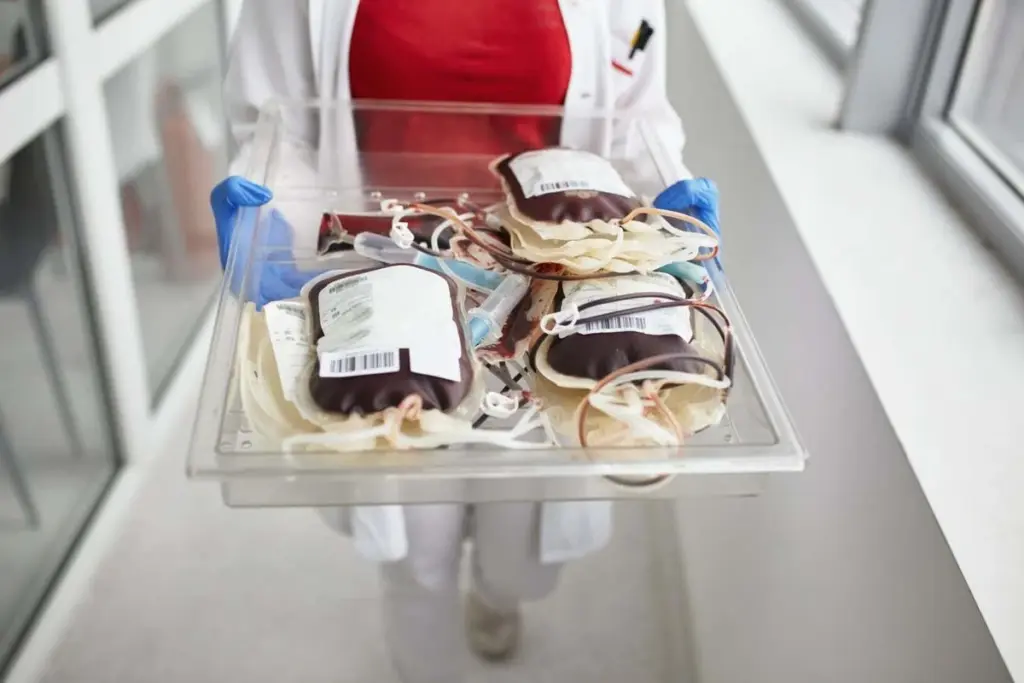
A hospital in the United States has agreed to a unique patient requirement for blood transfusions: the blood must come from donors who have not received a COVID-19 vaccine. This stipulation has resulted in significant delays for patients needing treatment, with one individual experiencing a life-threatening medical reaction as a consequence.
Jeremy Jacobs of Vanderbilt University Medical Center in Nashville, Tennessee, noted that these requests were frequently fueled by misinformation concerning vaccine safety and the blood supply, rather than by evidence-based concerns related to transfusions. He emphasized that the community blood supply is already subject to stringent regulation and thorough screening processes, and there is no scientific evidence to suggest that requesting unvaccinated blood enhances transfusion safety.
Jacobs and his team conducted an analysis of blood donations at the Vanderbilt center between January 2024 and December 2025. Their findings indicated that 15 patients, or their designated caregivers, had specifically requested directed donations. This practice involves blood being donated by a chosen individual, often a family member, in contrast to being sourced from a general blood bank.
In the United Kingdom and Australia, directed donations are generally permitted only under exceptional circumstances, such as when a patient has a rare blood type and a suitable donor from the blood bank is unavailable. While the practice is allowed more broadly in the U.S., it is typically discouraged, with significant variations in policy across different medical centers.
The researchers discovered that all 15 patients had requested directed donations specifically because they sought blood from a donor whom they knew had not been vaccinated against COVID-19. According to Jacobs, the vaccination status of anonymized donors is not recorded or disclosed by blood banks.
These specific requests led to delays in necessary medical treatments, placing the patients at risk. In the most severe instance, a patient’s hemoglobin levels—the protein responsible for oxygen transport in the body—decreased to a critical point, which can result in organ damage and failure. Another patient developed anemia due to these delays.
Jacobs explained that directed donation introduces greater operational complexity compared to utilizing the routine blood supply. It necessitates additional efforts in coordination, collection, processing, tracking, and timing.
While all donated blood undergoes rigorous screening before transfusion, directed donations have also been associated with an increased risk of infection. This is partly because they are often a one-time event, unlike donations from repeat donors within the community who may be known to blood banks and thus potentially more cautious about their exposure to infections.
Directed donations saw a surge during the HIV/AIDS epidemic in the 1980s and early 1990s. Their prominence increased again with the introduction of mRNA COVID-19 vaccines. These vaccines work by introducing a portion of SARS-CoV-2’s genetic material into the body, prompting cells to produce one of the virus’s proteins. The immune system then responds by targeting cells that display this protein. Should the individual contract SARS-CoV-2 later, their immune system is primed to combat the virus.
Extensive research has consistently demonstrated the safety and high efficacy of these vaccines. However, misinformation has falsely linked them to fertility issues and other health concerns. Some conspiracy theories have erroneously claimed that these vaccines contain microchips or alter an individual’s DNA.
In 2025, a study confirmed the safety of receiving blood from individuals vaccinated against COVID-19. Ash Toye from the University of Bristol, UK, stated that requests for unvaccinated blood reflect broader public uncertainty about vaccines, rather than any recognized transfusion risk.
This issue is not confined to the Vanderbilt center. Last year, the Welsh Blood Service reported that individuals were inquiring about the vaccination status of blood donors. A petition was also submitted to the UK government proposing the segregation of blood donations based on vaccination status, which was ultimately rejected. Meanwhile, in Oklahoma, legislators have put forth proposals for a mandate allowing patients access to unvaccinated blood.
Jacobs commented that these requests highlight how misinformation can create substantial operational challenges for patients, hospitals, and blood providers. He added that these situations also underscore the importance of addressing patient concerns with respect and careful consideration, even when those concerns lack evidential support.