
Gleaming graphs often depict a future where carbon dioxide levels and global temperatures decline by the century’s end. This projection hinges on a strategy: harvesting plants, utilizing them for energy, and subsequently capturing and storing the emitted CO2. This process, known as bioenergy with carbon capture and storage, or BECCS, is now revealing itself as a significant challenge.
BECCS is not being implemented on the necessary scale. Its prohibitive cost is a major factor. Furthermore, undertaking such a large-scale operation would have devastating consequences for biodiversity. Perhaps most critically, the technology itself is proving ineffective. Instead of reducing CO2 emissions within critical timeframes, it actually exacerbates them.
The concept of BECCS first emerged in 2001. Researchers in Sweden considered it as a potential avenue for paper mills to earn carbon credits. By 2005, climate modelers adopted this theoretical idea, viewing it as a means to justify scenarios where global temperatures could be brought back down after exceeding the 1.5°C threshold. The Intergovernmental Panel on Climate Change (IPCC) highlighted models in its fifth report that assumed vast quantities of carbon could be removed through BECCS. A technology that was, in essence, non-existent had somehow become the proposed global solution.
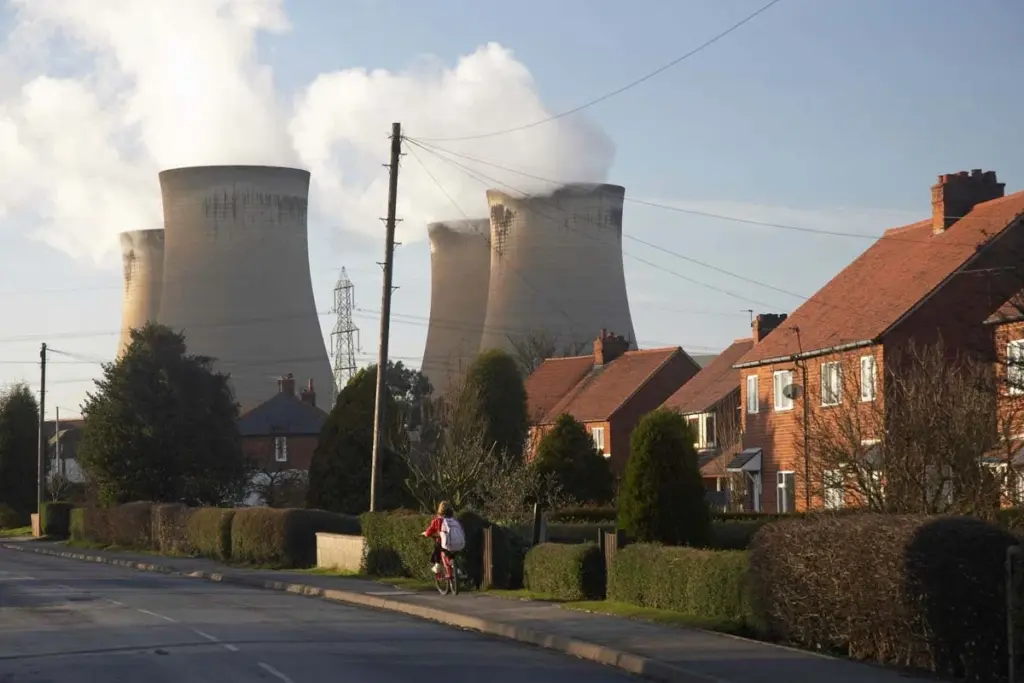
For a period, it appeared BECCS might materialize. In 2015, the UK energy company Drax announced plans to convert a large coal-fired power plant to run on wood pellets, with subsequent carbon capture and storage. This project was positioned as a flagship initiative.
However, a decade later, the Drax plant is indeed burning wood pellets, but carbon capture remains absent. Recent reports indicate that the company has postponed its carbon capture plans. Consequently, what was hailed as the world’s leading BECCS project is now either defunct or in serious jeopardy. Drax representatives have stated that while BECCS remains a potential option for the site, it is a much longer-term prospect than initially anticipated.
While a few smaller projects are being considered globally, it is evident that BECCS is not progressing as anticipated from a decade ago. A primary reason for this stagnation is the substantial government subsidies required, a financial burden that countries are reluctant to bear. The economic implications are substantial, with experts noting the immense expense involved.
The failure to widely adopt BECCS, rather than being an unfortunate development, can be seen as a positive outcome. This is because, crucially, it does not function effectively within the necessary temporal frameworks. While some highly theoretical scenarios might allow for marginal negative emissions, these are not significant, and any benefits are delayed for decades. Furthermore, the immediate consequences can be detrimental.
To aid policymakers in understanding the complexities, a computer model of the carbon flows associated with BECCS has been developed. This model suggests that it could take as long as 150 years for BECCS to achieve any net removal of CO2 from the atmosphere. In the initial decades, its performance is demonstrably worse than burning natural gas without any carbon capture measures. An added concern is the potential tripling of electricity costs.
The fundamental issue lies in BECCS’s transformation of CO2 already stored in forests into a form that requires storage elsewhere, such as in geological formations. This process is inefficient, with substantial CO2 losses occurring throughout. The atmospheric release of this lost CO2 negates any intended benefits.
Moreover, a significant portion of forest carbon never reaches power plants. Roots decompose, and other vegetation is destroyed during the harvesting process, contributing to atmospheric carbon. Burning wood also releases twice the amount of carbon per unit of energy compared to natural gas. The lower operating temperatures of such plants also reduce the amount of energy that can be converted into electricity. The carbon capture process itself is energy-intensive. Consequently, power plants would need to burn considerably more wood to fuel the capture technology, which typically manages to retain only about 85 percent of the released CO2.
There exists an additional, more subtle challenge. Some propose that using wood for processes like BECCS is acceptable as long as carbon is not extracted faster than forests can replenish it. However, climate projections anticipate that many forests will absorb additional carbon due to CO2 fertilization effects, a phenomenon referred to as the growth of land sinks. This perspective suggests that what is perceived as sustainable harvesting actually undermines a climate solution already factored into current projections.
These arguments are particularly relevant for slow-growing trees. Many BECCS scenarios envision the use of fast-growing energy crops, such as grasses. While this might offer slight advantages if abundant unused farmland were available, the global reality involves the ongoing clearing of rainforests to make way for agricultural expansion. Increasing land clearance would further exacerbate the catastrophic impact on biodiversity.
Without BECCS, the pathway to reducing atmospheric CO2 levels may be less clear. However, the immediate priority must be to halt the increase of these levels. The focus should instead be on accelerating the transition to wind and solar energy sources as rapidly as possible.