
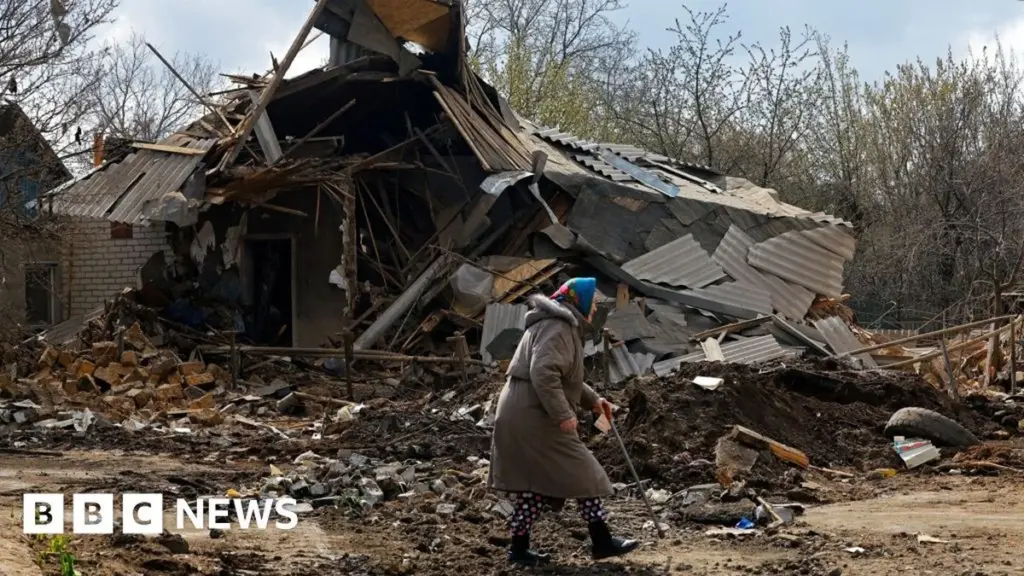
Ukraine and Russia have traded accusations of hundreds of ceasefire breaches coinciding with the Orthodox Easter period. The military of Ukraine stated that Russian forces were responsible for 2,299 violations from the moment the truce commenced on Saturday at 16:00 local time (13:00 GMT).
Conversely, Russia’s defense ministry reported that Ukrainian forces committed 1,971 violations. These included three attempts at counter-attacks within the Dnipropetrovsk region, according to their statement.
Ukrainian President Volodymyr Zelensky had previously indicated that his nation’s forces would respond in kind to any Russian assaults during the ceasefire. He emphasized that Easter is traditionally a time for peace.
Zelensky expressed hope that the temporary cessation of hostilities might be extended beyond Easter, potentially facilitating peace negotiations. However, Russia rejected this possibility, asserting that its offensive actions would resume on Monday. The peace talks have largely stalled since the onset of the wider conflict, which was further complicated by events in the Middle East.
The Ukrainian military detailed that Russian troops conducted 28 attacks and employed nearly 2,000 drone strikes during the truce. Notably, these actions did not involve the use of bombs or missiles.
In Ukraine’s northern Sumy region, which shares a border with Russia, local authorities reported an incident where a Russian drone struck an ambulance during the night. This strike resulted in injuries to three medical personnel.
Russia’s defense ministry countered by stating that Ukraine had initiated three overnight attacks on positions located in the Pokrovsk area and Otradne, both within the Dnipropetrovsk region. Furthermore, their report indicated that four attempts by Ukrainian troops to advance in the Sumy and Donetsk regions were successfully repelled.
The Easter ceasefire was unilaterally declared by Russian President Vladimir Putin earlier in the week. This announcement followed previous instances where Putin had resisted repeated appeals from Ukraine for a temporary halt to fighting. President Zelensky had previously stated that his forces would mirror any de-escalatory actions taken by Russia.
Earlier in the year, Putin had agreed to a US request to cease strikes on energy infrastructure, a move made as Ukraine prepared for severe cold weather conditions.
Both Ukrainian and Russian sources initially reported limited violations in the initial hours of the Saturday truce. These early reports were followed by the more substantial claims made by each side.
Authorities in both Ukraine and Russia also announced on Saturday that they had completed prisoner-of-war exchanges. Each side repatriated 175 individuals, a total that included seven civilians for each nation.
On the front lines of the conflict, which has been ongoing since 2022, Ukrainian civilians and soldiers expressed low expectations regarding the effectiveness of the ceasefire. Kyiv has consistently advocated for a more comprehensive ceasefire, viewing it as a prerequisite for peace negotiations and a lasting resolution to the full-scale invasion, a stance also supported by its European allies.
Moscow, however, maintains that an agreement on a broader peace deal must precede any discussion of a ceasefire. This position has led to accusations that Russia is not genuinely committed to ending the hostilities.