
A significant update to travel regulations is now in effect across the European Union, requiring non-EU citizens to provide biometric data alongside their passports. This new digital border system, known as the Entry/Exit System (EES), mandates the collection of fingerprints and photographs.
The EES was scheduled to become fully operational at all Schengen border crossing points in the 29 participating countries by Friday. Its gradual introduction began in October, aiming to enhance security while theoretically streamlining the travel experience. However, the rollout has encountered some initial challenges, meaning that not every border crossing is fully implementing the system simultaneously.
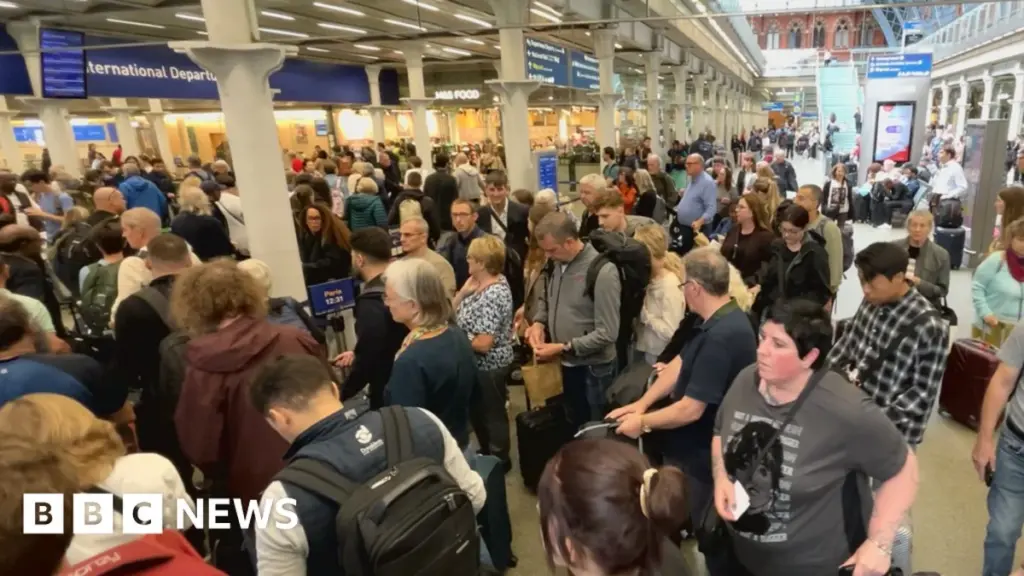
These implementation issues have already led to substantial queues at select European airports. Authorities have cautioned that these delays could become more pronounced during peak travel periods, such as upcoming holiday seasons.
Understanding the Entry/Exit System (EES)
The EES is a digital framework designed to meticulously record the entry and exit of individuals from non-EU countries, including those from the United Kingdom, when they traverse the Schengen Area. This area encompasses 29 European nations, predominantly within the EU, where individuals can travel internally without standard border checks.
Many popular destinations for UK travelers are part of this zone, including France, Spain, Portugal, Italy, and Greece. Under the new EES framework, travelers will be required to submit fingerprints and have their photograph taken. This process is set to supersede the existing method of passport stamping by border officials.
Navigating the EES for Travelers
The timing of your first encounter with the EES will depend on your destination and travel dates. For air passengers, the biometric registration process will occur upon arrival at their European airport. The phased introduction of the EES commenced on October 12, with an initial plan to complete its integration over a six-month period.
Reports have already surfaced of lengthy queues at critical transit points. Airports have issued warnings suggesting that conditions could deteriorate further during busy holiday periods. Travelers arriving at the popular ski destination of Geneva experienced significant delays attributed to the new system earlier this year.
Travel experts have informed the BBC that IT issues have plagued the system at certain locations, leading to extended queues where travelers struggle to navigate the process efficiently. The European Commission has indicated that the suspension of EES checks will be permitted during peak times until September to alleviate passenger congestion.
As of Friday, not all European airports will be fully compliant with the EES, with Milan and Lisbon cited as examples.
Passenger Procedures for EES
Upon their initial use of the EES, individuals from most non-EU countries will need to register their biometric data while their passports are scanned. Air travelers will complete this registration at their destination airport.
However, for those traveling by ferry from Dover, using the Eurotunnel shuttle to France, or taking the Eurostar train, the process will be conducted as they depart the UK. At these specific transit points, the majority of passengers will follow instructions provided at dedicated kiosks.
These machines will scan each passport, subsequently capturing fingerprints and a photograph. Children under the age of 12 will be exempt from providing fingerprints. Staff members are expected to be available to offer assistance. The kiosk screen will also present travelers with four questions pertaining to their trip, such as confirming their accommodation details and financial sufficiency.
It is important to note that at Eurotunnel, these questions will be posed by border officers on a discretionary basis. The EES registration will remain valid for three years, with the collected details subject to verification on each subsequent trip within that timeframe.
At the port of Dover, coach passengers began using the new system in October. Other tourist traffic was originally slated to transition by November 1. However, individuals traveling in cars have yet to begin using EES, with no confirmed date set. Eurotunnel, which operates vehicle shuttles through the Channel Tunnel, is also implementing EES in phases.
At the port of Dover and Eurostar’s London St Pancras terminal, the four qualifying questions will not be administered via the machines during the initial phase. The system will not be activated on April 10.
Infrastructure Adjustments at Dover
Significant modifications have been necessitated at the port of Dover. The port authority has reclaimed land from the sea to establish an additional processing area. Passengers will proceed to this new zone, located a mile from the ferry terminal, for their EES checks.
Given that the French border effectively operates from a coach processing building within this new area, coaches will be sealed once passengers have completed their checks before they embark on their ferry journey. The port director has indicated that school groups may be permitted to complete some registration in advance, reducing their on-the-spot requirements to simply presenting their passports at the border.
Eurostar’s EES Implementation
Eurostar has installed 49 EES kiosks across three areas at its London St Pancras terminal. Passengers are expected to utilize these kiosks before presenting their tickets at the departures area. Currently, however, checks are being performed manually by border officers rather than at the kiosks. Eurostar has stated that it will deploy the kiosks once the operational software and activation schedule are confirmed and approved by the French Ministry of Interior.
Eurotunnel’s Approach to EES
Eurotunnel has deployed over a hundred kiosks on both sides of the Channel. Customers traveling by car will be directed to drive up to a kiosk displaying their vehicle registration number to provide their biometric information. Coach passengers will undergo the process with a border officer.
A mobile application has been developed to enable passengers to complete a portion of the EES process before reaching the border. However, its widespread adoption is currently limited.
Concerns have been consistently raised that the additional few minutes required for each traveler to complete the registration could lead to substantial queues, particularly in space-constrained environments like Dover. Nevertheless, officials at cross-Channel travel hubs express optimism that the gradual introduction of EES, rather than an immediate full rollout, will mitigate the risk of disruption.
Yann Leriche, the Chief Executive of Eurotunnel, has asserted that there will be no “chaos” or significant queues at the Channel tunnel, emphasizing his company’s thorough preparation. Similarly, Eurostar anticipates that its strategy of initially limiting EES to select business travelers before broader implementation will help prevent congestion.
Introducing ETIAS: The Next Step
The EU is also introducing a new visa waiver system, integrated with passport checks, known as the European Travel Information and Authorisation System (ETIAS). This system will build upon the functionalities of the EES.
Citizens from non-EU countries who are not required to obtain a visa for entry into the EU, including those from the UK, will need to apply online for authorization prior to their travel. ETIAS is currently scheduled to launch at the end of 2026, though the precise date remains unconfirmed. Each application will incur a fee of €20 (£17.47) and will be valid for three years. While individuals aged under 18 and over 70 will be required to apply, they will be exempt from the application fee.