
The profound consequences of Amazon deforestation on the global climate are not a recent discovery. For a considerable time, climate scientists and dedicated activists have consistently raised urgent warnings regarding the critical need for rainforest preservation. Despite these ongoing appeals, the Brazilian government has recently eased environmental regulations affecting several significant industrial projects in the Amazonian region. This policy shift potentially facilitates more detrimental environmental transformations.
Photographer Lalo de Almeida has undertaken an extensive project documenting the rainforest. His work specifically focuses on areas currently undergoing development and those where the rainforest’s future is poised for immediate change. His photographs provide a visual record of these evolving landscapes.
Agribusiness and Transportation Infrastructure
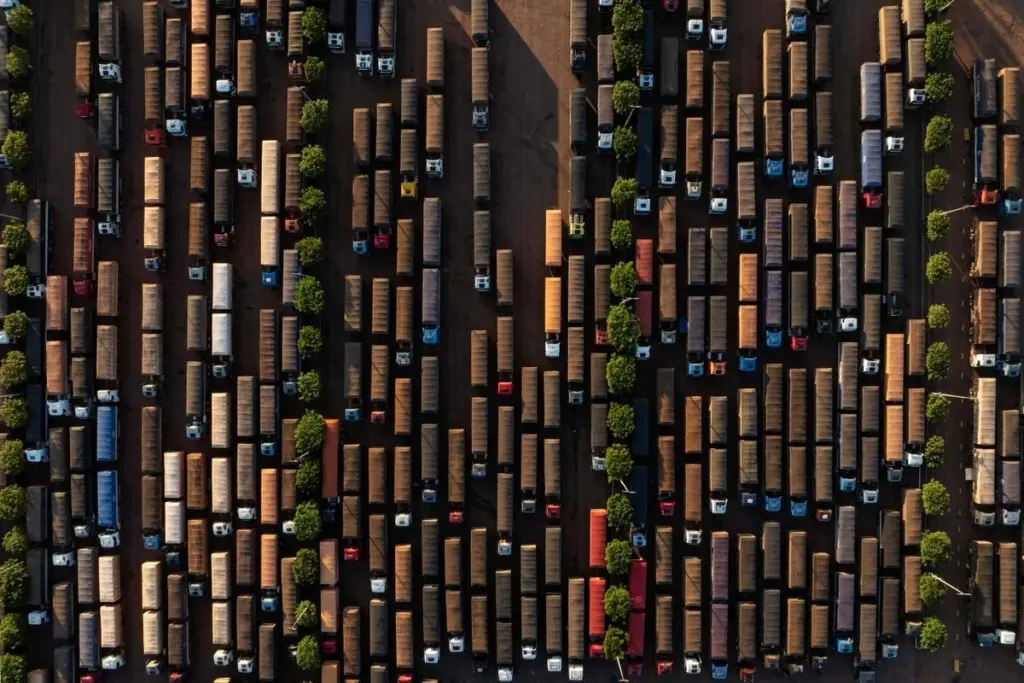
In a prominent image, de Almeida captured a series of the numerous trucks involved in transporting soya beans. This activity takes place along a road near Miritituba, a location designated as the final destination for a new railway line. The railway is intended to facilitate the movement of these beans to the Tapajos River. Another photograph depicts three individuals collecting soya beans from a truck following a traffic accident. Such incidents, it appears, are frequent enough to sustain these workers through the recovery of damaged cargo.
Impact on Local and Indigenous Communities
Beyond illustrating the vast scale of agribusiness’s presence in the Amazon, de Almeida’s photography also seeks to highlight local communities. These populations are frequently overlooked in political discussions and decision-making processes. Regarding the new soya bean transportation route, he notes that indigenous lands, riverside settlements, and protected conservation areas situated along the railway’s planned path will be directly impacted. Crucially, individuals residing in these affected areas have not been consulted on these developments.
A subsequent image shows children playing in a canoe. These children belong to a village located within an indigenous territory. This territory faces potential risks from another proposed project, which involves exploring the feasibility of oil extraction operations.
Mitigation Efforts and Ongoing Concerns
Offering a contrasting perspective, one image presents a project aimed at constructing an electricity pylon. This work is part of an initiative to establish a power line within the territory of the Waimiri Atroari indigenous people. This substantial construction effort involves the participation of community members, with the stated intention of minimizing its environmental and social impact.
However, significant environmental damage has already occurred in other areas. De Almeida’s photographs include images of burnt Brazil nut trees. These trees are located near an unauthorized access road branching off a highway slated for paving. The future paving of this highway has notably spurred increased deforestation and land acquisition initiatives within the region. The stark visual of charred branches, curving against dry grasses and a pale sky, serves as a potent reminder of living organisms that were destroyed to serve commercial interests.