
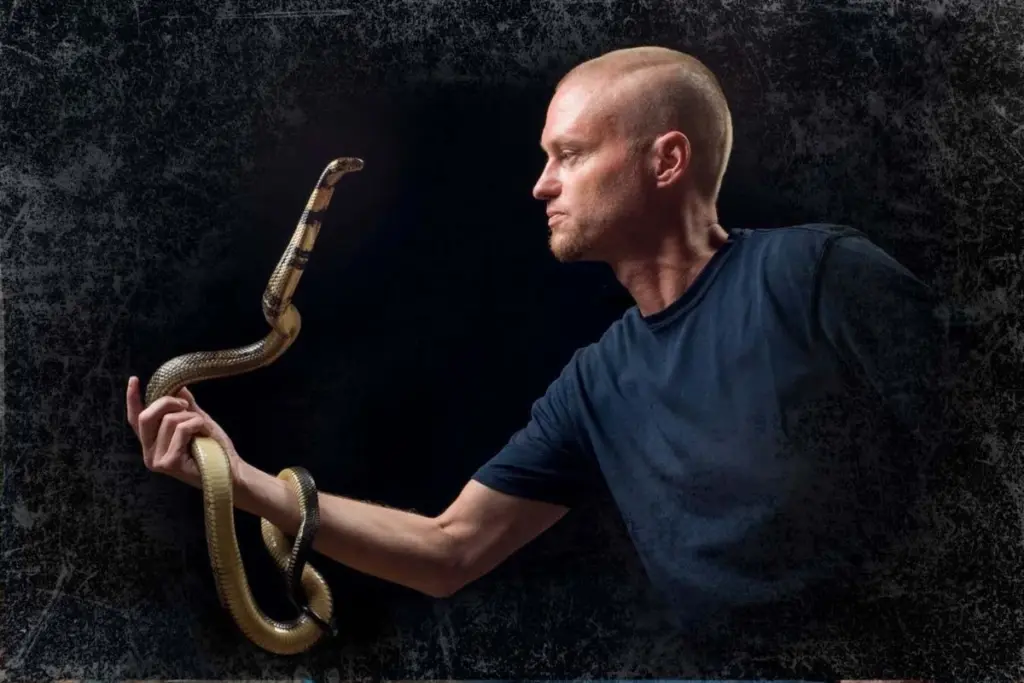
The experience of a near-fatal snakebite is profound. It renders one immobile and unable to breathe, yet acutely aware of one’s surroundings. During an intensive care unit stay, the author overheard physicians questioning the incident, speculating about a suicide attempt. This was not the case; it was a grave error of judgment.
The self-injection of snake venom began in 2001, driven by the desire to develop a novel treatment. The statistics are stark: approximately five million snakebites occur annually worldwide, resulting in 138,000 deaths and over 400,000 amputations or other severe complications. These figures highlight a significant global health burden.
Organizations like the Strike Out Snakebite global initiative are working to raise awareness of snakebite envenoming’s impact. The primary medical intervention, antivenom, was first developed 125 years ago by Albert Calmette. However, its fundamental method has remained largely unchanged, and it is not without its limitations. Current antivenoms are produced by injecting horses with venom and then harvesting the antibodies the animals generate. Administering these to humans carries a risk of anaphylactic shock due to the foreign equine proteins involved.
The personal motivation was to eliminate the reliance on animal intermediaries while avoiding personal harm, such as losing a limb or even missing work.
The Experimental Journey
Prior experience included a brief course in venom extraction from spiders, scorpions, and centipedes in 1999, which simplified the process of handling snake venom. The initial experiments involved cobra venom, administered at a highly diluted concentration of 1 in 10,000. These early doses were comparable to a mild bee sting. Gradually, the concentration was increased, moving towards administering pure, lethal doses of venom.
Preparation for live snakebites was a daunting phase, marked by uncertainty about the extent of acquired immunity and the potential for survival. This was a path with no established protocols or educational institutions; self-teaching and personal experimentation were the only options.
The beginning proved disastrous. On September 12, 2001, at 11:02 PM, after receiving a cobra bite, a second cobra bite an hour later proved overwhelming. The initial dose had been tolerated, but the second bite found no available antibodies, as they were already bound to the first venom dose. This led to a collapse at midnight. A four-day coma followed in the ICU, necessitating the administration of antivenom obtained from a local zoo. Unbeknownst to the attending paramedics, antivenom was available at the author’s residence.
Upon recovery, the choice was to either abandon the endeavor or learn from the severe misstep. The latter path was chosen. Since that incident, over 200 bites have been sustained without the need for further antivenom treatment.
Engaging with Academia and Scientific Inquiry
A serious commitment to the research led to outreach to scientists. The history of self-experimentation in medicine is notable; the author possesses a signed letter from Barry Marshall, who self-medicated and subsequently won a Nobel Prize. Conversations with Peter Doherty, another Nobel laureate for his work on immunity, fostered a sense of validation. This engagement propelled a deeper involvement in academic pursuits and venom research.
Snake venom exhibits significant variability, even within the same genus and species. A prime illustration is the Australian brown snake, Pseudonaja textilis. Its venom composition differs between Queensland in the north and southern regions. This geographical inconsistency poses a challenge for antivenom production, as a formulation developed for one area may not be effective elsewhere.
The ultimate goal was to cultivate broad-spectrum antibodies in the blood capable of neutralizing a wide range of venoms. This involved working with various snakes globally. Given the existence of approximately 650 venomous snake species and the practical limitations of accessing all of them, the focus was on venom from the most dangerous species, including taipans, cobras, kraits, coral snakes, and rattlesnakes.
Taipan bites, primarily neurotoxic, are relatively manageable. In contrast, viper and pit-viper venoms contain necrotic agents that cause severe muscle destruction and excruciating pain, representing a fundamentally different challenge.
Over a 25-year period, the author has undergone six scientific studies. This empirical validation was paramount, as it provided a pathway for contributing to the development of new antivenoms. The most recent study was initiated by Jacob Glanville of Centivax, who encountered a YouTube video featuring back-to-back black mamba and taipan bites. Blood samples were sent to Glanville’s laboratory, where DNA was extracted from B-cells to clone the author’s IgG antibodies. Subsequent in-vivo studies were conducted using mice.
The laboratory research was rigorous. A significant finding emerged: antibodies generated by the author could neutralize the venom of the king cobra (Ophiophagus hannah), despite no prior experimental exposure to this species. This discovery offered substantial hope for achieving broad-spectrum efficacy, potentially leading to a universal antivenom.
A research paper detailing these findings was published in Cell Press in the preceding year, culminating nearly 25 years of work. The author’s name does not appear on the list of authors, a decision stemming from academic perspectives that often view self-experimentation critically. Previous attempts at publication with the author’s name included were rejected by numerous journals. However, the absence of personal acknowledgment is not a concern; the focus remains on contributing to a critical medical need.
Transitioning from mouse studies to a human-usable antivenom will undoubtedly be a lengthy process. Nevertheless, the author is content with the prospect of this extended timeline. The knowledge that every possible effort has been made to effect positive change provides assurance and allows for peaceful rest.
_As told to Colin Barras_