
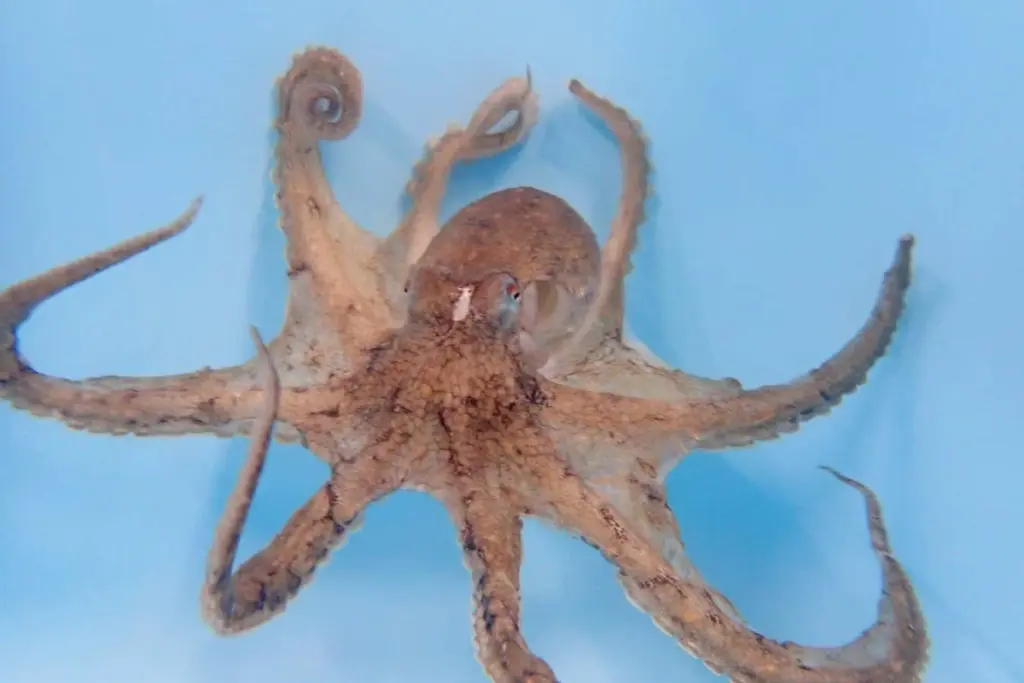
For male octopuses, the loss of a single appendage poses a significant threat to their reproductive future. This specialized limb is their third right arm, specifically adapted for reproduction. Consequently, these creatures exhibit a keen instinct for its protection.
A recent investigation spearheaded by Keijiro Haruki at Nagasaki University in Japan has illuminated the extent to which octopuses safeguard this vital arm from damage or predation. Haruki’s research was initially sparked by an observation during gentle interaction with a male octopus. “When I touched one particular arm, it resisted strongly, pulling it back towards its body,” Haruki recalled. This behavior led him to hypothesize the arm’s exceptional importance for males, drawing an analogy to human males’ instinctive fear regarding their reproductive organs.
The Hectocotylus: Anatomy and Function
This third right arm, designated R3, is known as the hectocotylus. It possesses anatomical distinctions from the octopus’s other seven arms. The primary function of R3 is to transfer sperm from a relatively small penis, which is otherwise incapable of reaching the female during mating. Male octopuses possess a single testis located within the mantle, the sac-like body behind the head. Sperm is produced here and stored in packets called spermatophores.
During the mating process, the male inserts the tip of the hectocotylus into the female. Prior to ejaculation, the male contorts the hectocotylus, forming a tube-like structure. By introducing water into this structure, the male expels the spermatophore from the penis into the female. This intricate mechanism underscores the R3 arm’s indispensable role.
Experimental Evidence of Protection
To quantitatively assess the protective behaviors regarding the third right arm, Haruki and his research team collected specimens of Japanese pygmy octopuses (Octopus parvus), comprising 32 males and 41 females. Their findings revealed a notable disparity: while 13 of the female octopuses had lost their R3 arm, only one male exhibited this loss. The team then designed two experiments to contrast how males and females utilize their R3 arms.
In the initial experiment, a lead sinker was positioned centrally in a tank. The octopuses’ limb usage in exploring this unfamiliar object was observed. The results showed a significantly higher propensity among females to use their R3 arm for investigation compared to the males. Subsequently, frozen shrimp were introduced into a compartmentalized box within the tank. Males demonstrated a marked preference for exploring with their other seven arms, delaying any engagement with their hectocotylus until other options were exhausted.
Evolutionary Rationale for Specialization
Haruki suggests that this complex system, which repurposes an arm for sexual reproduction, likely evolved due to a lower evolutionary cost associated with specializing one appendage as a hectocotylus and protecting it, compared to the expense of enlarging the penis. The loss of the R3 arm would render a male octopus reproductively inactive until regeneration, a process that can span several months.
However, Haruki also noted that the rarity of hectocotylus loss among individuals suggests that effective protection of this specific arm is not an exceptionally challenging task for male octopuses in their natural environment. This reinforces the evolutionary advantage of arm specialization for reproductive success.