
The global expansion of solar power has been remarkable. In the past 15 years, the cost of installing solar systems has plummeted by 90%, and these installations now represent over 80% of the world’s new electricity capacity annually. Consequently, when escalating oil and gas prices, driven by the ongoing Middle East conflict, impacted many nations, solar energy emerged as a logical solution for relief.
For the United Kingdom, this situation prompted more than just an endorsement of existing solar initiatives. The UK government has indicated its intention to legalize a currently prohibited form of solar technology. These so-called plug-in kits are slated to become available from high-street retailers and supermarkets within months.
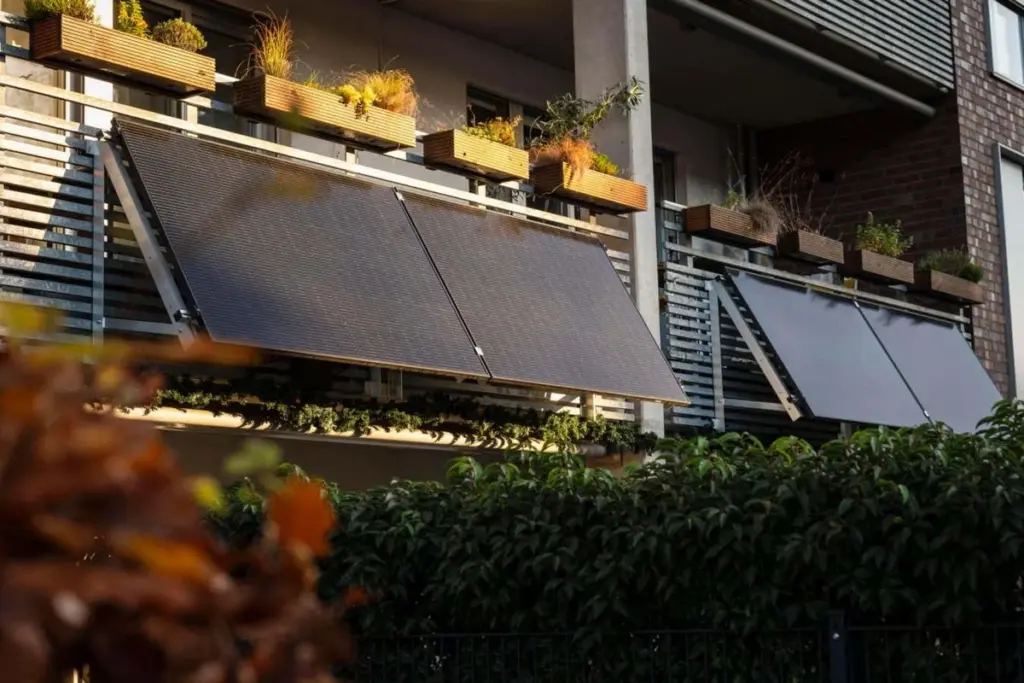
These kits are designed for straightforward DIY installation. Users simply bring the panels home, position them in a sunlit area, and plug them in. This bypasses installation costs, allowing immediate use of solar energy to power a household. Should one relocate, the panels can be easily detached and transported. Solar energy appears to be becoming even more affordable and accessible to a broader population.
While many countries have already embraced plug-in solar, and its global potential is a cause for optimism, questions remain about its efficacy in mitigating energy price hikes. What is its true cost? And importantly, is it safe?
Traditional Solar Installation Costs
Despite rapid cost reductions, installing a conventional solar system remains a significant investment. For an average UK home, a 4-kilowatt system, designed to meet most energy requirements, is estimated to cost around £7,000. In the United States, where the average household consumes roughly twice the energy, the cost for a comparable solar installation approaches $20,000. These figures typically encompass professional panel mounting, system installation by a certified electrician, and modifications to the electricity meter to enable the export of surplus power to the grid, thereby reducing bills or even generating revenue.
The Simplicity and Lower Cost of Plug-In Kits
Plug-in solar presents a more accessible option. These kits are smaller than those used in full-scale installations. An 800-watt system might cost approximately £400, with an expectation to cover about 20% of an average UK home’s energy needs. The absence of installation fees stems from the simple setup: attaching the panel to balcony railings, a garden fence, or a garage roof and connecting a cable to a standard wall socket. Once connected, the generated energy can be immediately utilized.
With plug-in solar systems, any excess energy is fed back into the grid. However, the absence of professional installation means users cannot earn money from this exported power. “Ultimately, that energy just gets used by the next-door neighbor,” explained Mark Golding of UK solar panel installer Spirit Energy.
Global Adoption and Potential
Plug-in solar technology is not new and is already established outside the UK. Germany, for instance, had registered over a million plug-in solar systems as of July last year. Estimates suggest these systems collectively possess a capacity ranging from 1.6 to 2.4 gigawatts, which is sufficient to power half a million kettles simultaneously.
Germany is unique in its efforts to systematically track plug-in solar installations, making precise statistics challenging to obtain elsewhere. However, one estimation indicates that up to five million such kits might be in use across Europe. While plug-in solar represents a small proportion of the overall energy mix, it holds the potential to significantly reduce individual energy bills and collectively enhance a nation’s renewable energy generation capacity.
Jan Rosenow from the University of Oxford noted that widespread adoption could accelerate if governments continue to enact legislation permitting individuals to install their own solar panels. “While individual systems are small, their aggregate impact is becoming meaningful, both in terms of distributed generation and consumer engagement in the energy transition,” Rosenow stated.
Legislative Hurdles and Aspirations in the US
Currently, plug-in panels are largely prohibited in the United States. Utah, however, became the first state to legalize them last year, with several other states considering similar legislation. Cora Stryker of the US pro-solar non-profit Bright Saver highlighted the administrative burden in many states, where installing a few solar panels at home requires the same level of paperwork as constructing a 20-megawatt solar farm, a situation she described as “patently ridiculous.”
Stryker expressed hope that plug-in solar could alleviate financial strain, contribute to curbing climate change, and serve as a catalyst for the US to advance its renewable energy infrastructure. “This is the watershed moment, the tipping point toward a world where the dirt-cheap cost of renewables is actually passed on to the consumer,” she remarked. Bright Saver projects that 24 million US households will utilize plug-in solar systems by 2035.
Safety Concerns Regarding Plug-In Kits
Despite the widespread use and inherent benefits, some experts harbor reservations regarding the safety of plug-in kits. Mark Coles, head of technical regulations at the Institution of Engineering and Technology (IET), advises individuals to have their home wiring checked for safety before purchasing a plug-in solar kit. Furthermore, the IET has identified several areas of concern.
One significant issue relates to residual current devices (RCDs), which are safety mechanisms in fuse boxes designed to detect current leakage—an indicator of electrocution or short circuits—and immediately cut power. Many RCDs in the UK are not designed to handle current flowing in both directions, potentially leading to malfunction. While the US electrical setup differs, similar problems exist. Germany’s rapid progress in this area is partly attributed to its incidental standardization of bi-directional RCDs in the 1980s.
The IET also raises concerns about the behavior of multiple plug-in kits during a power outage. Ideally, these kits are designed to shut down to prevent “islanding,” a scenario where a house’s power supply remains live. However, if the kits continue to generate power, they might mistakenly perceive the grid as active and persist in operating. This could result in electricity bypassing the fuse box, potentially electrocuting maintenance workers attending to the outage.
“That’s putting those people in danger,” Coles stated. “It kind of goes against the concept of ‘just buy this and plug it in,’ but in reality, we are concerned that there’s a public safety risk here.”
Coles acknowledged the potential benefits of plug-in solar but stressed the necessity for manufacturers to demonstrate that their systems operate safely, even in non-standard conditions.
In response to the IET’s safety concerns, a spokesperson for the UK’s Department for Energy Security and Net Zero commented: “Our tests have shown plug-in solar is safe to use on UK domestic circuits. All products will need to meet UK product safety standards, and we have commissioned an independent study to inform further regulations ahead of their sale.”
Stryker argued that given the severe impacts of climate change and escalating energy costs that push many into fuel poverty, inaction poses the greatest risk to consumers. She believes that people will adopt technologies like plug-in solar irrespective of official sanctioning and regulation, making a pragmatic approach to facilitate safe adoption the most sensible path. “Solar is the cheapest energy on the planet, full stop. It’s actually the cheapest energy humanity’s ever produced,” she asserted.