
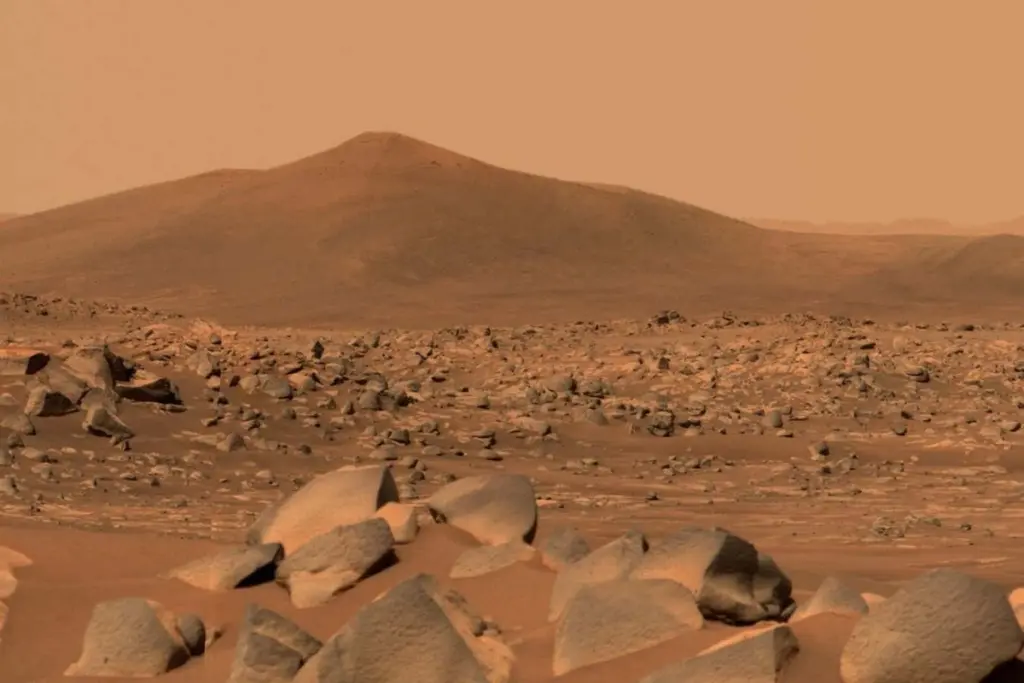
As people engage with Kim Stanley Robinson’s “Red Mars” around 2026, a comparison inevitably arises between the decade the novel envisioned and its present-day reality. This temporal discrepancy is a common characteristic of science fiction.
Over time, a science fiction narrative shifts from predicting the future to serving as a record of past ideas about that future. Such a transition offers a valuable glimpse into the mindset of its era, capturing a perspective that is otherwise difficult to recover. Reading older science fiction allows us to see what individuals at that time believed might occur.
This past apprehension of future possibilities was an important element of their lived reality. The older text, therefore, functions less as an indicator of inaccurate foresight and more as an accurate representation of the era’s sense of potential, articulating its hopes and anxieties concerning what lay ahead.
Ultimately, regardless of its temporal setting, science fiction primarily reflects its present. As it ages, it transforms into a portal to the past, offering a form of temporal displacement both forward into imagined futures and backward into historical perspectives.
Despite not intending to depict the 2020s specifically, “Red Mars,” as an imagined vision from the early 1990s, holds up remarkably well. The premise of declining empires like the US and Russia forming alliances to counter rising global powers finds resonance. Similarly, the ascendance of China and India is a readily observable trend.
Further predictive elements include the ecological and economic fragility of Earth, exacerbated by climate change and geopolitical instability, even extending to armed conflict. An emerging social order, characterized by ongoing, extensive debate about its future form, also feels prescient. These observations do not demand extraordinary foresight; Earth’s protracted challenges have long signaled an inevitable shift, driven by the fundamental principle that unsustainable conditions cannot persist.
The novel’s technological details, both those accurately predicted and those missed entirely, offer an interesting study. Occasionally, these converge. For instance, the continued use of video tapes is depicted alongside the creation of a YouTube-like platform from them. John Boone’s wristwatch features an AI named Pauline, a modest precursor to later AI characters in Robinson’s work.
Reflections on Mars and Terraforming
During the writing of the “Mars Trilogy” (1989-1991), scientific understanding of Mars was significantly shaped by data from the Mariner satellites in 1969 and the Viking orbiters and landers in 1976. These missions presented Mars as a tangible, yet uninhabited, alien world.
This influx of new Martian information coincided with the emergence of speculative science focused on terraforming. The central question became whether humanity could engineer an alien planet to support human life without protective equipment. This inquiry was particularly relevant given Mars’s status as a promising candidate for such a transformation.
While terraforming concepts were hypothetically applied across the solar system’s rocky bodies, Mars remained the most viable option. Its accessible water, substantial gravity, thin atmosphere, and essential elements for life—though a deficit in nitrogen was noted—made it a focal point. Speculation even arose about transferring nitrogen from Saturn’s moon Titan. This type of grand-scale thinking characterized the terraforming community’s approach, blending scientific inquiry with speculative fiction.
These discussions were instrumental in establishing the sense of plausibility found in Robinson’s novel, drawing heavily on the insights of scientists involved.
Contemporary Understanding of Martian Habitability
Thirty-five years later, subsequent discoveries about Mars and human biology present a more challenging picture for Martian habitation. The rovers of the early 2000s revealed the presence of perchlorates in Martian sands, toxic to humans at significantly lower concentrations than their prevalence on the surface.
Furthermore, extensive research has detailed the adverse effects of reduced gravity on the human body and the impact of cosmic radiation on mammalian brains. Consequently, the ambitious claims made by some individuals regarding imminent Mars colonization are increasingly viewed as unrealistic aspirations.
These visions appear to stem from a desire for Mars to revert to an earlier, more hospitable state. What was once science fiction in 1990 has, for some, transitioned into fantasy.
A More Realistic Martian Endeavor
While acknowledging the challenges, the prospect of human presence on Mars remains appealing. A more feasible approach could mirror present-day Antarctic exploration: the establishment of scientific outposts, such as McMurdo Station, where individuals might reside for limited periods before returning to Earth.
This model would involve a temporary, adventurous lifestyle for visiting scientists, potentially involving some health compromises, but yielding significant scientific understanding. Public interest in such endeavors would likely mirror that for current Antarctic research—notably moderate. Martian inhabitants would represent another facet of the Anthropocene.
This scenario represents the most scientifically grounded vision of a Martian future currently. In the distant future, spanning millennia, and contingent upon humanity developing a sustainable relationship with Earth, the terraforming and full inhabitation of Mars might become achievable.
Earth’s Health as a Prerequisite
A significant impediment to the Mars project, overshadowing even its toxicity concerns, is the ongoing degradation of Earth’s environment. Addressing terrestrial environmental issues must precede any serious consideration of off-world colonization. Achieving a healthier relationship with our home planet could present Mars as a subsequent reward and a new endeavor.
This perspective is crucial when encountering sensationalized claims about imminent human migration to Mars. The author of the “Mars Trilogy” regards such narratives as unfounded fantasies.
The Core of the Novel: Characters and Plot
While technical and speculative elements are present, their significance is secondary to the novel’s fundamental identity as a work of fiction. The author’s primary satisfaction stems from the characters and the plot that drives the narrative.
Having written “Red Mars” years ago, the author was recently able to read it with fresh eyes, experiencing the narrative without the burden of constant revision. This allowed for an unhindered appreciation of the story and its inhabitants.
The diverse cast of characters, from Nadia and Maya to John, Frank, Sax, Ann, Michel, Hiroko, Arkady, Phyllis, Vlad, Ursula, Spencer, and others, became vivid in the author’s mind, independent of personal acquaintance. Their narratives emerged organically, offering a profound creative experience.
The book’s success lies in its interwoven tapestry of interpersonal relationships, political dynamics with Earth, terraforming efforts, and the progression of lives over decades, collectively forming a comprehensive historical account—or, as noted by Fredric Jameson, “History.”
The author expresses satisfaction that the novel has translated from the creative process to the page and continues to resonate with readers.