
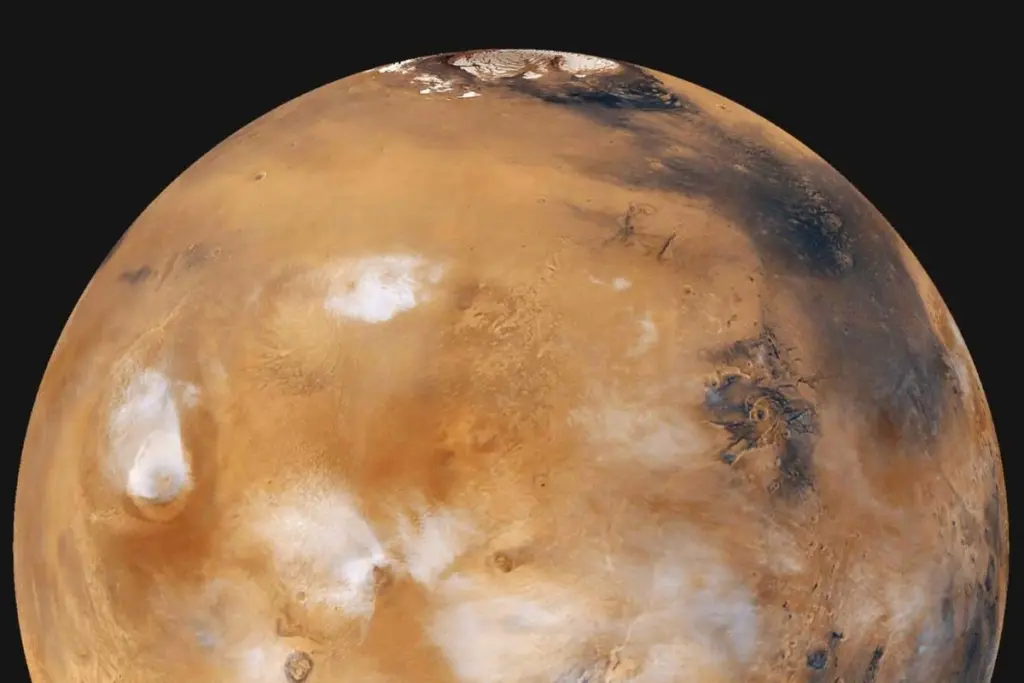
Before humanity’s arrival, Mars existed in a state of profound silence. The planet had undergone immense geological transformations—accretion, melting, and subsequent cooling—resulting in a surface deeply etched by features like craters, canyons, and volcanoes. However, these events occurred without any form of awareness or observation. There were no witnesses to its long history, save for humanity, who observed from Earth in the final moments of its geological past. In essence, we are the sole consciousness Mars has ever possessed.
The history of Mars, as understood by humankind, played out over millennia. For generations, its prominent red hue and fluctuating intensity made it a focal point in the night sky. Its apparent stalling and occasional reversal of its celestial course suggested a profound message. It is unsurprising, then, that ancient names for Mars—Nirgal, Mangala, Auqakuh, Harmakhis—carry a distinctive weight, seeming to predate the very languages in which they are found, perhaps originating from the Ice Age or earlier periods. For thousands of years, Mars was revered as a sacred power. Its color imbued it with a dangerous connotation, symbolizing blood, anger, war, and the heart.
The advent of the first telescopes offered a closer view. Observers could discern a small orange disk, accented by white polar caps and areas of dark patches that changed with the passing seasons. Despite advancements in telescope technology, these observations yielded little more detail. Yet, the clearest terrestrial images were sufficient to inspire a narrative: the story of a dying world and its valiant inhabitants, constructing canals in a desperate effort to stave off the encroaching desert. This narrative captured the imagination.
The landscape of understanding shifted dramatically with the images sent back by the Mariner and Viking missions. Our knowledge of Mars expanded exponentially; we gained access to information millions of times greater than previously available. A new, unsuspected world unfurled before us.
This revealed world, however, appeared devoid of life. Extensive searches for evidence of past or present Martian life—from microbial organisms to the hypothetical canal-builders, or even extraterrestrial visitors—have yielded no definitive results. Consequently, as in the times of Lowell, Homer, or even earlier human history, narratives have emerged to fill this void. These stories speak of microfossils destroyed by Earth organisms, of ruins discovered and then lost in dust storms, of legendary figures and their exploits, and of elusive small red beings, perpetually glimpsed from the periphery. All these tales strive to imbue Mars with life, or to reanimate it. This enduring impulse connects to our ancient human nature—that of Ice Age survivors gazing at the night sky with awe and crafting stories. Mars has consistently remained a significant sign, a potent symbol, and a powerful entity since humanity’s earliest beginnings.
Our arrival marked a transition. Mars, once a celestial power, transformed into a tangible place.
This excerpt is from Kim Stanley Robinson’s “Red Mars,” a recent selection for the New Scientist Book Club. You can sign up to read along with us here.