
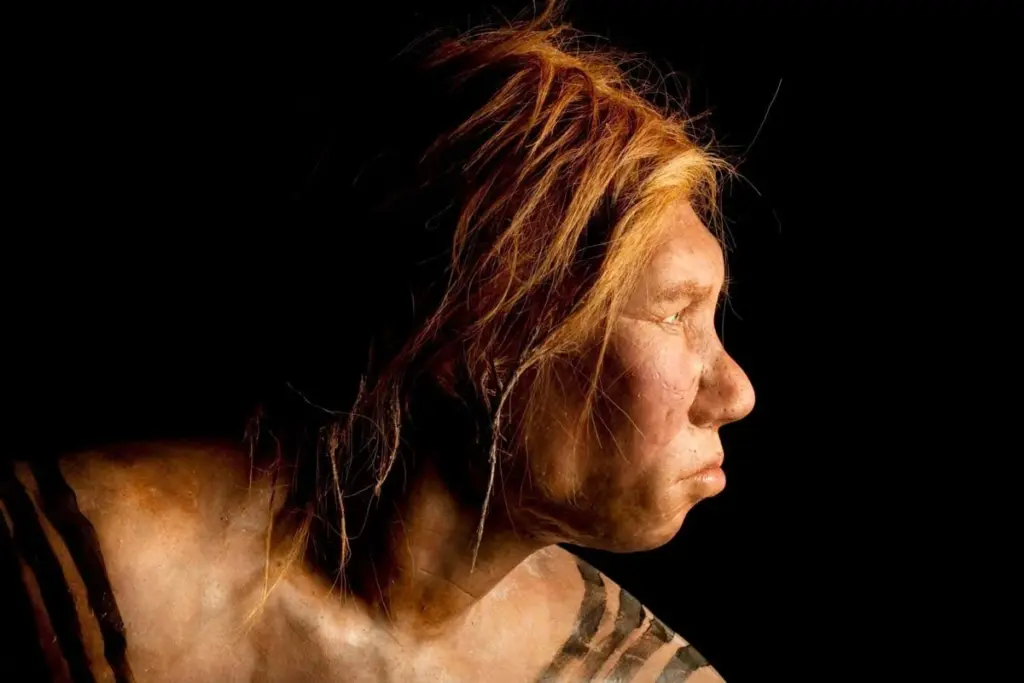
Modern humans might have contributed to the demise of Neanderthals not solely through conflict, but also via a subtle genetic incompatibility that arose from interbreeding. A recent study suggests that when Homo sapiens and Neanderthals reproduced together, a slow-acting genetic mismatch likely increased the incidence of pregnancy complications for hybrid mothers. This same genetic dissimilarity between mothers and their developing fetuses may also shed light on a portion of pregnancy failures observed today.
Genetic evidence confirms that sustained interbreeding between Homo sapiens and Neanderthals occurred between approximately 50,000 and 45,000 years ago. Neanderthals ultimately disappeared around 41,000 years ago. However, remnants of Neanderthal DNA persist in modern humans of non-African descent, constituting roughly 1 to 2 percent of their genome.
Curiously, none of the mitochondrial DNA found in modern humans originates from Neanderthals. This specific type of DNA is carried within egg cells, not sperm, meaning it is always inherited from the maternal line.
Patrick Eppenberger of the University of Zurich and his colleagues have put forth a potential explanation for this phenomenon. They propose that women whose parents were both Neanderthal and H. sapiens faced an elevated risk of pregnancy loss due to a genetic incongruity between their own genes and those of their fetus.
Neanderthals and H. sapiens possessed distinct versions of the PIEZO1 gene. This gene plays a crucial role in oxygen transport within the bloodstream. The researchers systematically analyzed both modern human and Neanderthal DNA samples. They then modeled the differences in the PIEZO1 protein to ascertain how these divergent variants might have interacted. Their investigation also extended to practical laboratory experiments involving human red blood cells, employing a chemical treatment designed to replicate the effect of the Neanderthal variant.
Gene Variants and Their Impact on Reproduction
Their findings revealed that the Neanderthal variant of PIEZO1, designated V1, leads to red blood cells that bind oxygen more tenaciously when compared to the H. sapiens variant, V2. The V1 variant demonstrates dominance. Consequently, an individual inheriting both V1 and V2 would exhibit red blood cells with this heightened oxygen affinity.
This genetic interplay suggests that a fetus conceived from an interbreeding between Neanderthals and H. sapiens could have developed normally within either a Neanderthal or an H. sapiens mother. However, the study indicates that complications could emerge in subsequent generations. Specifically, a hybrid mother possessing V1 and V2, carrying a fetus with two copies of the V2 variant, would experience a higher oxygen binding capacity than her fetus. This disparity would likely result in reduced oxygen delivery across the placenta, potentially hindering fetal development and increasing the likelihood of pregnancy failure.
While Eppenberger and his team refrained from interviews, their published paper posits that this genetic incompatibility would have gradually depleted the reproductive capacity of the Neanderthal population. They state, “Over millennia of coexistence, even low levels of gene flow from modern humans into Neanderthal populations could have introduced a gradual reproductive disadvantage, compounding over generations.”
Population Dynamics and Extinction Theories
The research team suggests this issue would have posed less of a problem for the much larger H. sapiens population. Although Neanderthal DNA could have been introduced into the broader human gene pool through paternal inheritance, the V1 variant would likely have been rapidly purged by natural selection. This selective pressure could account for the persistence of Neanderthal nuclear DNA in modern humans, while mitochondrial DNA, exclusively inherited maternally, did not endure.
Interestingly, the researchers also note that certain mutations in PIEZO1, which do not stem from Neanderthal DNA but exhibit a similar functional impact, are observed today. These mutations are believed to contribute to some instances of unexplained pregnancy loss through a comparable mismatch between mother and fetus.
Expert Perspectives on the Findings
Sally Wasef, from the Queensland University of Technology, acknowledges the discovery of this delayed, second-generation incompatibility as an insightful contribution.
“Even a minor hit to reproduction can push small groups below replacement, which can start a slide in numbers and, in fragile settings, an extinction spiral,” she commented. However, she also advised caution.
“That being said, I would treat this finding as one piece of the puzzle rather than the whole story,” Wasef added. “The effect is likely to be modest and to add to other ecological and social pressures.”
Laurits Skov of the University of Copenhagen concurs that multiple factors likely contributed to Neanderthal extinction. These include climate shifts, the arrival of modern humans, the small population sizes of Neanderthals, the introduction of new diseases, and genetic incompatibilities.
Skov also expressed surprise if a single mutation within the PIEZO1 gene were solely responsible for this difference in oxygen affinity, as the study’s authors suggest.
“I think more work is needed to conclusively say what the impact of this particular mutation is – and what happens when the mother and fetus have different configurations,” he stated. “Or what role, if any, did this mutation play in the extinction of Neanderthals.”
References and Further Exploration
Reference: Biorxiv DOI: 10.1101/2025.09.29.679417
For those interested in a deeper dive, New Scientist’s Kate Douglas offers a journey through key Neanderthal and Upper Palaeolithic sites in southern France, from Bordeaux to Montpellier, exploring ancient human history.
Neanderthals, ancient humans and cave art: France
Embark on a captivating journey through time as you explore key Neanderthal and Upper Palaeolithic sites of southern France, from Bordeaux to Montpellier, with New Scientist’s Kate Douglas.