
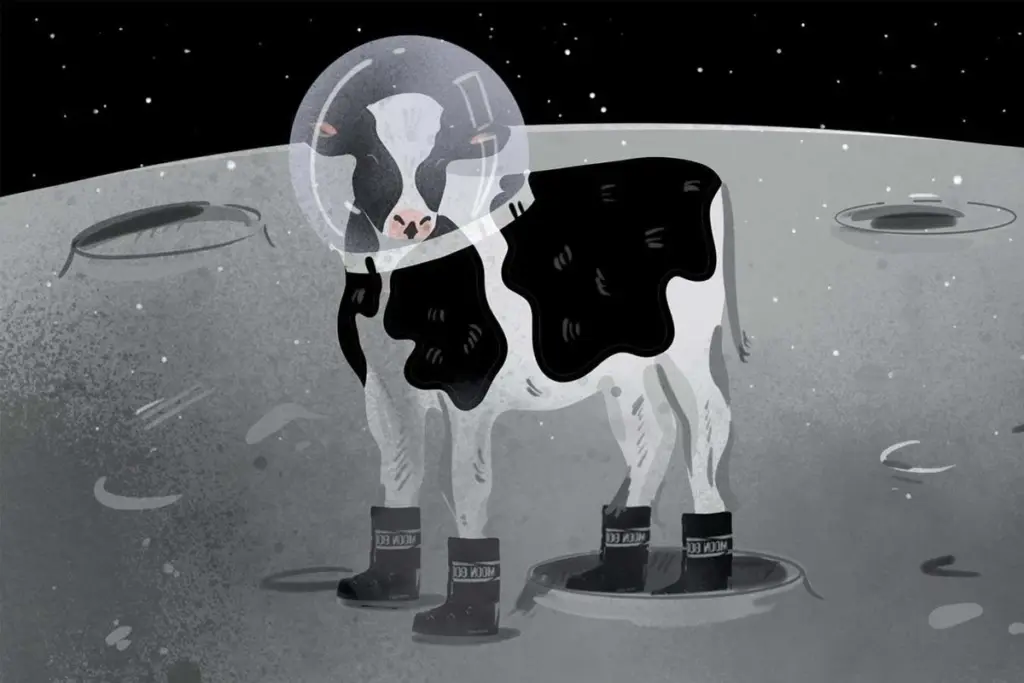
It has been over half a century since humans last set foot on the Moon, a span of 54 years. Numerous robotic missions have since visited our natural satellite, with some achieving successful landings rather than meeting a fate akin to a bullet striking talcum powder. Despite these efforts, human presence remains absent.
NASA’s Artemis project is slated to send astronauts to the lunar surface in early 2028, a goal set for two years hence. Subsequent missions could potentially increase the Moon’s permanent population from its current count of zero.
Given this context, it was somewhat unexpected to learn that the accounting firm PwC released its lunar market assessment in January. The report states, with apparent wisdom, that “The Moon is rapidly emerging as a potential focal point for future global economic activity in space.”
This sentiment aligns with what one might ponder when gazing at Earth’s satellite: the potential for its monetization. PwC indicates that individuals now harbor “ambitions centered on sustained human and commercial presence” and has attempted to quantify the prospective size of this emerging market.
The study employed a scenario-driven methodology, forecasting market opportunities for lunar surface activities between 2026 and 2050. Its analysis centered on five fundamental pillars: mobility, communication, habitation, energy, and water. Each of these domains was examined based on required investment, critical technological advancements, and potential revenue streams.
Entrepreneurs aiming for the Moon may anticipate substantial financial returns. PwC’s analysis projects that the total cumulative revenues from lunar surface activities between 2026 and 2050 could range from $93.9 billion to $127.3 billion. This projected figure surpasses the Gross Domestic Product of most nations.
The report identifies one primary factor influencing this economic outlook. “The lunar economy’s revenue outlook is shaped first and foremost by the intensity of exploration missions, both crewed and uncrewed,” PwC states. This assertion highlights the fundamental dependence of market growth on active space exploration.
However, the projected figures appear somewhat optimistic, particularly considering that the Artemis missions to the lunar surface have yet to commence. Upon closer inspection, it was revealed that this is the second edition of PwC’s lunar market assessment. The inaugural report, published in 2021, projected cumulative revenues of “$170 billion over up to 2040” – suggesting that as of five years prior, PwC anticipated significantly more lunar-related revenue, peaking ten years earlier than the current forecast.
The reasons behind this apparent downward revision in prospects for the lunar economy over the past five years are not entirely clear. This development is a disappointment, particularly for those who might have hoped to profit from investments in emerging markets like “moon-grown beef futures.”
Medical Journal Issues Major Retractions of Fictional Case Studies
In February, the journal *Paediatrics & Child Health* published two correction notices. While journals routinely correct errors in scientific papers, these particular notices were unusual. One correction pertained to 15 published papers, while the other addressed 123 papers. The stated purpose for these extensive corrections was “to add disclaimer.”
Upon reviewing the papers, as this publication did, observers would encounter a lengthy list of articles requiring these new disclaimers. Further down, the following text appears: “Every clinical vignette presented within the journal’s CPSP Highlights section describes a fictional case, created as a teaching tool and related to a Canadian Paediatric Surveillance Program (CPSP) study or survey.”
This statement, phrased in a notably mild manner, might not immediately convey its full implication. However, reporters at Retraction Watch clarified the situation more directly: “A medical journal says the case reports it has published for 25 years are, in fact, fiction.”
It has come to light that since the year 2000, the journal has regularly published a series of case studies that appeared to detail authentic patient experiences. Some of these fictional accounts were incorporated into clinical guidelines, while others reportedly spurred physicians to initiate research projects based on the presented observations. Crucially, these case studies were fabricated, and the journal had never previously indicated their fictional nature.
It is reasonable to suggest that a disclaimer identifying these case studies as fictional should have been present from their initial publication. However, one might also consider an alternative perspective. Science often struggles to gain traction in mainstream media. If it were freed from the constraints of factual accuracy, it might attract a larger readership. The hypothetical headline, “Dark matter is actually the farts of space whales,” clearly demonstrates this potential for broader appeal.
Press Release Promotes Hydration with Hidden Commercial Agenda
This publication occasionally revisits the anecdotal theme of “Well, they would say that, wouldn’t they?” The persistence of this observation stems from press officers frequently distributing press releases that initially appear to present objective scientific information. However, these releases often subtly embed additional details revealing their underlying commercial motives.
Another example arrived in an already crowded inbox, announcing: “Ahead of World Sleep Day (13 March 2026), we’re sharing expert insight on a simple but often overlooked factor that could be impacting sleep quality: hydration.” The release proceeded to explain that “even mild dehydration may contribute to night-time discomfort and next-day fatigue,” by causing “common discomforts such as headaches, dry mouth, muscle cramps and general restlessness.”
This particular press release was distributed on behalf of a company that manufactures soluble electrolyte tablets.
If you have a story you believe should be featured, you can submit it to Feedback by emailing [email protected]. Past and current Feedback articles are available on the publication’s website.