
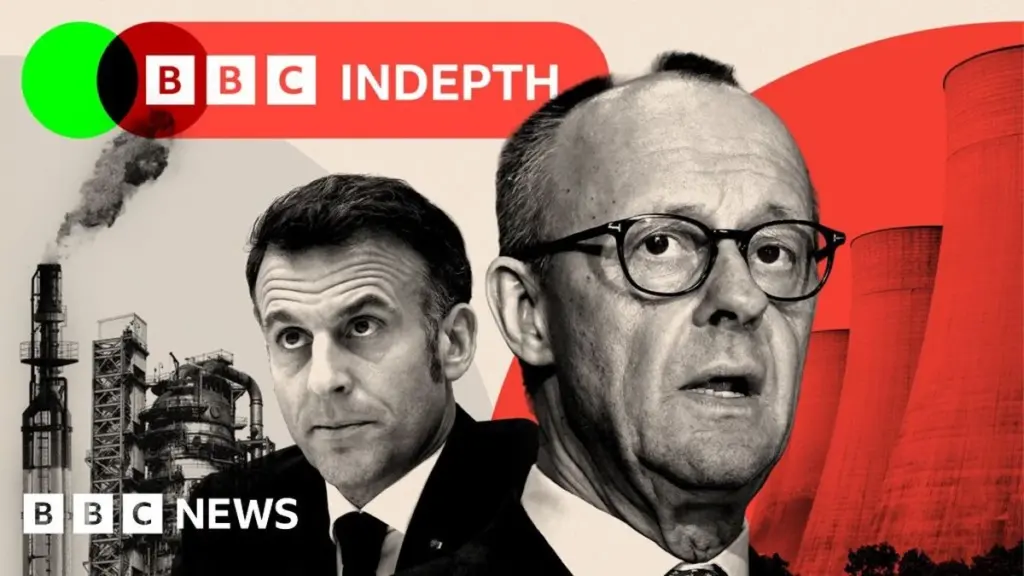
The escalating conflict in the Middle East is resurfacing familiar energy crises that once deeply unsettled the European Union. Seven months after Russia’s full-scale invasion of Ukraine in February 2022, European Commission President Ursula von der Leyen publicly accused Russia of manipulating the EU’s energy market. “They prefer to flare the gas than to deliver it,” she stated, as escalating energy prices impacted consumers across the continent and the market was described as no longer functioning.
Von der Leyen declared this a “war on our energy, a war on our economy, a war on our values and a war on our future.” She emphasized Europe’s pivot away from Russian gas towards more reliable partners like the United States and Norway. However, a mere four years later, deep frustration tied to energy matters is once again palpable in Europe’s core.
A high-ranking European diplomat, speaking anonymously to ensure candidness, expressed significant disappointment. “We swore we’d learn. We promised things would change but here we are,” they stated. The source of this frustration was Europe’s current energy shock, ignited by the ongoing conflict in the Middle East and poised to dominate a summit of European leaders in Brussels. The diplomat lamented that instead of focusing on essential long-term strategies for European competitiveness in a volatile world, leaders were preoccupied with energy price panics, voter discontent, and short-term fixes. This situation, they noted, mirrors the crisis following Russia’s invasion of Ukraine – a different conflict with the same European divisions and energy dilemmas, a cycle that urgently needs breaking.
Hard-Hit European Nations Grapple with Recurring Issues
Few policymakers in Europe would likely dispute the need for change. The critical question remains whether Europe, encompassing the diverse industries, energy needs, and renewable perspectives of its 27 member states, can truly achieve energy self-sufficiency.
Significantly, much has evolved since 2022, when Europe committed to reducing its reliance on Russian gas, oil, and coal to bolster its energy independence following Moscow’s large-scale actions in Ukraine. Despite its reputation for slow decision-making, the EU acted swiftly once the decision to sever ties with Russian energy suppliers was made. Currently, only 2% of its oil imports originate from Russia, primarily reaching Hungary and Slovakia, nations seen as more aligned with Moscow. The EU intends to cease all Russian gas imports, including liquefied natural gas (LNG), by the following year. This marks a dramatic shift from the pre-invasion period, when Russia supplied approximately 55% of Germany’s natural gas imports, powering its energy-intensive industries, particularly chemical production and automotive manufacturing.
As energy prices surged in 2022 due to Russia’s invasion and the subsequent energy dispute, many countries, including Italy and the UK, felt compelled to offer financial assistance to consumers and businesses struggling with exorbitant bills. This occurred shortly after the economic repercussions of the COVID-19 pandemic, placing considerable strain on already cash-strapped governments. “Diversification” became a prominent strategy discussed in Brussels. The EU resolved never to become overly dependent on a single energy source again.
Yet, four years onward, a dependency persists, albeit with multiple suppliers. Europe now relies heavily on Norway and the United States for its energy needs. Simply removing Russia from the equation has not resolved the continent’s energy security challenges.
The Pivotal Role of the United States
Under President Donald Trump, the United States has emerged as a key pillar in Europe’s energy supply, effectively replacing Russia. In 2022, Europe rapidly transitioned from Russian pipeline gas to LNG. The continent is now the world’s largest LNG importer, with the US serving as the primary supplier, accounting for 57% of total LNG imports into the EU.
Energy-intensive Germany now sources as much as 96% of its LNG from the US. This significant reliance might elucidate the silence of German Chancellor Friedrich Merz when he sat beside Trump at the White House recently. Trump had publicly criticized and threatened Spain with a trade embargo for denying him transit rights through its military bases to launch strikes against Iran. Merz’s contemplation of the struggling German economy and its current need for US energy, coupled with a potential reluctance to provoke the American president’s known vindictiveness, could explain his reticence. Nevertheless, the apparent lack of European unity that day was notable.
Since returning to the White House over a year ago, Trump has leveraged economic pressure and Europe’s desire for US assistance in resolving the conflict in Ukraine to compel the EU to commit to purchasing more expensive American LNG. In July, Trump threatened the bloc with substantial 30% tariffs on most of its exports to the US, excluding commodities like steel that already faced higher duties. In response, European Commission President Ursula von der Leyen traveled to Turnberry, Scotland, where Trump was vacationing, and finalized a commitment to spend $750 billion on US oil, LNG, and nuclear technologies over the subsequent three years. The EU pledged to impose no tariffs on US imports, in exchange for Trump reducing his threatened 30% tariff to 15% on most EU exports.
Von der Leyen framed this agreement as a strategic move to decrease the EU’s dependency on Russian fossil fuels. However, it positioned the bloc in a clearly subordinate stance to the US. The Trump administration, meanwhile, hailed the agreement as the largest trade deal in history, aiming to reduce its trade deficit with the EU and secure substantial EU investment in US energy, military equipment, and other sectors.
Europe’s Vulnerability in the Global Energy Landscape
However, it remains uncertain whether EU energy demands or US export capacities can genuinely sustain the scale envisioned in the agreement, which is currently under debate in the European Parliament. Furthermore, Europe’s dependence on LNG renders it highly susceptible to global price volatility during times of crisis, as is currently evident in the Gulf region.
The Strait of Hormuz, a critical global shipping lane and a vital oil transit chokepoint, handles approximately 20% of the world’s oil supply. Since Israel and the US attacked Iran on February 28, Iran has effectively blockaded the Strait, allowing passage only for a limited number of vessels carrying Iranian oil to India and China.
Although Europe imports minimal oil or LNG directly from the Middle East, these commodities operate within global markets. Any blockage of the Strait of Hormuz, present or future, can trigger price surges affecting Europe, irrespective of its direct import volumes. The sudden supply shortage, combined with uncertainty about the duration of the current crisis, led to an approximately 8% spike in oil prices and a roughly 20% increase in European gas prices on the morning of March 2.
Cost Pressures and the Competitiveness Challenge
“This choice between Russian energy and global market volatility presents a very challenging scenario for Europe,” commented Dan Marks, an energy security specialist at the Royal United Services Institute (Rusi). He believes Europe will likely manage to secure energy supplies during the current crisis, even with the Strait of Hormuz effectively closed, due to its economic capacity to outbid other regions. However, the primary concern is cost and its impact on competitiveness.
Looking long-term, he suggests Europe needs to focus on enhancing its energy stockpiles and restructuring or reducing energy consumption to gain greater control over sudden supply fluctuations, such as those currently being experienced. Marks also warns that Europe’s continued reliance on external actors like the US for critical energy supplies introduces unforeseen “wildcards.”
He posed hypothetical scenarios: What if Trump decided to prioritize US domestic consumption for energy supplies to lower US petrol prices or to retaliate against European nations for not immediately dispatching warships to the Strait of Hormuz as he demanded? Marks also highlighted the potential risk of severe storms or fires in the US impacting LNG terminals. “It’s a layering of risk. There are no easy answers here,” he concluded.
Even increased gas supply from the democratic ally Norway comes with its own set of challenges. Norway is now the EU’s largest gas supplier, effectively replacing Russia and providing one-third of the bloc’s annual gas consumption and half of the UK’s. Norway has indicated it is already operating at near maximum capacity, presenting a dilemma for the EU as any significant increase in supply would necessitate new exploration and investment.
Oslo has suggested that the EU may be undermining its own interests with plans to halt oil and gas development in the European Arctic as part of its climate change mitigation efforts. This contrasts with Russia’s extensive plans to expand LNG production in the Russian Arctic. Norway is actively lobbying Brussels to reconsider its policies, illustrating how environmental decisions are becoming entangled in Europe’s broader energy debate.
The Pursuit of Short-Term Solutions
The search for immediate solutions is expected to be a central theme at the upcoming EU summit. Several leaders express deep concern that escalating energy prices, potential inflationary rises, and possible refugee influxes stemming from the intensifying Middle East crisis could alienate voters and bolster populist nationalist movements across the political spectrum. “It is crucial that we reduce the cost impact [from the Iran war],” stated Ursula von der Leyen ahead of the summit, emphasizing the need for immediate relief and a comprehensive review of measures to lower energy bills for citizens.
EU leaders are reportedly considering measures such as reviewing taxes and implementing price caps for consumers as rapid responses to support struggling industries. Outside the bloc, the UK government is also facing pressure to aid households with rising energy costs. Last week, the British Chancellor of the Exchequer, Rachel Reeves, indicated that Treasury officials were reviewing preparatory work conducted during the 2022 energy shock related to the Russia-Ukraine conflict.
Lessons from China’s Energy Strategy
EU governments have also requested the European Commission expedite the expansion of electrification across the bloc while maintaining cost control. They acknowledge that China is considerably more advanced in this area. While China, as the world’s largest oil importer, has been affected by the de facto closure of the Strait of Hormuz, Beijing has long maintained an energy security strategy designed precisely for such eventualities. At its core is electrification, shifting more of its economy away from direct oil and gas consumption to reduce exposure to volatile markets susceptible to geopolitical disruptions.
Currently, electricity accounts for over 30% of China’s final energy consumption, compared to just over 20% globally and less than a quarter in the EU. China’s energy security policies, alongside its emissions reduction targets, have resulted in electric vehicles comprising more than half of new car sales, surpassing traditional combustion-engine vehicles. In contrast to China, discord prevails within the EU. Proponents and opponents of green policies and alternative energy supplies are leveraging the Iran war to support their respective viewpoints. For instance, Belgian Prime Minister Bart De Wever recently caused surprise by advocating for the EU to normalize relations with Russia to regain access to affordable energy. He asserted that while many European leaders privately agree, they are reluctant to voice this publicly.
Occasional off-the-record remarks from segments of German industry echo this sentiment. The hard-right AfD party, currently leading in German opinion polls, calls for the immediate lifting of sanctions on Russia. Elsewhere in Europe, soaring energy costs, exacerbated by Middle Eastern events, are being used to argue for a weakening of the EU’s two-decade-old Emissions Trading System (ETS). This system mandates that industries pay a carbon price for polluting activities, designed to encourage a long-term shift away from fossil fuels.
A contentious debate is anticipated at the EU leaders’ summit on Thursday between nations supporting the continuation of the ETS and those advocating for its weakening or abolition. Several EU member states, including Spain, Sweden, and Denmark, have emphasized that weakening the ETS would unfairly penalize companies that have embraced modernization and sustainability while rewarding laggards still reliant on fossil fuels. Conversely, Central European countries generally oppose the ETS, while Austria and Italy seek to mitigate its impact on electricity prices. Italian Prime Minister Giorgia Meloni stated last week that the Middle East crisis has amplified the importance of energy prices, prompting calls for an urgent suspension of the ETS application to electricity production at the European level.
One proposal from the European Commission, which acknowledges the need to revamp the ETS, suggests utilizing revenues generated from the system to support EU industries grappling with escalating costs. Georg Zachmann, an expert on EU energy and climate policies at the Brussels-based Bruegel think tank, described the situation as a complex trade-off. “If Europe wants to invest in nuclear or renewable energies with the goal of greater self-reliance and energy security, that will take time,” he noted. He characterized it as “madness” that regions like southern Italy, with abundant sunshine, are not maximizing solar panel installations. “You need a long-term plan, but also a realistic one. The EU has one, but new targets for 2030 and particularly 2040 are very ambitious.”
The EU, he points out, has set a legally binding target to reduce net greenhouse gas emissions by 90% by 2040 compared to 1990 levels. He questions the credibility of these targets. Zachmann also highlighted governments’ apprehension regarding costs. “Europe broadly wants to push oil and gas out of the [energy] mix, but policymakers are sensitive to cost implications.” Voter reactions also play a significant role.
Politics are also hindering closer energy cooperation between the EU and the UK, according to Zachmann. “On a sectoral level, both EU and UK energy officials desire increased collaboration as it makes considerable sense. From a purely economic perspective, everyone would benefit.” However, the lingering impact of Brexit politics casts a shadow over these discussions. Ultimately, the EU relies on the European Court of Justice to ensure the proper functioning of the bloc’s single market, a jurisdiction the UK does not accept.
Dan Marks of Rusi suggests that the EU needs to adopt a more flexible approach, while the UK could be more ambitious in its energy cooperation. “The reality Europe faces will continually bring the two parties back together,” he stated. “The UK possesses the largest offshore wind fleet and extensive plans for the North Sea, while the British government will want assurances that, in a crisis, France would not cut off energy supplies to the UK.” This indicates a mutual interest in securing energy reliability.
“Every time there’s an oil and gas crisis, everyone believes it’s a turning point,” observed Marks. “Think back to the 1970s and 80s when the US Congress was examining ways to reduce dependency and energy consumption. Now it’s 2026, and remarkably, we’re facing another gas crisis and remain just as exposed as ever.”
There is little doubt that this period represents a significant moment. EU leaders meeting in Brussels are acutely aware of this. The crucial question is whether they will possess the unity or the courage to enact substantial change.