
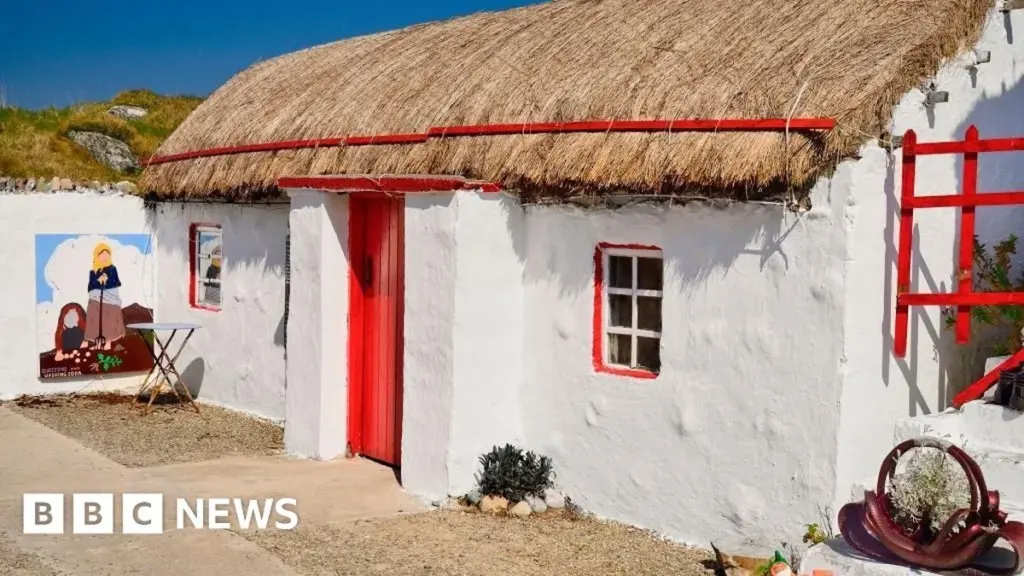
An outdoor museum in County Donegal has resumed operations nearly a year after a significant fire ravaged several of its structures. The Doagh Famine Village, an attraction dedicated to depicting the life of an Irish family from the famine era through to modern times, welcomed visitors back on St. Patrick’s Day.
The incident occurred on May 3rd of the previous year at the Ballyliffin site, located on the Inishowen Peninsula. Local Gardaí, the Irish police force, and fire services responded to the blaze. Residents assisted in bringing the fire under control, and an investigation subsequently ruled out any foul play.
For over ten months, the museum remained closed. Pat Doherty, the owner, noted the substantial community support that contributed to its reopening. Doherty himself has a personal connection to the site; he lived in one of the now-displayed thatched dwellings with his family until 1984. He established the village as a tourist attraction in 1997.
“More than half of the village suffered destruction in the fire,” Doherty stated in an interview with BBC Radio Foyle’s North West Today program. He emphasized the ongoing donations the museum received, to the point where they had to decline further items due to an overabundance. “The community has genuinely rallied around us,” he added.
Rebuilding and Community Endeavor
Among the structures that required complete reconstruction were a replica Orange Hall and a safe house that housed information regarding the peace process. Additionally, items connected to the Travelling community, including caravans, were lost entirely to the flames and subsequently replaced.
Doherty admitted to moments of doubt regarding the museum’s future reopening. The fire arrived at a particularly challenging personal juncture for him, as he had experienced a stroke and was hospitalized just a few weeks prior to the incident. “Then the fire happened,” he recounted, “and at one point, I believed that was it – that it would mark the end. But people truly propelled us forward.”
Extensive restoration work took place throughout the summer months. Doherty highlighted the significant support received, which enabled not only the rebuilding of lost elements but also the incorporation of new features. “We worked on it all through the summer. So many people supported us and ensured we could restore what we lost, while also adding new elements to the experience.”
Educational and Cultural Demonstrations
Visitors to the Doagh Famine Village can gain insight into the Northern Ireland peace process from a variety of viewpoints. The museum also offers demonstrations on the traditional method of making poitín, a potent, clear distilled alcoholic beverage.
“I sincerely need to thank everyone, from Derry to Donegal and even further afield, who all contributed to making this happen,” Doherty concluded.