
Recent years have witnessed temperature increases exceeding projections, sparking a significant discourse among climate scientists. While a consensus exists on the accelerating nature of global warming, a division has emerged regarding its intensity. Some researchers posit that the warming trend is outpacing established climate models, while others attribute the current surge in temperatures to transient natural cycles that are expected to subside.
The resolution of this scientific debate holds critical implications, potentially narrowing the timeframe available for humanity to avert or mitigate catastrophic climate impacts. As Zeke Hausfather of Berkeley Earth in California notes, “Ultimately, this is a question of how bad climate change is going to be.”
Shifting Temperature Trends and Notable Events
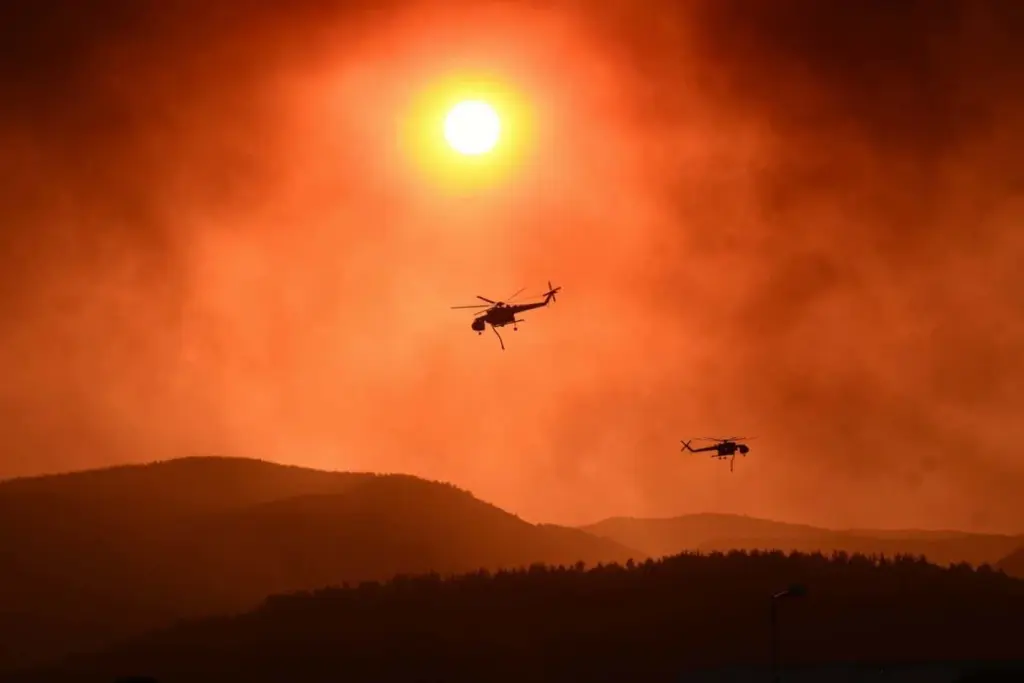
Until the 2010s, Earth’s temperature had been rising at a consistent rate of approximately 0.18°C per decade. Observations then began to indicate a slight, perceptible acceleration. This trend culminated in 2023, which registered as the hottest year on record by a considerable margin of 0.17°C, surpassing expectations even considering a modest acceleration in the preceding decade. This past year was marked by severe weather events globally, including devastating floods in Libya, unprecedented cyclones in Mozambique and Mexico, and widespread, record-breaking wildfires across Canada, Chile, Greece, and Hawaii.
The Aerosol Hypothesis: A Factor in Accelerated Warming
In 2023, a notable paper by James Hansen of Columbia University, renowned for his early testimony on human-induced climate change, proposed that the rate of warming had significantly increased to around 0.32°C per decade after 2010. This acceleration, the research suggested, is largely a consequence of a “Faustian bargain” involving aerosol pollution from fossil fuel combustion. Sulfur aerosols, which reflect solar radiation back into space and contribute to cloud formation, have historically masked some of the warming effects of carbon dioxide emissions.
The paper argued that as the world reduces aerosol pollution—associated with millions of yearly deaths—this obscured warming is gradually being revealed, leading to a hastened climate change. Significant reductions in aerosol emissions have been observed globally. China, for instance, initiated a substantial “war on pollution” following its hosting of the 2008 Beijing Olympics, resulting in at least a 75% decrease in sulfur aerosol emissions since then. Concurrently, the International Maritime Organization’s stricter regulations on sulfur emissions from ships have contributed to cleaner air over oceans. The diminishing presence of ship tracks, lines of cloud trailing vessels, serves as a visual indicator of this reduction.
These combined efforts have led to a substantial decline—approximately 40% since the mid-2000s—in global sulfur dioxide emissions. Samantha Burgess at the European Union’s Copernicus Climate Change Service commented, “The atmosphere is cleaner, so more solar radiation is coming in.”
Further Temperature Anomalies and Emerging Disagreements
The warming trend appeared to persist, with 2024 registering even higher temperatures than 2023 and crossing the 1.5°C threshold above pre-industrial levels for the first time, a significant step towards potentially missing the ambitious goals of the Paris Agreement. Temperatures remained exceptionally high into 2025, a year characterized by deadly heatwaves in Europe and extensive cyclone damage in Southeast Asia and Jamaica.
While a majority of scientists concur that reduced aerosol emissions have contributed to accelerated global warming, the extent of this contribution remains a point of contention. The 0.32°C per decade rate proposed by Hansen and his colleagues is higher than the 0.24°C rate estimated by the Intergovernmental Panel on Climate Change and the 0.29°C average derived from the latest generation of climate models.
The Influence of Natural Variability
A significant complicating factor in assessing the rate of warming is the concurrent influence of natural climate fluctuations. Among these, the pronounced solar cycle maximum in 2020 saw increased solar activity boosting the amount of sunlight reaching Earth. Additionally, the 2022 eruption of an underwater volcano near Tonga released approximately 146 million tonnes of water vapor, a potent greenhouse gas, into the stratosphere, alongside sulfur aerosols that exerted a temporary cooling effect.
Furthermore, the strong El Niño event in 2023 and 2024, characterized by weakening trade winds and a significant displacement of warm ocean water in the Pacific, contributed to the inflation of global temperatures. Accurately quantifying the acceleration of global warming necessitates the estimation and exclusion of these natural variability impacts. Scientists then attempt to discern a trend from observed temperatures, which is still in its early stages of emergence.
Divergent Analyses and Model Comparisons
Recent statistical analyses have presented varying conclusions. A study by Stefan Rahmstorf at the University of Potsdam and statistician Grant Foster indicated a jump in global warming to around 0.36°C per decade. However, scientists such as Michael Mann from the University of Pennsylvania contend that some researchers, including Rahmstorf and Hansen, may have overstated the impact of aerosols while underestimating the influence of natural variability. Mann’s ongoing research suggests a more modest acceleration since the 1990s.
“Recent warmth, which is greatly influenced by the 2023-2024 El Niño event, is entirely consistent with standard climate model simulations,” Mann stated. “There is no need to invoke any ad hoc mechanisms, including a supposed acceleration within the past decade.”
The Role of Cloud Feedbacks
Beyond these factors, unexpected climate feedback loops may also be contributing to recent heat. Clouds, due to their scale and distribution, are inadequately represented in current climate models, presenting a significant uncertainty. A study by Helge Goessling and colleagues at the Alfred Wegener Institute attributed roughly 0.2°C of the nearly 1.5°C warming observed in 2023 to a decrease in low-lying clouds. While some of this cloud reduction is linked to lessened sulfur pollution, researchers suggest it may also stem from an “emerging low-cloud feedback.”
Normally, a temperature inversion, created by the stratification of cold, moist air and warm, dry air over subtropical oceans, keeps these layers distinct. Climate change, by warming the colder air and disrupting this inversion, could allow dry air to descend, reducing moisture and consequently cloud cover, according to Goessling. “The more you warm up, the more you would be able to dissolve your low-level clouds,” he explained. “It’s really most likely that there is a low-cloud feedback taking place.”
Future Implications and Policy Imperatives
The distinction between the drivers of accelerated warming—whether primarily aerosol reduction or the activation of climate feedback loops—carries significant future implications. If sulfur reductions are the main cause, climate change might stabilize in coming decades as there is less sulfur pollution to cut. Conversely, if climate feedback loops have been triggered, the rate of warming could continue to increase.
This scenario would suggest an underestimation of climate sensitivity, the degree of warming resulting from a given increase in atmospheric CO2. Brian Soden at the University of Miami described a “worst-case scenario” where an unpredicted cloud feedback mechanism indicates a far more sensitive climate than current models project. Current policies place the world on track for approximately 2.7°C of warming this century, with an uncertainty range of about ±1°C. Increased acceleration could push this figure closer to 3.7°C, necessitating more drastic emissions reductions to prevent severe consequences.
Hausfather highlighted the severity, stating, “3.7°C… makes some regions uninhabitable,” whereas “2.7°C would still be bad, but many more regions could potentially adapt to that.”
Regardless of the precise acceleration, fossil fuel emissions are also increasing, a trend that governments must urgently reverse to mitigate climate impacts, according to Burgess. She noted, “Global warming is a bit faster, but we’ve also lost time because we’ve not seen the ambitious measures to decarbonise our society.”