
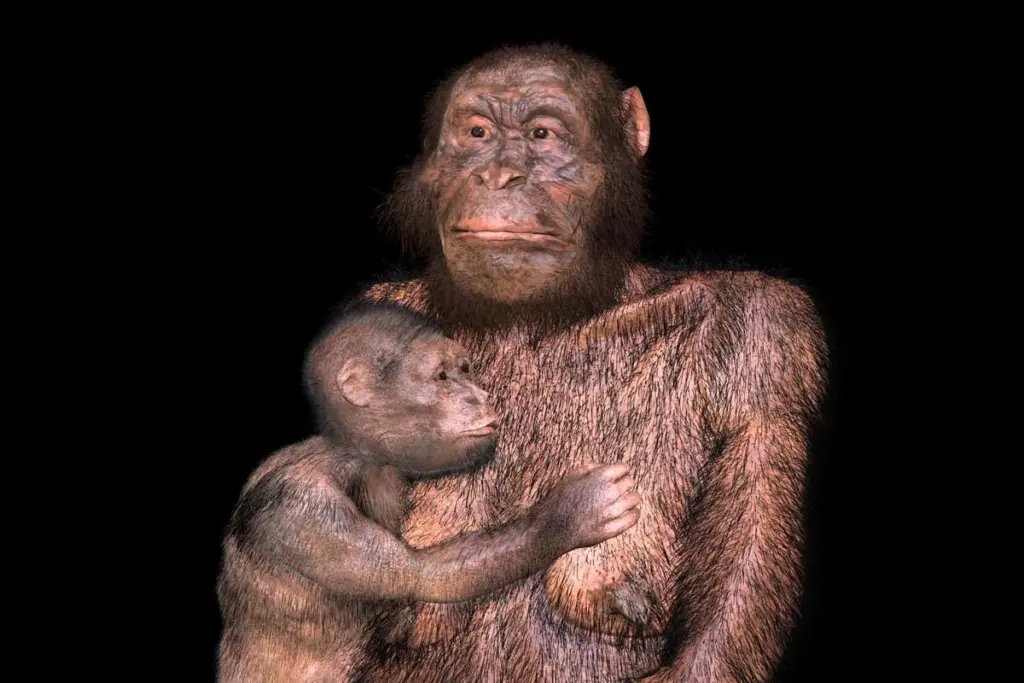
Childbirth presented significant challenges and dangers for our early ape-like ancestors, a situation not entirely dissimilar to the experiences of women today. Recent research focusing on the pelvic structures of *Australopithecus* suggests that the birthing process exerted considerable strain on their pelvic floors. This implies that *Australopithecus* mothers were susceptible to tears in this critical area.
“Our findings indicate that *Australopithecines* exhibited considerable similarities to modern humans,” stated Pierre Frémondière, a midwife affiliated with Aix-Marseille University in France. “Should they have undergone numerous deliveries, it is probable that they would have faced an increased risk of pelvic floor disorders.”
For contemporary humans, vaginal birth necessitates significant physical exertion. This is largely due to the passage of a large-headed infant through a comparatively narrow pelvis. A vulnerable region during this process is the pelvic floor, a complex network of muscles that connects the left and right sides of the pelvis. Many women experience tearing of their pelvic floor during labor, and it is estimated that one in four women will encounter pelvic floor disorders such as incontinence or organ prolapse.
Frémondière and his research team embarked on an investigation to determine whether similar childbirth difficulties affected our extinct ancestors. Their focus was on *Australopithecus*, a genus that inhabited Africa between approximately two to four million years ago. These early hominins were bipedal, meaning they walked upright, yet retained adaptations for arboreal life, and may have been capable of crafting and utilizing stone tools. They are considered potential ancestors of the *Homo* genus, to which modern humans belong.
Drawing upon the limited number of *Australopithecus* pelvises that have been recovered, the research group was aware that the birth canal of *Australopithecus* possessed an oval shape. This meant it was wider from side to side but narrower from front to back. In contrast, the birth canal of non-human primates, such as chimpanzees, is structured differently, while the modern human birth canal is more circular.
To explore the mechanics of childbirth in *Australopithecus*, the team developed simulations of the pelves from three distinct species: *Australopithecus afarensis*, *Australopithecus africanus*, and *Australopithecus sediba*. For the simulation of pelvic floor muscles, the researchers utilized an MRI scan of a pregnant woman. They extracted a three-dimensional representation of the pelvic floor and then modified it to conform to the dimensions of the *Australopithecus* pelves. Subsequently, they simulated the passage of a baby through these modeled pelves, estimating the forces that would be applied to the pelvic floor.
The study’s results revealed that the simulated *Australopithecus* pelvic floor would have experienced forces ranging from 4.9 to 10.7 megapascals. These figures are comparable to the 5.3 to 10.5 MPa exerted on the modern human pelvic floor during labor.
Lia Betti at University College London commented positively on the study’s methodology, noting the strength in using multiple *Australopithecus* pelves and comparing the findings to data derived from live human births. “This is a really good way of checking that your model is robust,” she observed.
Despite these strengths, Betti expressed some reservations regarding the results. She highlighted the unknown nature of *Australopithecus* pelvic floor musculature, which could have influenced their resilience to tearing. Furthermore, as a validation step, the team simulated two modern human births, and in one instance, the simulated baby did not rotate within the birth canal as they typically do in reality. This suggests that the simulations might be omitting crucial factors, according to Betti.
“The problem is just we do not have a huge amount of evidence,” Betti articulated. The availability of only three *Australopithecus* pelves, each from a different species, represents a small dataset. There are currently no known pelves from earlier hominin species.
“I think that we are just at the beginning of this kind of study,” Frémondière concluded.