
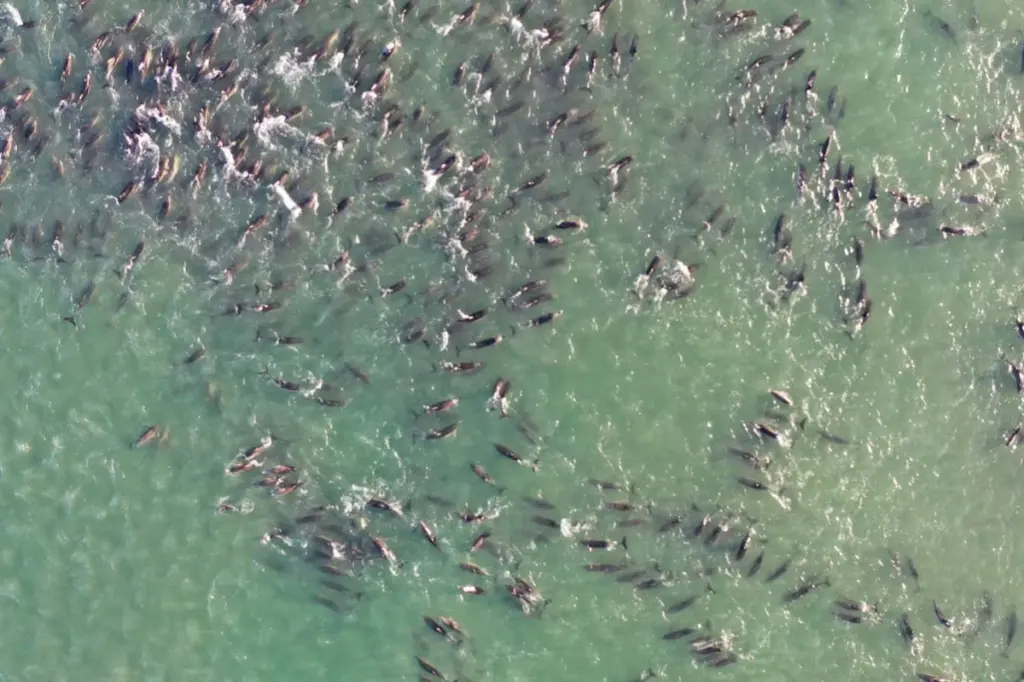
Numerous stranded dolphins along Argentina’s coast appear to have met their fate in a grim predicament, finding themselves trapped while attempting to evade predatory orcas. This heartbreaking scenario, a stark example of a lose-lose situation, has been illuminated by video evidence shared across social media and citizen science platforms. These recordings have been instrumental in helping scientists piece together the puzzle behind two devastating mass stranding events that have occurred in recent years.
Magdalena Arias, affiliated with Argentina’s National Scientific and Technical Research Council, notes that while predators aren’t always the sole cause of mass strandings, the evidence suggests that interactions between predators and prey can sometimes precipitate such events. This is particularly true when compounded by geographical features along the coast, tidal patterns, and the strong social cohesiveness inherent to dolphin behavior.
Mass mortality events involving marine mammals have been a recurring phenomenon for millions of years. Yet, the precise reasons behind these strandings remain a subject of scientific debate. Existing hypotheses point to a range of factors, including human interference, the presence of toxic algae blooms, infectious diseases, disorientation, overpopulation, natural disasters, and even group hunting expeditions that go awry.
Some research efforts have posited that pods experiencing strandings might have been attempting to flee from predators. However, documenting such escapes has proven challenging. Predatory hunts often span vast oceanic areas and can last for extended periods, making direct observation difficult. “Often researchers only see the final result,” Arias explains, “a group of dolphins stranded on the beach that appear otherwise healthy.”
Over the past half-decade, common dolphins (Delphinus delphis) have experienced three mass stranding incidents in northern Patagonia. This frequency is notable, as such events had not been observed previously in this region. This unusual pattern prompted Arias and her research colleagues to undertake an investigation.
Their work involved a detailed analysis of video footage. This material was sourced from drone cameras and mobile phones, contributed to the eWHALE citizen science platform, and shared on social media by a diverse group including tourists, tour guides, fishermen, and local inhabitants. This collective effort provided crucial visual data.
In one instance, observed in 2021, approximately 350 dolphins were recorded moving at high speed towards the San Antonio Bay, situated in Argentina’s Rio Negro province. Crucially, a pod of eight orcas (Orcinus orca) was observed trailing them, positioned about thirty minutes behind. Upon reaching the bay’s entrance, a significant number of dolphins veered into the shallow waters of the port, adopting a quiescent state as if seeking concealment. The orcas, in contrast, executed a U-turn, retreating back into the open sea. Tragically, the following day saw dozens of these dolphins discovered deceased within the port area.
A similar event unfolded in 2023. In this instance, around 570 dolphins were documented heading toward the bay at considerable speed, pursued by a group of orcas. A portion of the dolphin pod entered the port. However, on this occasion, local authorities and volunteers successfully intervened, managing to rescue the dolphins after the orcas had departed from the immediate vicinity.
Post-mortem examinations were conducted on 38 dolphins that perished during the 2021 stranding. These analyses revealed that the animals were in good physical condition, exhibiting no significant signs of disease or injury. Intriguingly, their stomachs contained no recent food remnants, suggesting that the dolphins were not actively hunting prey at the time of the incident. “This makes some of the most common explanations for strandings less likely,” stated Arias.
The research team also integrated scientific reports and anecdotal accounts of orca sightings in the region over recent years. This information allowed them to construct a chronological map of orca activity in the area. This mapping further supported their findings, revealing two confirmed instances of orcas actively hunting and killing common dolphins within this specific locale.
Arias suggests that the dolphins likely sought refuge in shallow zones, areas that potentially disrupt the echolocation capabilities and maneuverability of orcas. However, this strategy inadvertently led them into a new peril, becoming ensnared by the sandbanks and tidal channels characteristic of these bays.
Concurrently, it is plausible that orcas may intentionally drive dolphins towards bays as a tactic to corner their prey. Evidence supporting this comes from observations of two orcas involved in the 2021 event. These individuals had been repeatedly sighted utilizing coastal formations to effectively trap sea lions, indicating a sophisticated hunting strategy.
The prolonged stress and disorientation experienced during such intense chases could have severely impaired the dolphins’ ability to navigate their way back to the open sea. Arias believes that occurrences of this nature likely transpire globally but have simply not been documented to date.
This investigation underscores the significant role that citizen science can play in advancing research. Furthermore, understanding these complex ecological interactions not only sheds light on the causes of mass strandings but also enhances our comprehension of how marine ecosystems evolve and how different species adapt to these dynamic environmental shifts, she concluded.