
Twice within a single week, Russian President Vladimir Putin has engaged in telephone conversations with the President of Iran. These discussions occur as the United States and Israel continue their military actions against Iran, a period during which Putin is positioning himself as an international arbiter of peace.
This role is not without its complexities, particularly given the Kremlin leader’s decision to initiate a full-scale invasion of an independent sovereign nation in 2022. The United Nations General Assembly at the time formally condemned Russia’s actions in Ukraine as a contravention of the UN Charter.
Despite the Kremlin’s current calls for “a swift de-escalation and political resolution” concerning the conflict in Iran, Russia persists with its war of attrition against Ukraine. Russia maintains a “Comprehensive Strategic Partnership” agreement with Iran, and President Putin recently reiterated the Kremlin’s “unwavering support” for Tehran. However, this strategic partnership does not equate to a mutual defense treaty.
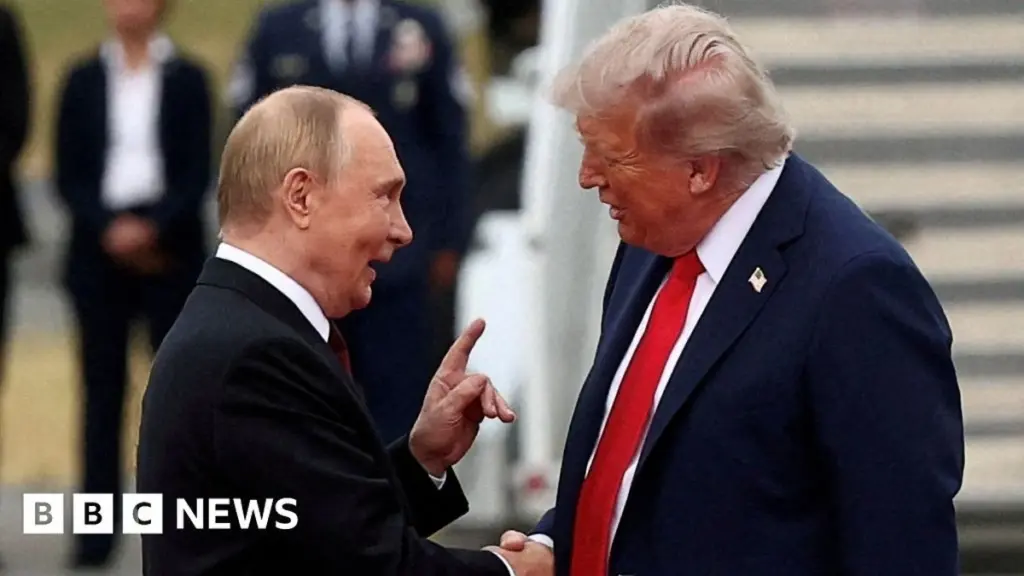
Instead of a military alliance, Moscow has offered to act as a mediator in the conflict. Kremlin reports from a Monday telephone conversation with U.S. President Donald Trump indicated that Putin “expressed several thoughts aimed at a swift diplomatic resolution of the Iran conflict.” These proposed solutions were reportedly based, in part, on communications with leaders from Gulf states, the President of Iran, and other national leaders.
For Russia, this situation presents an avenue to enhance its regional standing within the Gulf and the broader Middle East, showcasing its influence on the international stage. It also offers an opportunity to strengthen its relationship with Washington.
The Kremlin is keen to preserve constructive working relations with the Trump administration. Moscow perceives its ties with the Trump administration as advantageous to its strategic objectives in Ukraine. This careful approach explains why Putin has avoided direct, public criticism of Trump regarding the Iran war.
Following his call with Putin on Monday, Trump commented, “[Putin] wants to be helpful.” He further suggested that Putin “could be more helpful by getting the Ukraine-Russia war over with. That would be more helpful.”
Yet, even as the Kremlin advocates for de-escalation in Iran, the unfolding conflict generates additional opportunities for Moscow, particularly economic ones. The recent sharp increase in global oil prices offers a significant and much-needed boost to Russian government revenues. This sustained period of elevated prices is crucial for Russia in continuing to finance its ongoing war in Ukraine.
Russia’s federal budget is structured with an assumed oil export price of $59 per barrel. In recent months, oil prices had fallen below this benchmark. However, this week saw crude oil surge dramatically, reaching nearly $120 per barrel. While prices have since receded, they remain notably above the $59 threshold.
Furthermore, President Trump has indicated a willingness for the U.S. to waive oil-related sanctions on “some countries” to alleviate supply shortages stemming from the current Iran conflict. Should oil sanctions be eased concerning Russia, Moscow could anticipate an even more substantial financial benefit. Ukrainian President Volodymyr Zelensky stated that such a development would represent a “serious blow” to Kyiv and urged Trump to refrain from such action.
The pro-Kremlin publication Komsomolskaya Pravda adopted an optimistic outlook in its commentary, with a headline declaring, “Expensive oil is a reason [for the West] to cancel sanctions.”
While the Kremlin may be maintaining diplomatic silence regarding the American president, certain Russian newspapers have adopted a more critical stance, targeting both Trump and the Iran war. Tuesday’s edition of the tabloid Moskovsky Komsomolets published a harsh assessment: “The ‘peace president’ has simply lost his mind.” The publication further added, “The Emperor has no clothes. Or rather, no sanity.”