
Scientists are exploring a new method for identifying signs of life beyond Earth, a technique that could prove instrumental in detecting extraterrestrial organisms even if they operate on fundamentally different chemical principles than life as we know it.
The prevailing strategy in the search for alien life relies on the identification of biosignatures. These are specific substances or observable patterns that serve as reliable indicators of biological activity. Astronomers frequently analyze the atmospheric composition of distant planets, seeking molecular biosignatures. However, a significant challenge arises because many molecules produced by living organisms can also be generated through non-biological geological or chemical processes. This overlap complicates definitive identification.
Christopher Carr and his team at the Georgia Institute of Technology have developed a novel test that centers on amino acids. These molecules are fundamental components of proteins, which are complex structures indispensable to all terrestrial life. While crucial for life, amino acids themselves are relatively simple compounds. Their existence is not exclusively tied to living systems; they have been detected in non-biological environments, such as lunar soil and within comets and meteorites.
Recognizing this ambiguity, Carr and his colleagues moved beyond merely detecting amino acids. They theorized that measuring the reactivity of these molecules within a given sample would offer a more robust marker of biological presence.
In systems devoid of life, molecules undergo formation and destruction through interactions with their surroundings. Environmental factors like cosmic rays or other chemical compounds can alter molecular structures. Crucially, molecules exhibiting higher reactivity are more susceptible to degradation. Carr explains, “If you don’t have a system in place to maintain what’s present, then the things that will tend to be destroyed would be those that are more reactive.” In contrast, living systems actively preserve more reactive molecules. This preference stems from their necessity in facilitating the intricate chemical processes that sustain life, thereby creating a distinctive observable signature.
The inherent reactivity of a chemical compound is dictated by the arrangement of electrons within its molecular structure. Molecules with higher reactivity tend to have a narrower energy disparity between their outermost electrons and the next available energy level that an additional electron would occupy during a chemical reaction.
Carr’s research group calculated this specific energy difference for 64 different amino acids, including many not utilized by life on Earth. They then cross-referenced these calculations with the known abundances of amino acids in various samples. These samples originated from both abiotic sources, such as meteorites and lunar soil, and from living organisms, like fungi and bacteria. By mapping the statistical distribution of amino acid reactivities against their molecular energy calculations, the team developed a method to assign a probability of a sample being biological or non-biological.
When subjected to this methodology, over 200 distinct samples, encompassing both living and non-living materials, were analyzed. The results indicated that the test could accurately identify life with a 95 percent success rate. Carr highlights the approach’s elegance, noting, “The beauty of this approach is that it’s incredibly simple. It’s highly explainable and it’s linked directly to physics.”
Carr posits that life originating elsewhere in the universe is likely to share fundamental characteristics with Earth-based life. Specifically, it would likely be based on carbon chemistry, involve amino acids, and adhere to the same chemical reactivity principles. Therefore, this analytical method should be applicable to extraterrestrial life. He further elaborates, “Life inherently needs to control when, how and where molecules interact and reactions take place, so that is going to involve having structures that can regulate the flow of electrons and how things interact electrically.”
While the concept of using molecular reactivity to detect life is not entirely new, the specific technique of measuring this reactivity across a statistical distribution represents an advancement, according to Henderson Cleaves, a researcher at Howard University in Washington D.C.
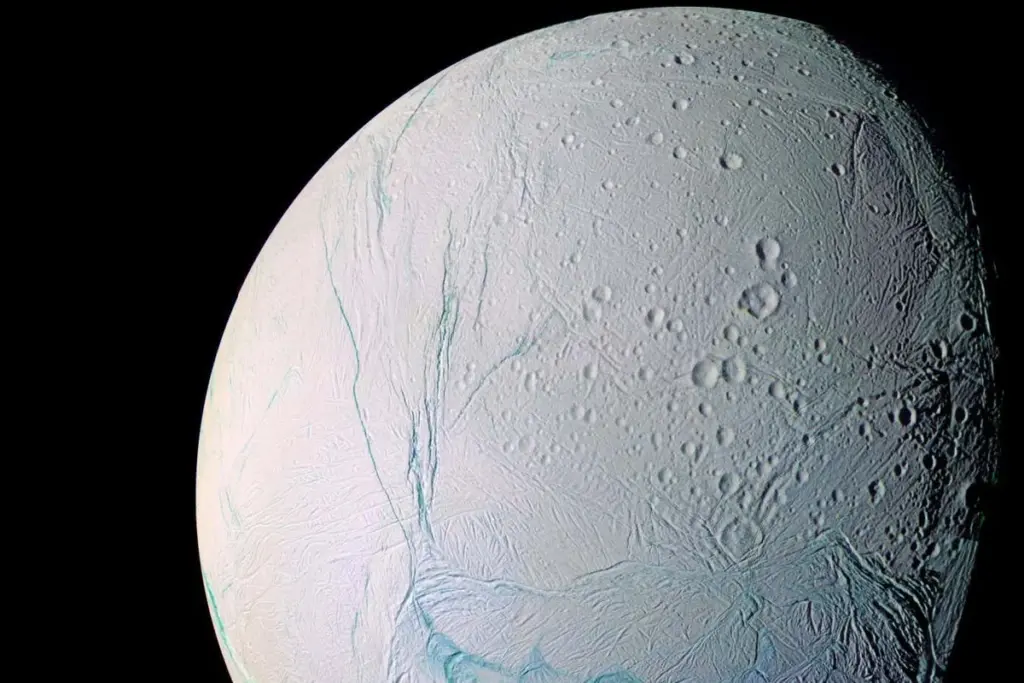
Cleaves suggests that this novel method could be integrated into a comprehensive suite of life-detection tools for prospective space missions, such as those targeting Mars or moons like Enceladus, a moon of Saturn. However, he cautions that implementation would necessitate sophisticated equipment capable of accurately measuring molecules and their concentrations, a technical challenge that remains considerable.