
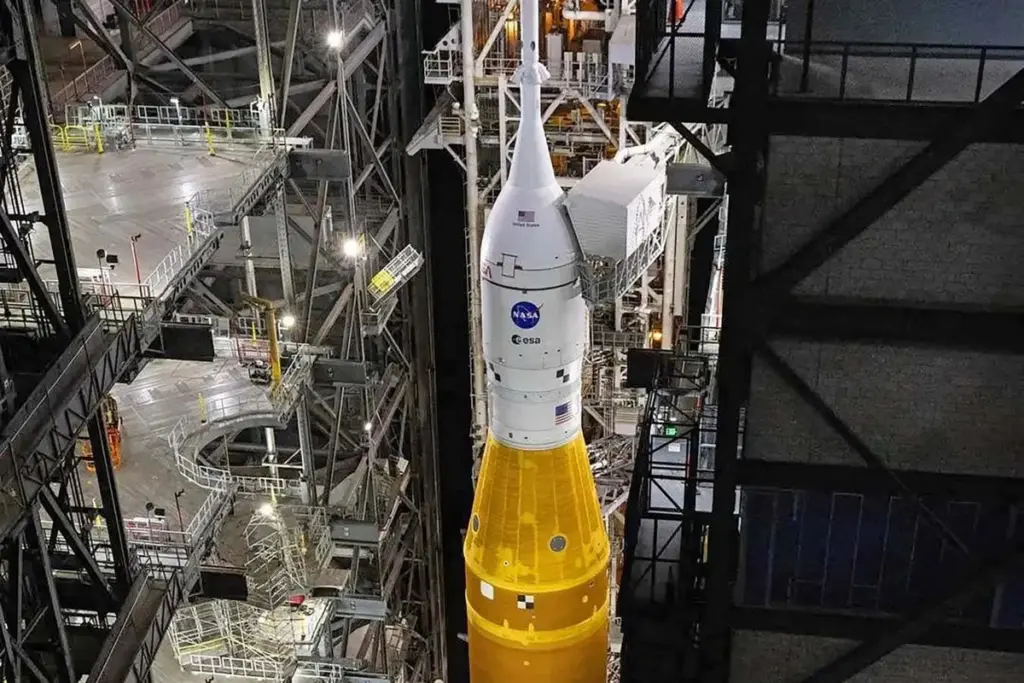
NASA is implementing significant adjustments to its strategy for the Artemis program, the initiative aimed at returning humans to the Moon. During a press conference held on February 27, NASA Administrator Jared Isaacman revealed crucial modifications to the agency’s roadmap for lunar expeditions. These changes come after the successful conclusion of the Apollo program in 1972, marking the first crewed lunar landings in over five decades.
The Artemis II mission, initially scheduled for launch within the coming months, encountered challenges during its recent practice runs. The Space Launch System (SLS) rocket experienced issues with fuel leaks during loading procedures. These difficulties necessitated the rocket’s return from the launchpad for detailed analysis and necessary repairs. The SLS rocket’s previous launch occurred in 2022.
Artemis II’s primary objective was to carry astronauts on a trajectory around the Moon, serving as a preparatory step for the Artemis III mission, which intends to land a crew on the lunar surface. However, this plan has now been revised. Artemis III will no longer focus on a lunar landing. Instead, its role will shift to validating the Orion crew capsule’s capability to rendezvous and dock with a lunar lander while in orbit. Additionally, it will test the advanced space suits designed for the eventual surface operations.
While this modification might appear to represent a step backward, it is part of a broader strategy to increase the tempo of lunar missions. The revised plan designates Artemis IV and potentially Artemis V for lunar landings, with these missions now targeted for 2028.
“The entire sequence of Artemis flights needs to represent a step-by-step buildup of capability, with each step bringing us closer to our ability to perform the landing missions,” stated NASA official Amit Kshatriya. He further elaborated, “Each step needs to be big enough to make progress, but not so big that we take unnecessary risk given previous learnings.”
Previously, there were intentions to significantly upgrade the upper stage of the SLS rocket for subsequent missions. However, Administrator Isaacman announced during the press conference that NASA will now pursue a “standardized” version of the rocket. This approach aims to avoid making substantial modifications to the rocket for every mission. “We’re not going to turn every rocket into a work of art,” Isaacman remarked during the briefing.
These strategic shifts signal a fundamental change in the Artemis program’s overall philosophy. The new approach emphasizes thorough testing of each component of the rocket and mission plan before proceeding to the next stage. The focus is on executing smaller, quicker advancements rather than undertaking major leaps every few years. Isaacman expressed his hope that this methodical progression will help mitigate the persistent delays that have affected the Artemis program since its inception, thereby fostering a more secure and logically structured lunar exploration initiative.