
Spain’s government has recently made public a substantial collection of documents pertaining to an attempted coup that shook the nation 45 years ago. This event, a pivotal moment in the country’s transition to democracy, has continued to fuel speculation and alternative narratives.
The incident unfolded on February 23, 1981. A contingent of officers breached the Spanish parliament’s main chamber, armed and issuing threats to politicians during the swearing-in of a new government. Their objective was to reinstate authoritarian rule, a mere six years after the demise of dictator Francisco Franco. This bid for a return to past governance models ultimately faltered when King Juan Carlos declined to endorse their actions.
However, the episode has since been shrouded in a persistent haze of conspiracy theories. These theories range from suggestions of prior knowledge on the king’s part to allegations of his direct involvement in the coup’s orchestration.
The release of 153 formerly classified files generated significant public anticipation. The demand was so high that the government’s webpage, designated for hosting these documents, experienced temporary outages due to the influx of visitors.
Within the declassified material are police and judicial reports, detailed transcripts of official conversations, and records of foreign governments’ responses to the unfolding events. Despite the anticipation, the documents themselves do not appear to contain any groundbreaking revelations that dramatically alter the established understanding of the coup.
Francisco Franco, Spain’s dictator noted for his harsh rule, died in 1975. His death created an opening for the establishment of a parliamentary monarchy. Six years later, Spain’s nascent democracy faced a perilous test for several hours during the coup attempt.
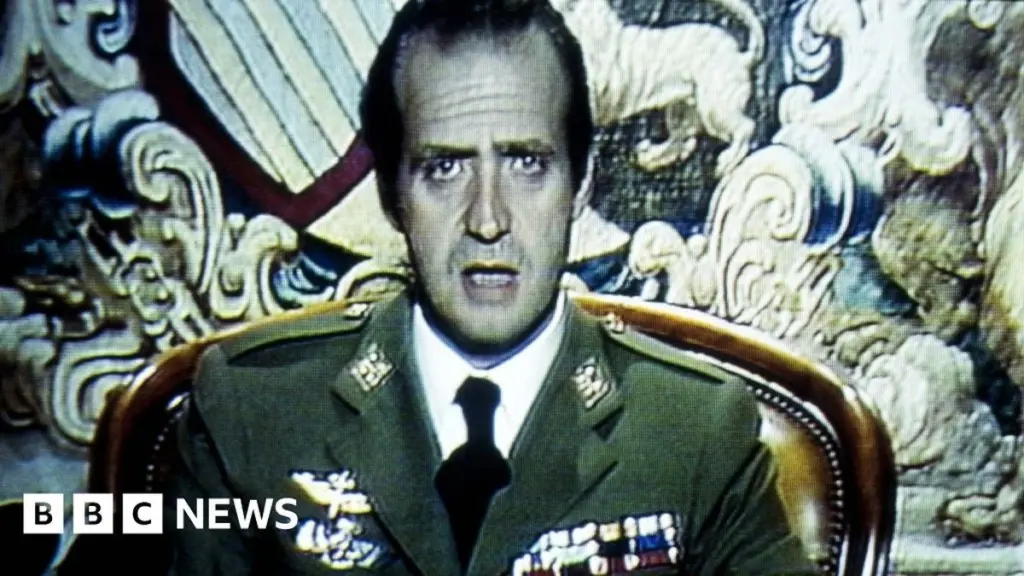
The attempt ultimately failed following a televised address by the young King Juan Carlos. In a crucial intervention, he spoke directly to the Spanish people and the armed forces, unequivocally denouncing the rebels. He issued orders for all military units to remain within their barracks, thereby signaling his opposition to the coup.
For a significant portion of the Spanish populace, this intervention solidified King Juan Carlos’s image as the protector of their young democracy and signified the nation’s definitive stance against Francoist ideologies. Yet, in the subsequent decades, many voices have begun to question the king’s purportedly heroic role in the crisis.
Alternative theories have posited that the uprising was a carefully orchestrated event, a staged test by the political establishment itself, designed to ultimately strengthen the country’s democratic foundations. These narratives suggest the coup was not a genuine threat but a controlled exercise.
The current administration, led by Prime Minister Pedro Sánchez of the Socialist party, stated that keeping documents related to this critical event classified was an “historical anomaly.” They emphasized that their declassification was a necessary correction and posed no personal risk to anyone. Furthermore, the government indicated that releasing these files would help discredit those propagating unsubstantiated theories about the coup.
Despite the lack of overarching revelations, some notable details emerged from the released files. Among these was the confirmation that six members of the intelligence services were implicated in the plot. Another document highlighted the security forces’ estimations, which suggested that an attempt by a police special unit to storm parliament could have resulted in “between 80 and 110 deaths.”
The collection also included messages of support from various foreign governments that were sent once the coup attempt had been successfully thwarted. One such message, conveyed in Spanish from Queen Elizabeth II to King Juan Carlos, expressed a collective sense of relief: “All of us in Great Britain are reassured to know the final result.”