
The bedrock principle in quantum mechanics that quantum information cannot be duplicated—the no-cloning theorem—has long been considered an absolute tenet of physics. However, novel research into backing up quantum bits, the fundamental units of quantum computers, suggests a way to circumvent this seemingly immutable law.
The Discovery of the No-Cloning Theorem
First articulated by researchers in the 1980s, the no-cloning theorem states that quantum states, which encapsulate all informational properties of a quantum system, are fundamentally uncopyable. Any attempt to measure the information with the intention of duplication inevitably destroys the very delicate quantum properties being measured. This principle has been instrumental in the development of quantum technologies, particularly in areas like quantum encryption, where it underpins straightforward protocols designed to prevent unauthorized copying and hacking of information.
A New Approach to Quantum Information Duplication
A team led by Achim Kempf at the University of Waterloo in Canada has now demonstrated a method by which a quantum system can, in fact, be cloned. The crucial condition is that the information must first be encrypted and accompanied by a unique, single-use decryption key.
Kempf explains the process: “You can create numerous copies and thus generate redundancy, but these copies must be encrypted, and the decryption key is designed for only one application.” He further clarifies that this approach remains compatible with the no-cloning theorem, as it ensures that only a single, unencrypted, and readable copy of a qubit can exist at any given time.
From Quantum Wi-Fi to Encryption Breakthrough
This unexpected conclusion emerged from the researchers’ investigation into the feasibility of a quantum Wi-Fi or radio station. Such a concept was previously considered impossible under the traditional no-cloning theorem, as it would require multiple receivers to access identical quantum information simultaneously.
During their analysis of how random fluctuations, or noise, might affect the information received by multiple recipients, Kempf and his colleagues observed a potential workaround. “We questioned why quantum noise appeared to interfere with the no-cloning theorem,” Kempf stated.
Upon closer examination, the team identified that the quantum noise in their system was effectively acting as an encryption mechanism. It garbled the original message, but in a reversible manner. This provided the insight that such an effect could be intentionally harnessed as a tool.
Experimental Validation and Practical Implications
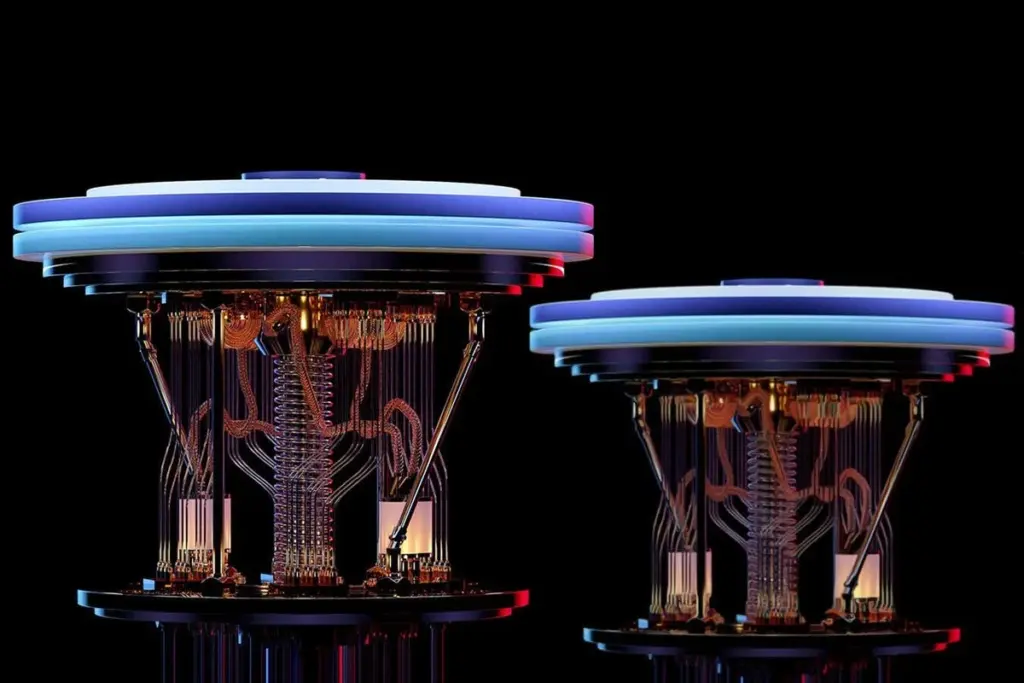
Following theoretical proof, Kempf’s team proceeded to demonstrate the practical application of their protocol using an IBM Heron 156-qubit quantum computing processor. The technique proved remarkably resilient to the prevalent noise and errors that characterize current quantum computers.
The researchers successfully created hundreds of encrypted clones of individual qubits by repeatedly applying their method. Kempf noted, “We ended up running out of available space on the IBM processor. Although it houses only 156 qubits, we calculated that we could perform over 1,000 encrypted clones before accumulated errors significantly impacted the results.”
Potential for Quantum Cloud Storage and Communication
Kempf believes this adaptation of the no-cloning theorem holds significant promise for quantum cloud storage and computing services. He draws a parallel to conventional data storage: “When you upload a file to Dropbox, your data is typically replicated at least three times across different, geographically dispersed computers. This redundancy ensures data survival even if one location is affected by disasters.” He added, “It was previously thought impossible to apply this to quantum information due to the prohibition of cloning. However, our findings show it can be achieved.”
Expert Perspectives and Refinements
Aleks Kissinger from the University of Oxford described the development as a “fascinating quantum cryptographic protocol” with potential applications in quantum communication, particularly where information redundancy is needed. However, he cautions that the technique does not invalidate the original no-cloning theorem, as Kempf’s method is not a direct duplication in the traditional sense. “It’s less about cloning and more about distributing the quantum state to numerous parties, from whom it can later be retrieved,” Kissinger commented. “While it’s an ingenious technique, I personally wouldn’t classify it as cloning.”
Kempf concurs with this distinction, stating, “It is not cloning; it is encrypted cloning. This represents a refinement of the no-cloning theorem.”
Journal References
Physical Review Letters DOI: 10.1103/y4y1-1ll6
arXiv DOI: arXiv:2602.10695