
Both artists and astronomers function as translators. They transform observable phenomena into narratives that humans can comprehend. The Royal West of England Academy in Bristol, UK, is currently hosting “Cosmos: The Art of Observing Space,” an exhibition that thoroughly examines this intricate conversion process.
Artist Ione Parkin, who also curated the exhibition, describes the experience of observing as a recalibration of perspective, shaped by sustained engagement. In an essay accompanying the show, she connects the prolonged observation required for stargazing with the meticulous analysis of scientific data. The exhibition, open until April 19th, encourages visitors to become observers themselves, fostering new understandings through the integration of art and science.
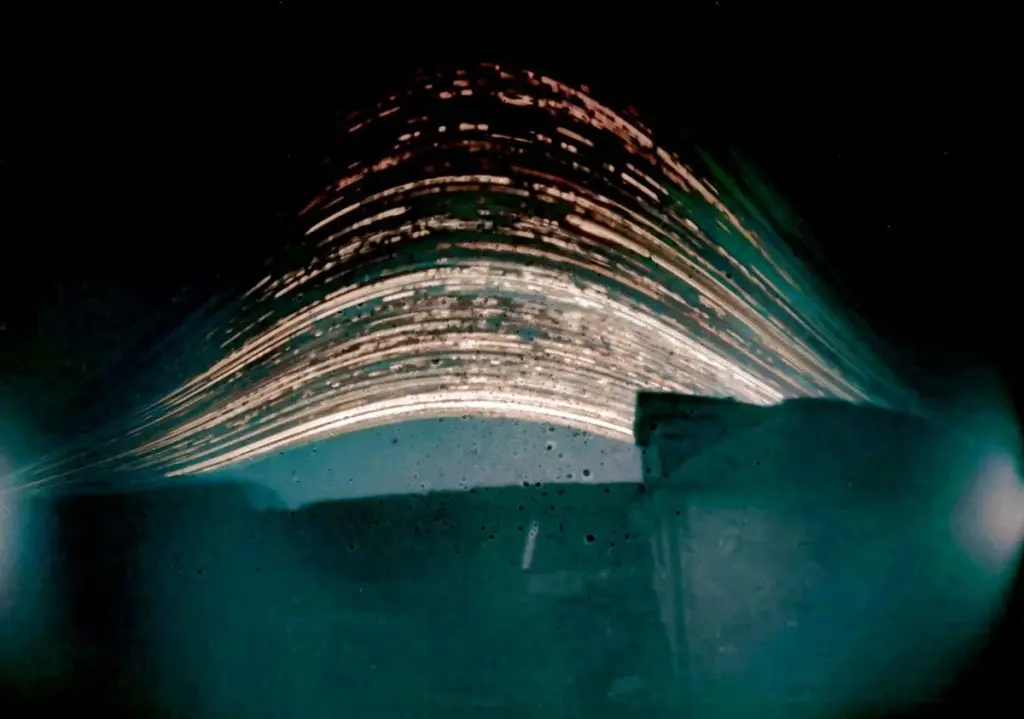
An example of this creative process can be seen in a work by Janette Kerr. She collaborated with communities across Iceland, Greenland, Shetland, and Somerset to capture moments in time using solargraphy. This photographic technique involves long exposure times to record the sun’s movement over several months.
Alex Hartley’s artwork offers another perspective. This piece integrates a solar panel with modified photographs of ancient Neolithic standing stones. It highlights a historical continuity in solar technology, extending from antiquity to the present day.
Another featured piece is a painting by Ione Parkin herself. The canvas is a dynamic swirl of reds and oranges, punctuated by streaks of brilliant white, visually representing the turbulent motion of super-heated plasma on the sun’s surface.
Concluding the showcased works, Michael Porter presents an “Impossible Landscape.” Parkin notes that Porter ventures “beyond the experientially knowable.” However, he grounds his otherworldly scenery with textures of rock and ice, elements familiar from Earth’s geology. This approach bridges scientific understanding with the imaginative possibilities that art can unlock.