
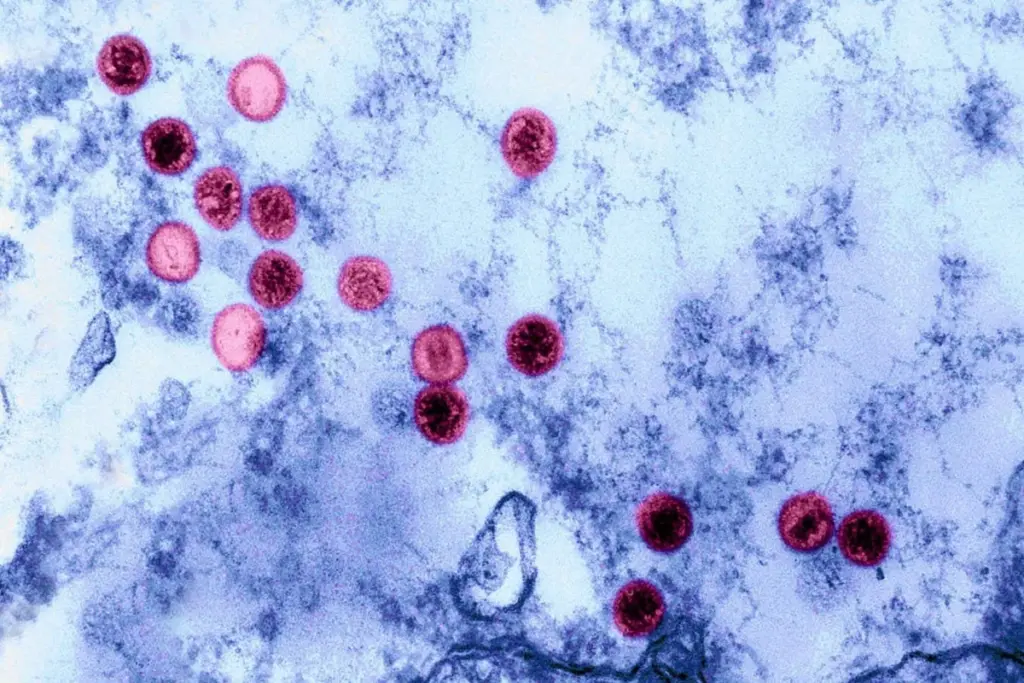
Approximately one in ten individuals carry genetic variations that render them particularly susceptible to the Epstein-Barr virus (EBV). This widespread pathogen is increasingly implicated in chronic health conditions such as multiple sclerosis and lupus. The findings, derived from an extensive study involving over 700,000 participants, offer a potential explanation for why EBV leads to severe illnesses in some people while leaving the majority unaffected.
Dr. Chris Wincup of King’s College London, who was not involved in the research, notes the widespread exposure to EBV. “Almost everyone is exposed to EBV,” he stated. “How can everyone be exposed to the same virus, and that virus causes autoimmunity, yet the majority of people don’t end up with an autoimmune condition?” This recent study provides a compelling answer to that long-standing question.
Understanding Epstein-Barr Virus
First identified in 1964 following the discovery of its particles in Burkitt’s lymphoma, EBV is now known to infect over 90 percent of the global population, a fact evidenced by the near-universal presence of antibodies against the virus.
In the short term, EBV is the primary cause of infectious mononucleosis, commonly known as mono or glandular fever. This condition typically resolves within several weeks. However, in certain individuals, EBV appears to contribute to severe, long-term autoimmune disorders where the body’s immune system mistakenly attacks its own tissues. For example, a 2022 study provided robust evidence suggesting EBV as the ultimate trigger for multiple sclerosis, a disease characterized by damage to the protective sheaths surrounding nerve fibers, leading to mobility challenges.
Investigating Differential Immune Responses
Dr. Caleb Lareau from the Memorial Sloan Kettering Cancer Center in New York highlights the puzzle of varying human responses to the same viral infection. “Why is it that humans, at a population level, respond so differently to the same viral infection?” he remarked.
The Study’s Methodology and Findings
To address this, Dr. Lareau and his research team analyzed health data from over 735,000 individuals sourced from the UK Biobank study and the US-based All of Us cohort. Crucially, participants’ genomes were sequenced using blood samples. Dr. Lareau explained that EBV leaves a trace of itself within certain blood cells during infection, meaning the human genomes sampled contained copies of the EBV genome.
The investigation revealed significant variations in EBV DNA levels among participants. A total of 47,452 individuals, representing 9.7 percent of the study group, exhibited more than 1.2 complete EBV genomes per 10,000 cells. This indicated that, unlike the majority who had largely cleared the virus post-infection, this specific cohort had not.
Identifying Genetic Predispositions
The next phase focused on understanding why these individuals were more vulnerable. Ryan Dhindsa of Baylor College of Medicine in Houston, Texas, a member of the research team, posed the question: “Were there certain differences in their genome that predisposed them to have higher levels of EBV?” The team identified 22 distinct genomic regions associated with elevated EBV levels. Dhindsa added, “Encouragingly, many of those genomic regions that popped up had already been previously associated with different immune-mediated diseases.”
The most significant associations were found with genes responsible for the major histocompatibility complex (MHC). This complex comprises a group of immune proteins crucial for differentiating the body’s own cells from invading pathogens. Dr. Dhindsa elaborated that certain individuals possessed distinct variants within their MHC, and further experiments suggested these variants impaired the body’s capacity to detect EBV infections.
EBV’s Persistent Impact on the Immune System
Dr. Ruth Dobson at Queen Mary University of London described the persistent nature of EBV’s effect on the immune system. “This virus does something to our immune system, and it does something persistent and permanent to our immune system in some people,” she observed. The continuous presence of viral DNA, she explained, may subtly stimulate the immune system over time, eventually provoking it to attack the body.
Furthermore, the genetic variants linked to high EBV levels were also associated with numerous other traits and conditions. Notably, this included an increased risk of autoimmune diseases such as rheumatoid arthritis and lupus, reinforcing the growing body of evidence connecting EBV to their development.
Implications for Treatment and Prevention
The study also uncovered a correlation between carrying these specific variants and experiencing malaise or fatigue. This finding is particularly noteworthy given that some research suggests EBV could be a causal factor in myalgic encephalomyelitis, also known as chronic fatigue syndrome (ME/CFS). Mr. Dhindsa confirmed the robustness of this signal, stating, “Due to the huge sample size, ‘we can say with confidence that that signal is there.’ However, he cautioned, ‘But at this point, we don’t exactly know what the relationship is.'”
For Dr. Wincup, a significant achievement of this research is the pinpointing of specific immune system components disrupted by persistent EBV. Identifying these compromised areas could pave the way for targeted therapies, potentially mitigating the adverse effects of EBV-related illnesses.
An alternative avenue being explored is vaccination against EBV. Currently, only experimental vaccines exist. Dr. Wincup described vaccinating against EBV as a “radical step,” acknowledging that EBV is often perceived as a mild illness. However, he questioned this perception, asking, “Many people see EBV as a quite benign illness… So how benign is it?” given the substantial burden of associated conditions experienced by many.