
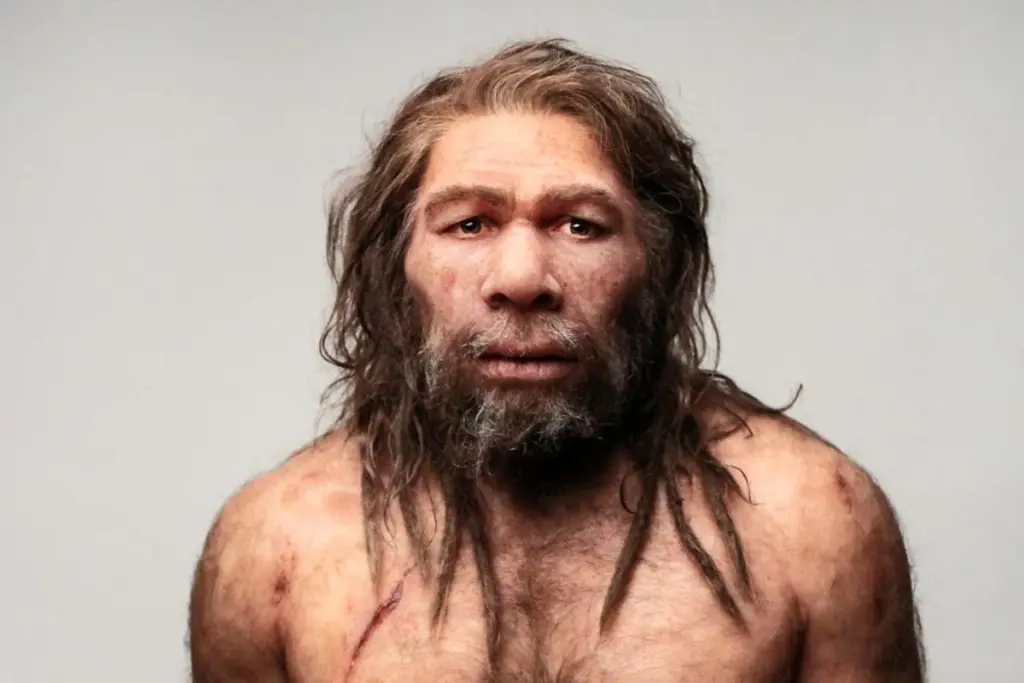
Among the diverse human species that once shared our planet, Neanderthals stand out as the most well-known. Their existence stretched remarkably close to our own time, and in many respects, their lives mirrored ours. Recent discoveries have painted an increasingly detailed picture of their existence.
Evidence has emerged suggesting Neanderthals utilized tar derived from birch bark, possessing antibiotic properties, to treat wounds. The discovery of an ancient yellow crayon, fashioned from ochre, offers a glimpse into their symbolic or artistic practices. Furthermore, a well-preserved skull challenged previous assumptions, indicating their noses were not specifically adapted for frigid climates. Findings from Germany, specifically butchered elephant bones, point to Neanderthals as the agents of this activity. There is even compelling, albeit indirect, evidence that Neanderthals navigated expanses of water.
Collectively, these insights provide a substantial understanding of Neanderthal life, a picture that continues to be enriched annually. However, a significant gap remains: a comprehensive account of their origins. The evolutionary path they took and the identity of their ancestors constitute one of the most profound mysteries in human evolution.
Grappling with Ancestry: Complexities in Human Lineage
While plausible genealogical trees exist, each presents unresolved questions that current skeletal and genetic evidence cannot definitively answer. Adding to the complexity are several less obvious hypotheses concerning Neanderthal emergence.
One tentative theory proposes that Neanderthals are the product of an ancient interbreeding event that occurred hundreds of thousands of years ago. Should this hypothesis prove true—and it is crucial to stress its speculative nature—it would necessitate a substantial revision of established human family trees. Such a change could fundamentally alter our perception of humanity’s position within the broader narrative of human evolution.
A Tangled History: Tracing Neanderthal Existence
The current archaeological consensus places Neanderthals in Europe and Asia for several hundred thousand years, though the precise duration remains somewhat unclear.
The oldest known fossil evidence originates from Sima de los Huesos cave in northern Spain, dating back approximately 430,000 years. These specimens do not exhibit all the defining characteristics of later Neanderthals, leading some to interpret them as either ancestors or close relatives. However, a 2016 genetic analysis of their DNA revealed a strikingly Neanderthal-like profile.
It is improbable that these fossils represent the very earliest Neanderthals. Genetic data suggests the group existed tens of thousands, perhaps even hundreds of thousands, of years prior. Neanderthals endured periods of significant environmental change, including multiple ice ages, before their eventual disappearance around 40,000 years ago.
Both genetic and archaeological evidence present a complex narrative of their decline. A severe cold snap toward the end of their existence appears to have driven them into a refuge in southern France, significantly reducing their genetic diversity. The final, reliably dated Neanderthal populations resided in southern Europe, largely within the boundaries of modern-day Spain.
Connecting the Dots: Hominin Relatives and Ancestral Links
To chart the lineage of Neanderthals, researchers have sought connections with other known hominin groups. A key player in this investigation is the Denisovans, who inhabited East Asia concurrently with Neanderthals.
Genetic studies indicate a close relationship between these two groups, suggesting they descended from an as-yet-unidentified common ancestor, sometimes referred to as the “Neandersovans.” Genetics further reveals that Neanderthal DNA shares more similarities with Denisovan DNA than with that of modern humans. This implies the existence of a previously unknown shared ancestor, termed “Ancestor X.” The prevailing theory posits that this mysterious population diverged, giving rise to both the ancestors of modern humans and the early Neandersovans, from whom Neanderthals eventually evolved.
It is important to underscore that this evolutionary scenario relies heavily on genetic evidence. If accurate, it predicts the discovery of fossils belonging to two additional hominin types: Neandersovans and Ancestor X. The absence of such definitive fossil finds presents a significant challenge. This could mean that crucial remains have yet to be unearthed or correctly identified. Alternatively, the genetic data might be misinterpreted, leading to an inaccurate reconstruction of events.
Candidate Ancestors: Exploring Potential Predecessors
To gain further insight, examining the existing fossil record for potential Neanderthal ancestors is instructive. The earliest known hominins, dating from 7 million to 2 million years ago, are exclusively African. It appears our ancestral line remained on the African continent for several million years.
Hominins found outside Africa, thus presenting as plausible ancestors for Neanderthals, are relatively few. Three primary candidates emerge in this context.
Homo erectus: The Pioneer Traveler
We begin with Homo erectus, notably the first hominin species known to have migrated into Europe and Asia. Present in East Africa by 2 million years ago, by 1.8 million years ago, some individuals had established themselves in regions now corresponding to Georgia, at the intersection of Europe and Asia. Their descendants journeyed eastward, ultimately reaching Java, Indonesia.
Based on the temporal scale, it might appear logical to consider H. erectus as the ancestors of Neanderthals. However, a critical impediment exists: despite extensive searching over many decades, H. erectus fossils have not been discovered in Europe. The closest discovery consists of fragmented facial bones—part of the cheek and upper jaw—unearthed in a Spanish cave and described in 2025. These remains, estimated between 1.1 million and 1.4 million years old, align with the necessary timeline. Yet, their fragmentary nature prevents confident classification. Researchers have tentatively identified them as Homo aff. erectus, a designation that signifies a likely but unconfirmed connection.
Consequently, while H. erectus might be distant progenitors of the Neanderthals, a firm link cannot currently be established. A considerable temporal gap separates the one potential European occurrence of H. erectus from the earliest known Neanderthal fossils.
Homo antecessor: A Regional Connection
Next, we consider Homo antecessor, a species found in northern Spain. While this location is geographically relevant, the temporal aspect requires scrutiny. Debates regarding the dating of its remains have occurred, with the most current estimate placing them between 772,000 and 949,000 years ago. In 2020, protein analysis from an H. antecessor tooth revealed a close genetic relationship to Ancestor X. This timeframe appears plausible, supported by molecular evidence.
The primary challenge is that H. antecessor is known from only one site: the Gran Dolina cave in Spain. Although the site yielded remains from at least six individuals, definitive information regarding the species’ geographic distribution or duration of existence is lacking. This candidate remains promising but unproven.
Homo heidelbergensis: Shifting Plausibility
The final candidate is Homo heidelbergensis. For a period, this species was considered a leading contender for Ancestor X due to skull morphology similarities with both Neanderthals and modern humans, and its presence in Europe and Africa between 300,000 and 500,000 years ago.
However, its plausibility has diminished. Primarily, a significant portion of fossils initially attributed to H. heidelbergensis have been reclassified following further analysis, leaving only a limited number of confirmed specimens, all from Europe. This revision significantly narrows our understanding of the species. Crucially, the remaining fossils appear too recent to be Ancestor X.
These three candidates each present their own set of advantages and disadvantages. A key difficulty lies in the absence of preserved DNA from H. erectus, H. heidelbergensis, or H. antecessor. Their fossils are either exceptionally old or were discovered in hot, humid tropical environments where any genetic material would likely have degraded. This absence of genetic data prevents certainty regarding their relationships with each other or with the Neanderthals.
While fossil evidence exists, much of it is incomplete or damaged. Based purely on age, one might hypothesize that H. erectus gave rise to H. antecessor and H. heidelbergensis in Europe, with one of these, perhaps H. antecessor, serving as Ancestor X. However, definitive confirmation remains elusive.
Geographic Puzzle: Reconciling Genetics and Archaeology
A significant issue arises when considering the overall narrative: the current hypotheses lack cohesive coherence. The problem, as perceived by some researchers, stems from apparent discrepancies between genetic and archaeological findings. Genetics suggests that the ancestors of modern humans diverged from the Neandersovans (the group ancestral to both Neanderthals and Denisovans) between 500,000 and 700,000 years ago, providing a timeframe for Ancestor X.
This genetic data also offers clues about Ancestor X’s likely location. The earliest Neanderthals are found in Europe, Denisovans exclusively in East Asia, and early modern humans in Africa. The most straightforward interpretation posits a single ancestral population that bifurcated, with each branch migrating to distinct regions to form these distinct groups.
This scenario points towards a geographical origin in Western Asia, encompassing the general vicinity of the Eastern Mediterranean, the Levant, the Middle East, the Caucasus, or Ukraine. The vagueness in pinpointing an exact location reflects the rudimentary nature of this reasoning and the improbability of precise localization at this stage. A broad, generalized area should be considered.
Recent archaeological discoveries may help to clarify this situation. A skull recovered from Yunxian, China, identified as an early Denisovan, dates between 940,000 and 1.1 million years ago. This finding suggests an earlier existence of Ancestor X, potentially reintroducing H. erectus into consideration. Similarly, hominin remains from the Grotte à Hominidés cave in Morocco, dating to approximately 773,000 years ago, appear to possess characteristics consistent with Ancestor X. While Morocco is not in Western Asia, it is in North Africa, a region not unreasonably distant from the theoretical habitat of Ancestor X.
The Twist: Unconventional Neanderthal Genetics
However, a final, peculiar aspect of Neanderthal genetics introduces a significant complication: their history of interbreeding with modern humans. The most substantial instances of interbreeding occurred between 50,000 and 43,000 years ago, likely across Europe and Western Asia. But evidence also suggests earlier, less clearly defined periods of genetic exchange.
Consequently, individuals of non-African descent today carry some Neanderthal DNA. Examination of ancient Neanderthal genomes reveals traces of modern human DNA resulting from these interbreeding events. Intriguingly, genetic patterns show a peculiar outcome: in modern humans, Neanderthal DNA has been largely eliminated from the X chromosomes. Simultaneously, Neanderthals replaced their original Y chromosomes with those of H. sapiens. A similar transfer occurred with their mitochondrial DNA, which is maternally inherited.
A Radical Hypothesis: Neanderthal Origins Reimagined
These observations have led to a striking new hypothesis regarding Neanderthal origins, proposed by geneticist David Reich of Harvard University. Reich outlined his concept in a pre-publication paper released on March 13th.
It is imperative to approach this idea with caution, as the paper itself is titled “hypothesis.” Reich opted against an interview, stating his intention was to solicit feedback from colleagues and acknowledging that such comments might potentially invalidate his proposal. With this caveat in mind, the hypothesis unfolds as follows.
Reich suggests that the origin of Neanderthals is linked to an early migration of modern humans out of Africa. The oldest recognized examples of Homo sapiens date to around 300,000 years ago, originating from Morocco. Reich posits that a segment of these early modern humans ventured into Europe and engaged in interbreeding with currently unidentified local hominins, likely between 400,000 and 250,000 years ago.
The resulting hybrid offspring predominantly retained their modern human Y chromosomes and mitochondrial DNA, while losing most of their other modern human genetic material. These hybrids, according to this theory, were the Neanderthals. This represents a complete reinterpretation of the genetic evidence, implying that earlier interbreeding events, which affected Neanderthal Y chromosomes and mitochondrial DNA, were not minor occurrences but rather the very genesis of the Neanderthal lineage.
Tool Use and Hypothesis Support
This proposed scenario offers a coherent explanation for a notable archaeological finding: the presence of distinctive stone tools known as Levallois tools. These tools were utilized in Africa from at least 400,000 years ago, likely by modern humans. They are also found in Europe and the Middle East, attributed to Neanderthals, dating between 480,000 and 300,000 years ago.
While it is possible that modern humans and Neanderthals independently developed Levallois tool technology, Reich’s hypothesis provides a more elegant explanation: some modern humans carried these tools with them when they departed Africa.
It remains possible that Reich’s hypothesis may falter under closer scientific scrutiny. The timing is particularly noteworthy: considering the estimated age of Ancestor X, the critical period of interbreeding seems somewhat recent. Nevertheless, the theory offers a brilliant reframing of the research question.
Recent decades have firmly established our species as a hybrid entity, shaped by diverse African populations and subsequent interbreeding with Neanderthals and Denisovans. Embracing this understanding logically extends to the possibility that other hominin groups also emerged through interbreeding.
Furthermore, this perspective brings Neanderthals even closer to us. If this scenario holds true, they are, in essence, direct descendants of the earliest members of our own species.